
What if the sunniest season isn’t the one that best suits your plans? The best time to visit Monchique depends on whether you want to hike mountain trails, take in the views from Fóia and Picota, or experience village traditions and seasonal events. Summer brings the driest stretch, from late May to early September, while spring and autumn can suit outdoor days when you’d rather avoid the hottest weather.
Mountain conditions and village life change through the year. A date that works well for a walk may not suit a festival visit, and clear coastal skies do not guarantee clear views from the hills. Before settling on a date, check the local forecast, visibility, access information, and opening details for places you hope to visit.
This guide compares Monchique through the seasons so you can choose according to your priorities. It includes practical checks for planning outdoor activities and local visits, plus a look at the 2026 Monchique Walking Festival, scheduled for November 27 to 29. A guided Monchique and Silves excursion with multilingual local interpretation is another way to connect the landscape with the region’s heritage.
Key Takeaways
- The best time to visit Monchique depends on whether your priority is outdoor exploration, mountain views, village heritage, or a quieter atmosphere.
- Compare the seasons to find the landscape and local character you want to experience.
- Before choosing a date, check the forecast, visibility, access, and opening information relevant to your plans.
- Seasonal events can add a cultural focus to your visit, so check what’s happening around your dates.
- A guided Monchique and Silves Tour offers local interpretation connecting the area’s landscape, traditions, and gastronomy.
Best Time to Visit Monchique: What to Experience
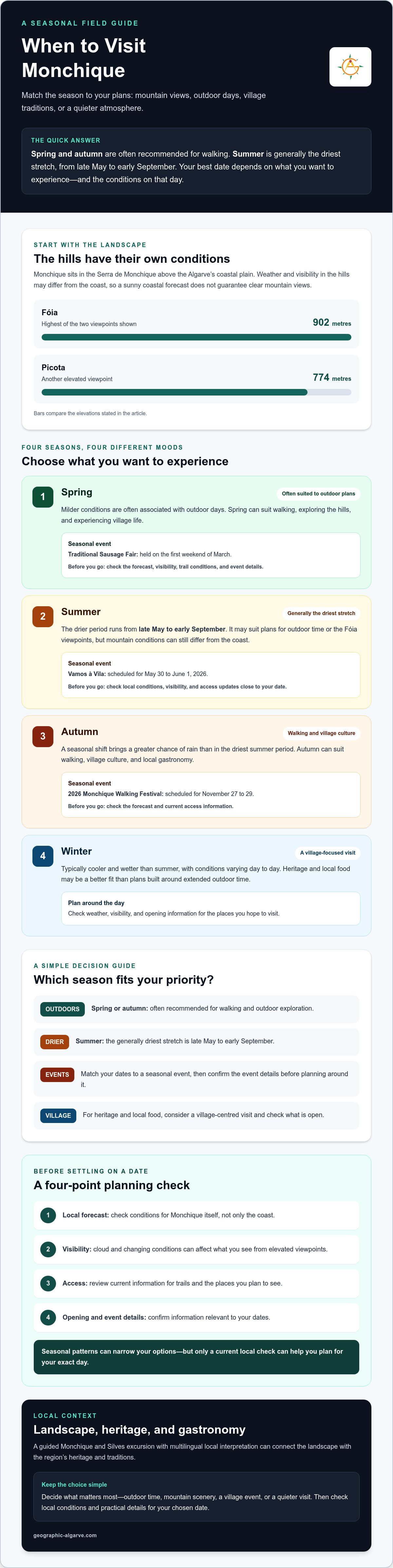
The best season for Monchique depends on what you want from the visit: mountain scenery, time outdoors, or a closer look at village life and local food. Spring and autumn are often recommended for walking. The drier stretch from late May to early September may appeal if you prefer to plan around generally warmer, sunnier weather. Neither seasonal pattern guarantees clear viewpoints or ideal conditions on your chosen day.
Use those patterns to narrow your options, then check a local forecast close to your visit. Monchique sits in the Serra de Monchique, above the Algarve’s coastal plain. Fóia reaches 902 metres and Picota 774 metres, so conditions in the hills may differ from those shown in coastal forecasts. The Monchique municipality overview provides geographic context, but a current local forecast is more useful for planning a specific day.
Choose your Monchique visit by priority
If scenery is your focus, keep your plans flexible: cloud and visibility can change what you see from elevated viewpoints. For walking, spring and autumn are commonly favoured for milder conditions, but check the forecast and relevant access information before setting out. If village culture and gastronomy matter most, see whether an event falls during your visit. The Traditional Sausage Fair is held on the first weekend of March, while Vamos à Vila is scheduled for May 30 to June 1, 2026.
Why the mountain setting matters
The Serra de Monchique has a different setting from the Algarve coast. Its elevation is one reason not to assume that a sunny coastal forecast means similar conditions in the hills. Temperature, cloud, and visibility can vary, so use coastal weather information as broad context rather than a promise about the mountains. For a day trip, check the forecast for Monchique itself and review local access information for the places you plan to see.
The key seasonal choice is simple: match the season to your priorities, then check conditions for your exact date. Decide whether outdoor time, a particular village event, or a quieter visit matters most. Then confirm the forecast, visibility outlook, and current opening information. This is more useful than relying on a universal “best month.”
Monchique by Season: What to Expect Throughout the Year
Each season offers a different way to experience the Serra de Monchique, from outdoor exploration to local traditions. Treat seasonal weather patterns as planning clues, not predictions: conditions around Fóia and the surrounding hills can change, and visibility is never guaranteed. Use this comparison to narrow your dates, then check the forecast and local information before you go.
| Season | Likely atmosphere | May suit | Check before visiting |
|---|---|---|---|
| Spring | A changeable season, with milder conditions often associated with outdoor plans. | Walking, exploring the hills, and experiencing village life. | The forecast, visibility, trail conditions, and event details. The Traditional Sausage Fair is held on the first weekend of March. |
| Summer | Generally the drier, sunnier part of the year, though mountain conditions can still differ from the coast. | Visitors planning outdoor time or hoping to see the Fóia viewpoints. | Local conditions close to your date, including visibility and any access updates. |
| Autumn | A seasonal shift with more chance of rain than in the driest summer period. | Walking, village culture, and local gastronomy. | The forecast and current access information. The 2026 Monchique Walking Festival is scheduled for November 27 to 29. |
| Winter | Typically cooler and wetter than summer, with day-to-day conditions varying. | A village-focused visit, heritage, and local food. | Weather, visibility, and opening information for places you hope to visit. |
Spring and summer in the Monchique hills
Spring is often recommended for outdoor activities. Summer falls within the region’s typically drier stretch, which runs from late May to early September. These broad tendencies can help you choose a season for walking or visiting elevated viewpoints, but they can’t tell you what the sky will look like on a particular day. If Fóia’s scenery is a priority, check conditions close to your visit. For local nature, heritage, and visitor information, consult the official Monchique tourism site.
Autumn and winter in Monchique
Autumn can suit visitors drawn to walking and seasonal village events. Winter’s cooler, wetter tendency may make a village-centred day more appealing than a plan built around extended time outdoors. Culture and gastronomy are worthwhile interests in any season, not just the cooler months. Confirm event details, access, and opening information with local sources before setting a date.
The best time to visit Monchique is the season that fits your priorities while leaving room to adapt to the day’s conditions. For local context connecting the landscape with traditions and gastronomy, consider Geographic Algarve’s Monchique and Silves guided tour.
Which Season Suits Your Monchique Plans Best?
Start with the experience you care about most. The Serra de Monchique offers elevated landscapes and outdoor routes, while the village has its own heritage and food traditions to explore. Fóia, the region’s highest point at 902 metres, is a notable viewpoint, but no season guarantees clear skies or far-reaching views. Let your priorities guide the date and leave room to adjust your plans.
Best timing for views and outdoor exploration
Spring and autumn are often recommended for hiking and other outdoor activities, with generally milder conditions than the hottest part of summer. Treat this as a broad seasonal tendency, not a forecast. If you’re planning a longer walk or hoping to see the landscape from Fóia, check a reliable local forecast close to your visit and keep an alternative activity in mind. Cloud, rain, or changing conditions can affect what’s practical on the day.
Summer may suit travellers who prefer to plan around the drier part of the year, but warm weather alone doesn’t guarantee good visibility. If scenery is your priority, flexibility matters more than choosing a supposedly perfect month. Check conditions for the hills, not only the Algarve coast, and confirm any relevant trail or site access before setting out.
Best timing for village culture and a quieter visit
Village streets, local heritage, and gastronomy can shape a rewarding visit in any season. If a festival is part of your plan, use its scheduled dates as an anchor: the Traditional Sausage Fair is held on the first weekend of March, and Vamos à Vila is scheduled for May 30 to June 1, 2026. To seek a quieter-feeling visit, consider dates outside events that interest you, but don’t assume a particular month or day will be uncrowded without checking locally. A broader Algarve cultural heritage guide can also help place Monchique’s traditions within the region.
Use this quick guide:
- Walking and outdoor exploration: Consider spring or autumn, then check the forecast and access details.
- Mountain viewpoints: Choose a flexible date and confirm visibility conditions close to your visit.
- Village traditions and food: Visit in any season, or plan around an event with confirmed dates.
- A quieter atmosphere: Check for local events and current visitor information rather than relying on assumptions about crowd levels.
The best time to visit Monchique is the one that fits your main interest while allowing for real conditions on the day. Match the season to your plans, verify the details, and keep some flexibility in your itinerary.
How to Choose Your Monchique Visit Date: A Practical Checklist
A season can help you narrow down dates, but a current forecast and reliable local information are more useful for confirming a particular day. Use this checklist before finalising your plans. It focuses on what matters in the Serra de Monchique: conditions, visibility, your intended activities, and whether the places you want to see are open.
Check conditions and local information close to your visit
- Set your main priority. Decide whether you’re planning a walk, hoping for views from Fóia, or focusing on village heritage and gastronomy.
- Check a current forecast. Look for conditions in Monchique and the hills, not just the Algarve coast. Seasonal averages describe broad patterns, not the weather on your chosen date.
- Review visibility. If mountain scenery is central to your plans, check the latest outlook. A clear forecast elsewhere does not promise clear views in the Serra.
- Confirm opening information. Check directly with each attraction, site, or local business you plan to visit. Hours and access details can change.
- Look for current local updates. Verify event dates, trail access, and seasonal changes with authoritative local sources, such as the official Monchique tourism site.
Before choosing a date, check the local forecast, visibility, access, and opening information for the places you want to visit. This helps you distinguish a promising seasonal pattern from conditions that suit your specific plans.
Match the day’s plan to the season
If the forecast suits outdoor exploration, make a walk or viewpoint visit the centrepiece of your day. Keep your plans flexible if visibility matters, since mountain conditions can differ from those along the coast. If the weather doesn’t favour time outdoors, shift your focus to Monchique’s village heritage and gastronomy. These interests aren’t limited to one season, so they can help make the visit worthwhile if your first-choice activity needs to change.
For local context connecting Monchique’s landscape with regional traditions, explore Geographic Algarve’s Monchique and Silves Tour, a guided excursion with multilingual local guides.
Make the Most of Monchique With Local Context
Monchique’s appeal goes beyond mountain scenery. The landscape, village traditions, and local gastronomy are connected, and understanding that relationship can add depth to a visit in any season. A knowledgeable local guide can explain what you’re seeing and how the area’s natural and cultural heritage fit together. You don’t need to choose a particular month as the “right” time to benefit from that context.
What a local guide can add to a Monchique visit
Geographic Algarve’s Monchique and Silves Tour is an optional guided experience led by multilingual local guides. Its educational commentary connects the region’s environmental heritage with local traditions and food culture, giving visitors context as they explore. The company has more than 25 years of experience in the Algarve and was founded by local expert Vasco Salgueiro.
Local interpretation can help you balance scenery with village life. A viewpoint or landmark gives you a sense of place; local knowledge can explain its significance and connect it to Monchique’s wider character. Gastronomy offers another way into that story, from regional products to the traditions behind them. These themes aren’t limited to one season, so they can enrich a visit centred on either outdoor exploration or the village.
Plan a season-aware Algarve experience
Before planning around a guided experience, check the current tour details and consider how they fit your chosen date and interests. Weather and visibility may shape outdoor plans, while opening information and seasonal access can affect which places you’re able to visit. For wider regional context, an Algarve cultural heritage guide can help show how Monchique’s traditions relate to the surrounding area.
The best time to visit Monchique is still the date that suits your priorities. Local interpretation can make any season more meaningful by bringing the landscape, heritage, and gastronomy into focus. If you’d like to explore the area with knowledgeable local guides, take a look at Geographic Algarve’s Monchique and Silves Tour.
Choose Your Monchique Season and Start Planning
The best time to visit Monchique depends on what you want from the day: mountain scenery, outdoor exploration, village heritage, or local gastronomy. Use seasonal patterns to narrow your options, then check the forecast, visibility, and current opening information before confirming your plans. Conditions in the Serra can differ from the coast, so keep your itinerary flexible.
For a deeper connection to the region, consider Geographic Algarve’s Monchique and Silves Tour. Founded by local expert Vasco Salgueiro, the company brings more than 25 years of experience in local excursions. Its multilingual guides share educational commentary on regional heritage and nature, linking the landscape with Monchique’s traditions and food culture.
Explore the Monchique and Silves Tour for a guided way to experience the area. Choose a season that suits your interests, check the details close to your visit, and plan a Monchique day around what you most want to see.
Frequently Asked Questions
What is the best month to visit Monchique?
There isn’t one best month for every visitor. Spring and autumn are often recommended for walking and outdoor exploration, while the drier stretch from late May to early September may suit plans built around generally sunnier conditions. The best time to visit Monchique depends on your priorities, whether that’s mountain scenery, village traditions, or outdoor activity. Check the forecast and local information before settling on a date.
Is Monchique worth visiting in winter?
Yes. Winter can be a rewarding time to focus on Monchique’s village heritage, local gastronomy, and the character of the surrounding hills. Conditions are generally cooler and wetter than in summer, so check the forecast before planning extended outdoor activities or a visit to Fóia. Confirm current opening information for specific places, too. For visitors exploring inland Algarve from areas such as Lagos or Silves, Monchique offers a distinct mountain setting.
Can you visit Monchique in summer?
Yes. Summer falls within the typically drier part of the year, which runs from late May to early September, and can suit outdoor plans. That seasonal tendency doesn’t guarantee clear skies or views, especially in the Serra de Monchique. Check local weather and visibility close to your date, and consider the heat when planning outdoor activity. Village heritage and gastronomy can also be part of a summer visit.
When is the best time to see views from Fóia?
No month guarantees clear views from Fóia, the highest point in the Algarve. Visibility depends on conditions on the day, so check a reliable local forecast close to your visit rather than relying on seasonal averages or a coastal forecast alone. If the mountain outlook is cloudy, keep your plans flexible and consider focusing on Monchique’s village or local heritage instead. Confirm current access information before setting out.
How many days should you spend in Monchique?
For a focused visit, plan around the experiences that matter most to you. One day may suit a look at the village and a viewpoint, while walking, local heritage, and gastronomy could warrant more time. There’s no fixed itinerary that fits everyone, so check opening details and allow for changing conditions. Monchique can also add an inland contrast to Algarve stays in Portimão, Albufeira, Lagoa, Carvoeiro, Alvor, Armação de Pêra, Galé, Olhos d’Água, or Praia da Luz.
What should I check before visiting Monchique?
Check a current forecast for Monchique, visibility if you’re hoping for mountain views, and conditions relevant to your outdoor plans. Confirm opening details for places you intend to visit, and verify event dates or seasonal access changes with authoritative local sources. Don’t rely only on Algarve coastal weather information: conditions in the hills may differ. A little checking close to your chosen date can help you shape a practical plan.
Is spring a good time to explore Serra de Monchique?
Spring is often recommended for walking and outdoor exploration in Serra de Monchique, as conditions are generally milder than during the hottest part of summer. Treat that as a broad seasonal guide, not a promise about any particular day. Before heading out, check the local forecast, visibility, and relevant access information. If conditions change, Monchique’s village heritage and gastronomy offer other ways to connect with the inland Algarve.
Article by
Kim
To conclude her studies Tourism and Recreation Management, Kim came to Portugal in 2006 for a three month internship and then simply never left! She took a few years exploring the country, living in Porto and the Algarve, while gaining experience working for the main international tour operators. Since 2013 she is a full-time local guide for Geographic Algarve, where she can share her love for and knowledge of Portugal in the best way. Both on tour and here in the blog, she shares crucial tips to get the most out of your stay in the Algarve. Kim creates her articles and photos with the help of AI, so she has more time left to show you around in the wonderful Algarve!
Disclaimer - AI generated content
This article was created by AI (including photos), within guidelines set by Geographic Algarve. Geographic Algarve checks to the best of her abilities all articles for incongruencies, but may not succeed to correct all inaccurate details before publishing. In no way or form, are these articles part of any contract when booking one of our trips. Only the specific tour information as stated on www.geographic-algarve.com is valid. In case of any doubt, please contact us via [email protected].


