

Most travelers believe the Algarve’s story begins and ends at the shoreline, but the true spirit of this land is etched into the stone of its ancient ruins. If you’re tired of generic travel lists that lack soul, you aren't alone. It’s easy to feel overwhelmed by the sheer volume of historical sites near Portimão without knowing which ones truly matter. You want more than a photo; you want a connection to the Roman and Moorish legacies that shaped our local traditions.
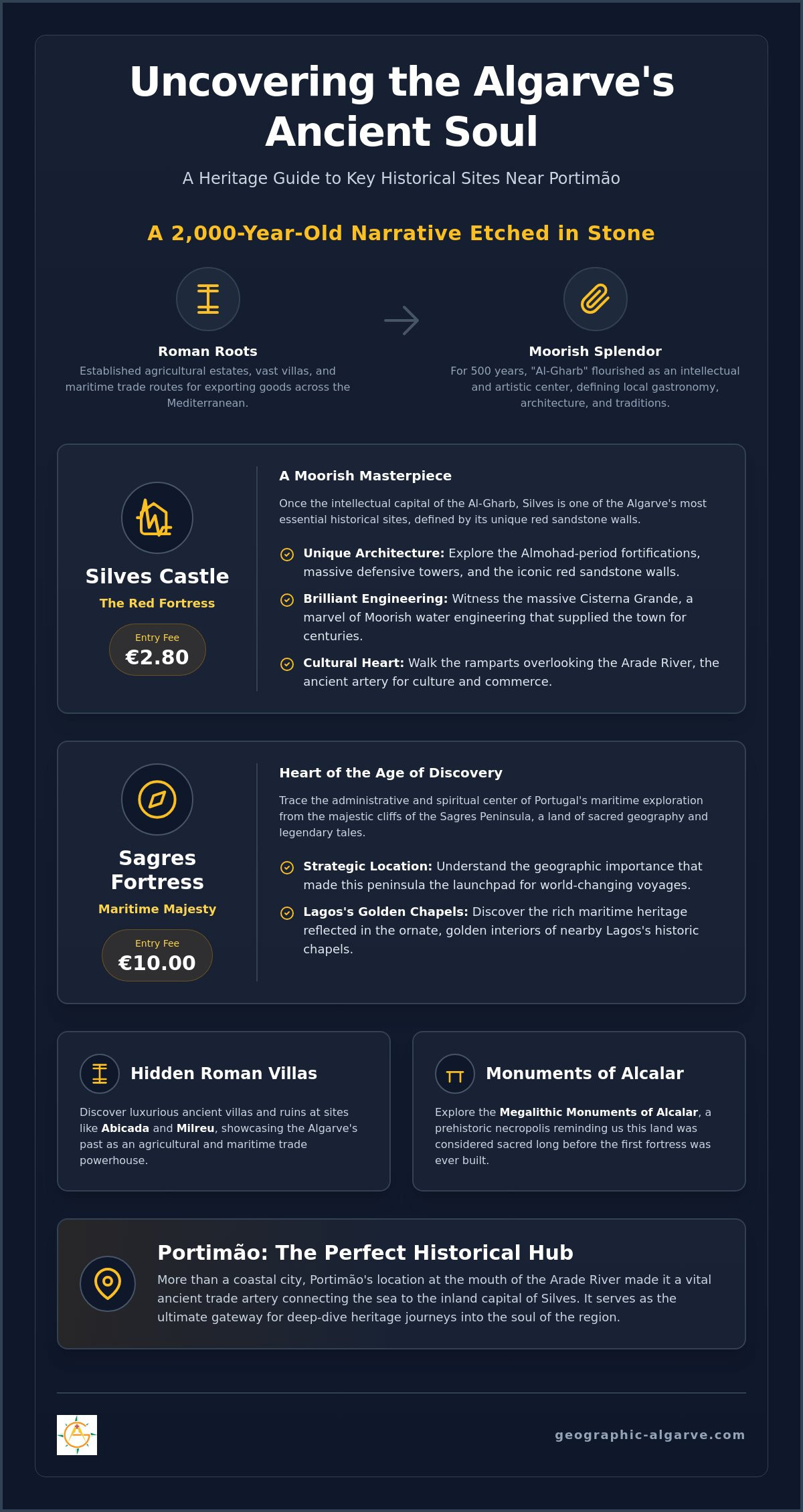
This 2026 heritage guide promises to be your definitive expert narrator. We’ve curated a list of landmarks that offer profound ethnocultural value, moving beyond surface-level facts to provide deep context. From the red sandstone walls of Silves Castle for just €2.80 to the €10.00 entry at the legendary Sagres Fortress, we'll show you exactly where to spend your precious time. Prepare to discover the secrets of the Megalithic Monuments of Alcalar and the golden interiors of Lagos’s finest chapels as we bridge the gap between ancient geography and modern exploration.
Key Takeaways
- Uncover the profound ethnocultural stories that transform standard ruins into a living 2,000-year-old narrative!
- Experience the Moorish grandeur of Silves Castle and learn why its unique red sandstone defined the Algarve’s ancient intellectual capital.
- Trace the administrative heart of the Age of Discovery through the maritime majesty of Lagos and the sacred geography of the Sagres Peninsula.
- Locate hidden historical sites near Portimão, including the Roman Ruins of Abicada and the luxurious ancient villas of Milreu.
- Gain exclusive insights from local experts who provide the deep context necessary to truly interpret the region’s archaeological wonders.
The Living Tapestry of Algarve’s Historical Landmarks
History in the Algarve isn't a collection of dusty dates. It's a vibrant, living story written into the very landscape. When we look at the ethnocultural geography of this region, we see how the environment shaped human ambition. For millennia, the southern coast stood as a vital strategic prize for empires. From Phoenician traders seeking new markets to the devastating 1755 earthquake that reshaped our cities, every era left a permanent mark. Exploring the historical sites near Portimão allows you to peel back these layers and understand the true identity of Portugal's south.
From Roman Roots to Moorish Splendour
The Roman presence turned the Algarve into an agricultural powerhouse. They established vast estates and maritime trade routes that exported salted fish across the Mediterranean. This Roman foundation met a transformative shift when Moorish forces arrived in the 8th century. For five hundred years, "Al-Gharb" flourished as an intellectual and artistic center. You can still see this influence today in the white-washed chimneys of local villages and the complex irrigation systems that feed our citrus groves. This period didn't just build walls; it defined the local gastronomy and traditions that make our excursions so enriching. Even the prehistoric Megalithic Monuments of Alcalar remind us that this land was sacred long before the first stone of a fortress was laid.
Why Portimão is the Perfect Historical Hub
Portimão is far more than a coastal destination. It's the ultimate gateway for anyone eager to explore the Algarve’s heritage. Its location at the mouth of the Arade River made it a vital ancient trade artery. This river once connected the sea to the inland capital of Silves, serving as a highway for culture and commerce. This geography provides unparalleled access to diverse landscapes. You can easily reach the rugged west coast or the lush peaks of the Monchique mountains from here. Within the city itself, the blend of industrial canning heritage and ancient maritime tradition creates a unique atmosphere. It’s the starting point for deep-dive heritage journeys that reveal the soul of the region. Whether you're interested in Roman villas or medieval fortresses, the most significant historical sites near Portimão are all within reach. Every excursion becomes a masterclass in local history!
The Red Fortress of Silves: A Moorish Masterpiece
Silves was once the shining jewel of the Al-Gharb. Known then as Xelb, it served as the intellectual capital of the region, where poets and scholars gathered under the shade of orange trees. Today, it stands as one of the most essential historical sites near Portimão. You'll recognize it immediately by the striking red sandstone walls, known locally as grés de Silves. This unique material gives the fortress a warm, fiery glow that changes with the sun. It’s a sight you won't forget!
Step inside and explore the massive cisterns that showcase the brilliance of Moorish water engineering. The Cisterna Grande is so vast and well-designed that it provided water to the town for centuries. For just €2.80, you can walk the high ramparts and visualize the ancient defense of the Arade valley. From this vantage point, you see the river that once brought wealth and trade directly to the castle gates. For current opening hours and visiting details, check the Silves Castle official information before you arrive.
- The Al-Mu'tamid Statue: A tribute to the poet-king who ruled during the city's golden age.
- Cisterna dos Cães: A deep, mysterious well that descends nearly 60 metres into the earth.
- The North Gate: A classic example of defensive Moorish architecture designed to trap invaders.
Architecture of the Almohad Period
The castle we see today is a testament to the Almohad caliphate's military genius. You'll notice the heavy towers and the "albarrana" style of fortification, which allowed defenders to fire at enemies from multiple angles. The Almohad architectural legacy is defined by these massive defensive towers and intricate brickwork that stood firm until the Christian reconquest of the city in 1242. It’s a powerful transition from a defensive stronghold to a modern cultural symbol of the Algarve.
The Cultural Synthesis of Silves
Medieval Silves was a true melting pot. Christians, Jews, and Muslims lived and worked together, creating a rich cultural tapestry that still influences the area. This spirit of coexistence is celebrated every August during the famous Medieval Fair. The streets fill with the scent of spices and the sound of ancient music! It’s the perfect time to connect with local traditions. If you want to dive deeper into these stories, explore our Algarve cultural tours for a truly expert perspective. To see these red walls in person, you might consider booking a Monchique & Silves Tour for an unforgettable day of discovery.
Maritime Majesty in Lagos and the Sagres Peninsula
While Silves represents the Algarve's inland power, Lagos and the Sagres Peninsula define its global reach. These coastal landmarks are the most evocative historical sites near Portimão for anyone fascinated by the Age of Discovery. This isn't just about pretty views. It’s about the moment European history turned its gaze toward the Atlantic! Lagos served as the administrative heart of the empire, while Sagres provided the sacred geography for the world’s most daring navigators. They are two halves of the same maritime story.
Lagos: Gateway to the New World
- Igreja de Santo António: Known as the "Golden Church," its interior is a masterpiece of gilded woodcarving (entry is just €1.50).
- Forte da Ponta da Bandeira: A 17th-century fortress that once guarded the entrance to the Lagos harbor (entry is €2.00).
- The Statue of Prince Henry: Located in the main square, it honors the man who launched the Age of Discovery.
Sagres Fortress: Where the Land Ends
At the very tip of the continent lies the Sagres Fortress. This site is legendary! Entry is €10.00, and it grants you access to a wind-swept plateau where the land feels like it's surrendering to the sea. You can't miss the massive rosa-dos-ventos (wind rose) etched into the ground, a 43-metre stone circle with mysterious origins. While the famous "School of Sagres" is likely more myth than reality, the spirit of navigational innovation here was undeniably real. Navigators once looked to Cape St. Vincent, the nearby spiritual beacon, as their last point of reference before sailing into the unknown. The fortress has survived fierce Atlantic storms and privateer raids, standing today as a monument to human resilience. To experience this rugged beauty with an expert narrator, our Southwest coast Portugal tour provides the deep-dive insights you need. It’s the definitive highlight of any heritage trip!
Beyond the Walls: Hidden Roman and Rural Heritage
The Algarve’s story isn't just told through coastal fortresses. Venture slightly inland, and you'll find the quiet remnants of Roman estates and the deep-rooted traditions of the hills. These historical sites near Portimão reveal a different side of our heritage, focusing on agriculture, industry, and the luxury of ancient rural life. It’s a fascinating contrast to the maritime military history of the coast! Every stone here tells a story of survival and sophistication.
The Roman Ruins of Abicada and Milreu
While many travelers overlook rural ruins, the Roman Ruins of Abicada remain a hidden gem of agricultural history. Located near the Alvor estuary, this site was once a thriving villa where the elite managed vast salt-panning and farming operations. The detailed mosaics here depict maritime life and intricate geometric patterns, showcasing a high level of artistry in a rural setting. If you travel toward Estoi, Milreu offers even more luxury. This site features a well-preserved villa and a temple later converted into a Christian basilica. You can still see the sophisticated Roman heating and water systems that allowed residents to thrive in the Mediterranean climate. These locations are essential for understanding the Romanization of Lusitania and how ancient settlers harnessed the land's resources.
- Abicada Mosaics: Look for the unique fish and geometric motifs that highlight the villa's connection to the sea.
- Milreu’s Temple: A rare example of a Roman religious structure that survived through the Visigothic and Moorish eras.
- Ancient Hydraulics: Observe the foundations of thermal baths that represent Roman engineering at its peak.
Monchique: The Ethnocultural Heart
Rising above the coastal plains, the Monchique mountains represent the spiritual and industrial soul of the inland Algarve. The mountain geography shaped a culture entirely distinct from the coast. In Caldas de Monchique, you can visit the heritage of Roman thermal baths, where the mineral-rich waters have been prized for their healing properties for over two thousand years. The hills also preserve the traditional art of cork harvesting. This sustainable industry remains the backbone of the rural economy. Local artisans still craft "scissor chairs," a folding wooden design that dates back to the Roman period! Understanding this inland heritage is vital for a complete picture of the region. To see these traditions in action, book our Monchique & Silves Tour for a deep dive into the heart of the Algarve.
Discovering the Soul of the Algarve with Expert Guidance
Seeing an ancient ruin is one thing; understanding why it exists is another entirely. Without the right context, the most significant historical sites near Portimão can look like simple piles of weathered stone. This is where local expertise becomes vital. A professional narrator doesn't just list dates. They bridge the gap between the physical landscape and the human stories that played out over centuries. At Geographic Algarve, our philosophy is simple: education through exploration. We believe your time is precious, so we focus on deep-dive heritage journeys that leave you with a profound connection to our land.
The Value of Ethnocultural Geography
We move beyond names and numbers to explore ethnocultural geography. This means looking at how the rugged cliffs of Sagres or the fertile valleys of Silves dictated where empires rose and fell. It’s about understanding the people who lived here! By choosing small-group, educational excursions, you gain insights that generic lists simply can't provide. This approach also supports sustainable tourism. By valuing the educational aspect of these landmarks, we help ensure they are preserved for future generations. A professional guide adds layers of meaning to every mosaic and rampart you encounter, turning a simple visit into a premium leisure experience.
- Expert Interpretation: Benefit from over 25 years of local expertise and specialized knowledge in regional geography.
- Multilingual Insight: Our local guides speak your language, ensuring no detail of the story is lost.
- Curated Itineraries: We take the stress out of planning by selecting the most meaningful historical sites near Portimão for your 2026 visit.
Preparing for Your Heritage Expedition
Planning your 2026 historical itinerary around Portimão requires a bit of strategy. To get the best out of your day, we recommend visiting popular sites like Silves Castle or Sagres Fortress early in the morning. This provides the best light for photography and a quieter atmosphere for reflection. Ensure you wear sturdy walking shoes, as many of these ancient paths are uneven and rocky. Bring plenty of water and a hat to stay protected while you explore the sun-drenched ruins of Abicada or Milreu. Most importantly, bring your curiosity! If you’re ready to move beyond the tourist surface, it’s time to Book your custom cultural journey with Geographic Algarve and experience the definitive highlight of your trip.
Step Into the Living History of the Algarve
The Algarve is much more than a summer destination; it's a profound journey through time. You've discovered how the red sandstone of Silves and the wind-swept plateau of Sagres tell a story of human ambition. From the sophisticated mosaics of Roman villas to the traditional cork harvests of Monchique, these historical sites near Portimão offer a rare glimpse into a 2,000-year-old ethnocultural tapestry. Every ruin and fortress we've explored serves as a physical chapter of our shared heritage.
Don't settle for a surface-level visit when you can experience a deep-dive heritage journey. Led by local expert Vasco Salgueiro, our excursions draw on over 25 years of specialized guiding to provide high-quality education. We focus on small groups to ensure every guest gains a meaningful connection to our landscape. It’s time to turn your vacation into an unforgettable masterclass in Portuguese history! Your time is precious, and we're here to ensure every moment is well-spent.
Explore the Deep History of the Algarve with Geographic Algarve and make your 2026 trip truly definitive. We're eager to share these regional highlights with you!
Frequently Asked Questions
What is the most important historical landmark in the Algarve?
Silves Castle and Sagres Fortress are widely considered the most significant landmarks in the region. Silves represents the peak of Moorish architecture, while Sagres marks the beginning of the Age of Discovery. Both locations offer a deep connection to the ethnocultural geography of the south. Visiting these historical sites near Portimão provides a complete overview of how different empires shaped the Algarve’s unique identity over two millennia.
Are there Roman ruins near Portimão that I can visit?
Yes, the Roman Ruins of Abicada are a remarkable site located just a short distance from the city. This ancient villa showcases beautiful mosaics and advanced irrigation systems that highlight the importance of Roman agriculture in the region. You can also visit the Megalithic Monuments of Alcalar nearby. These sites are essential for anyone wanting to understand the prehistoric and Roman roots that preceded the medieval era.
Is Silves Castle open to the public in 2026?
Silves Castle is fully open to the public throughout 2026 with extended summer hours for visitors. From June to September, you can explore the ramparts between 9:00 AM and 10:00 PM for a standard entry fee of €2.80. During the winter months of October to May, the castle remains accessible from 9:00 AM to 5:30 PM. It’s an incredible value for anyone exploring the most iconic historical sites near Portimão!
How much time should I spend at the Sagres Fortress?
You should plan to spend at least 90 minutes to two hours at the Sagres Fortress to see everything. This allows enough time to walk the full perimeter of the cliffs and examine the mysterious 43-metre stone wind rose. The site is quite large, and the walk to the lighthouse at the tip of the peninsula takes time. Don't forget to visit the small chapel of Nossa Senhora da Graça inside the walls.
Why is Lagos significant in Portuguese maritime history?
Lagos was the administrative and logistical heart of the Portuguese Age of Discovery in the 15th century. It served as the home base for Prince Henry the Navigator and the shipyard where many caravels were built. The city’s 15th-century walls and the site of Europe’s first slave market stand as powerful reminders of this era. Its maritime wealth transformed it from a fishing village into a global gateway for explorers.
Can I visit historical landmarks in the Algarve without a guide?
While you can visit these landmarks independently, an expert narrator provides the ethnocultural context that brings ruins to life. Many sites lack detailed signage, making it difficult to interpret archaeological remains without specialized knowledge. A guided excursion ensures you don't miss hidden details, like specific Moorish masonry techniques or Roman heating systems. It’s the best way to maximize your time and gain a deeper understanding of regional traditions.
What are the best historical sites for families near Albufeira?
Paderne Castle is a fantastic family-friendly site located just a short distance from Albufeira. It’s one of the few remaining castles in Portugal built with "taipa" (rammed earth) and offers a great opportunity for kids to explore outdoor ruins. Families also enjoy the Silves Medieval Fair in August, where history is brought to life through reenactments and street food. These experiences provide an educational yet exciting day out for all ages!
How did the 1755 earthquake affect the Algarve’s historical landmarks?
The 1755 earthquake was a catastrophic event that leveled much of the Algarve’s medieval architecture. Coastal towns like Lagos and Portimão were hit hardest by the subsequent tsunami, destroying many original Roman and Moorish structures. This led to a major rebuilding phase that introduced the Pombaline style of architecture seen in many city centers today. It’s why some landmarks appear as a blend of ancient foundations and 18th-century reconstruction.

Article by
Kim
To conclude her studies Tourism and Recreation Management, Kim came to Portugal in 2006 for a three month internship and then simply never left! She took a few years exploring the country, living in Porto and the Algarve, while gaining experience working for the main international tour operators. Since 2013 she is a full-time local guide for Geographic Algarve, where she can share her love for and knowledge of Portugal in the best way. Both on tour and here in the blog, she shares crucial tips to get the most out of your stay in the Algarve. Kim creates her articles and photos with the help of AI, so she has more time left to show you around in the wonderful Algarve!
Disclaimer - AI generated content
This article was created by AI (including photos), within guidelines set by Geographic Algarve. Geographic Algarve checks to the best of her abilities all articles for incongruencies, but may not succeed to correct all inaccurate details before publishing. In no way or form, are these articles part of any contract when booking one of our trips. Only the specific tour information as stated on www.geographic-algarve.com is valid. In case of any doubt, please contact us via [email protected].


