
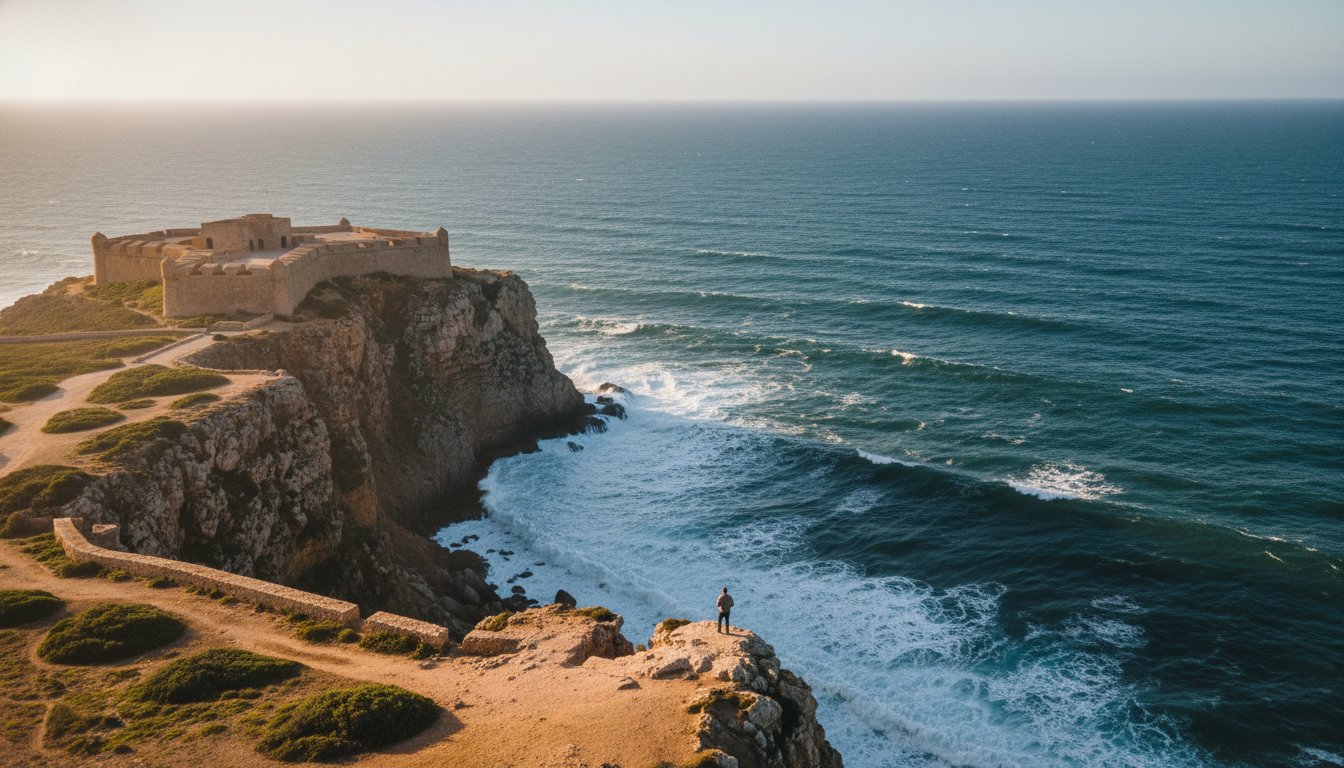
What if the very edge of the known world was actually the birthplace of the modern age? When you stand on the windswept cliffs of the Algarve, it's easy to feel overwhelmed by the raw Atlantic energy and the sheer scale of the ruins. Many travelers find themselves wandering the vast grounds without truly grasping why this limestone promontory changed history forever. If you've felt lost in generic tourist brochures, you aren't alone. Exploring Sagres fortress requires more than just a ticket; it demands a connection to the 15th-century ambition that launched the Age of Discovery.
Our local experts are here to transform your visit into a deep, memorable cultural experience. You'll discover the maritime heritage that turned Portugal into a global power and learn to spot the rare endemic flora that thrives within the Southwest Alentejo and Vicentine Coast Natural Park. We'll show you how to navigate this iconic site effectively so you don't miss a single hidden detail. From the massive wind rose to the dramatic coastal geography, get ready for a journey that maximizes every second of your time in this legendary landscape!
Key Takeaways
- Uncover the Roman roots of the 'Sacred Promontory' and its evolution into a 15th-century maritime powerhouse.
- Gain a professional edge when exploring Sagres fortress by identifying the most significant landmarks hidden within the walls.
- Learn how the legendary 'School of Sagres' used cartography and astronomy to launch the Age of Discovery.
- Identify rare botanical species and unique wildlife found only in the surrounding Vicentine Coast Natural Park.
- Discover how an expert local guide reveals the invisible layers of history that generic tourist guides often overlook!
What is the Sagres Fortress? Defining the End of the World
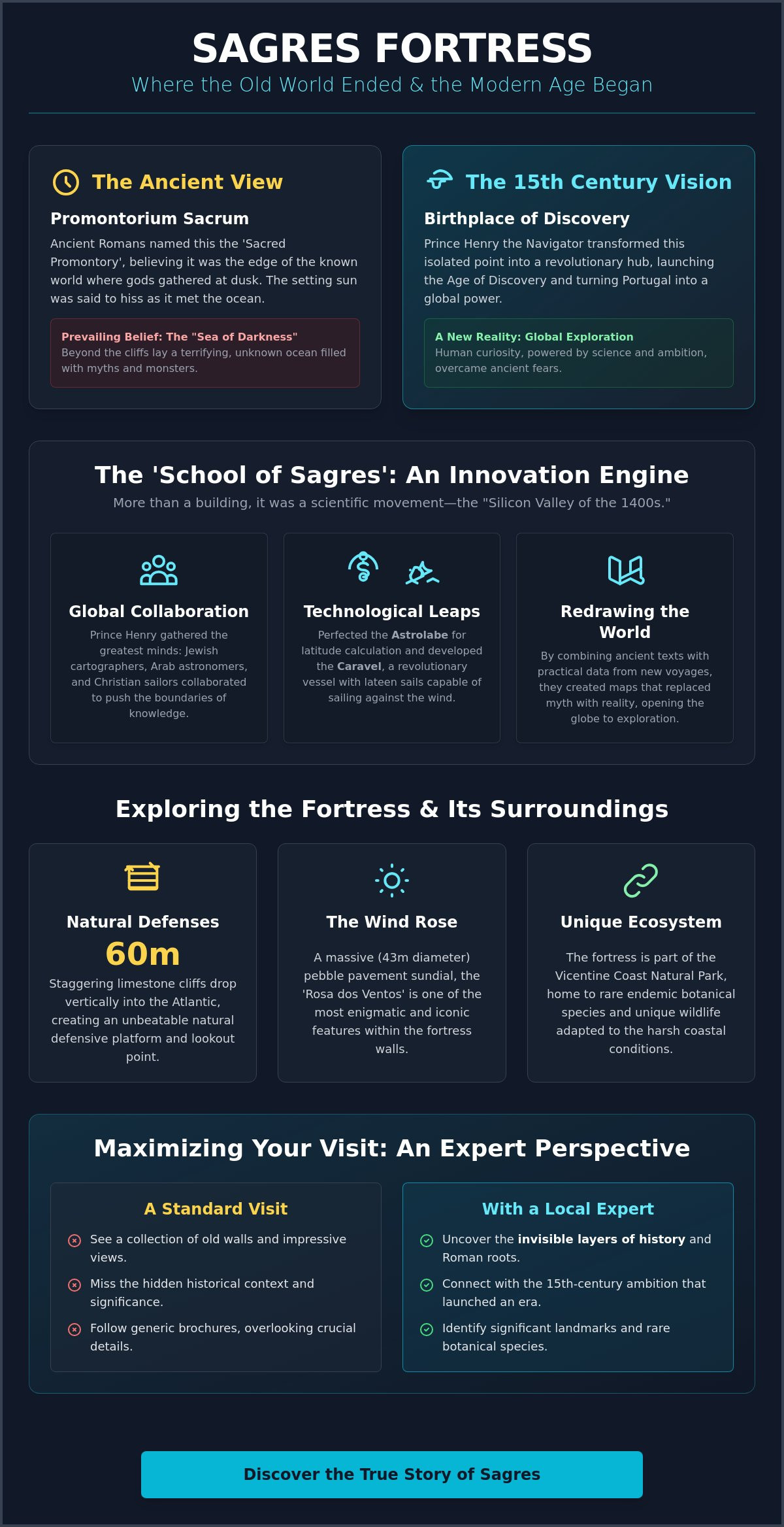
Imagine standing where the land simply stops. For centuries, the Fortress of Sagres represented the absolute limit of human knowledge. This isn't just a collection of old walls; it's a massive promontory fortress of immense national significance. Ancient Romans designated this site as 'Promontorium Sacrum' or the Sacred Promontory. They believed the gods gathered here at night, and that the setting sun literally hissed as it dipped into the cold ocean depths. Exploring Sagres fortress today allows you to walk through these deep layers of spiritual and historical weight.
This location was considered the edge of the known world for generations. Beyond these cliffs lay only the "Sea of Darkness," a terrifying expanse filled with myths and monsters. To understand Sagres, you must look at it through the lens of ethnocultural geography. This perspective examines how the unique physical landscape shaped the culture, beliefs, and legendary ambitions of the Portuguese people. It's a place where human curiosity finally overcame ancient fears.
The Geographical Significance of the Sagres Point
The fortress sits atop staggering 60-meter high limestone cliffs that drop vertically into the churning white water below. This isn't your typical hilltop castle. It is a natural defensive platform where the Atlantic's raw energy meets Mediterranean influences. The sheer power of the ocean acted as the primary architect for the site. You'll notice the fortification's low, sprawling design, which was built to withstand the constant, punishing winds. This unique vantage point offered a 360-degree view of the horizon, making it an unbeatable lookout for any vessel approaching the Algarve.
A Sentinel of Portuguese Sovereignty
For centuries, this site served as a vital shield protecting the coastline from North African pirates and rival European navies. While much of the original 15th-century construction was damaged during the 1755 Great Earthquake, the 18th-century reconstruction kept its imposing spirit alive. Today, the fortress remains a powerful symbol of modern Portuguese identity. It represents the courage of a small nation that looked at the vast Atlantic and decided to explore it. When you are exploring Sagres fortress, you are standing on the very ground that launched a global revolution in navigation!
The Maritime Legacy: Prince Henry’s School of Navigation
Sagres wasn't just a fortress; it was the Silicon Valley of the 1400s. Prince Henry the Navigator transformed this rocky outcrop into a buzzing hub of innovation that changed the map of the world forever. When you're exploring Sagres fortress, you're walking through the birthplace of global connectivity. This legacy is a central part of any Southwest coast Portugal tour, where the horizon represents both a mystery and a challenge. Instead of a static classroom, the 'School of Sagres' was a scientific movement that combined practical experience with theoretical genius.
Gathering the Greatest Minds of the 15th Century
Prince Henry was a visionary who built bridges between cultures. He invited Jewish cartographers, Arab astronomers, and Christian sailors to share their secrets in this remote corner of the Algarve. Together, they translated ancient texts and perfected the astrolabe. This tool allowed sailors to calculate their latitude by measuring the height of the stars. Sagres was the perfect 'think tank' because of its isolation. Perched on the edge of the Southwest Alentejo and Vicentine Coast Natural Park, the site provided the quiet focus needed for deep scientific work away from the distractions of the royal court.
From Sagres to the Seven Seas
Before this era, sailors lived in fear of the 'Sea of Darkness.' They believed the world ended just past Cape St. Vincent, where the water boiled and monsters lurked. The scholars at Sagres broke this psychological barrier with data and courage. They developed the caravel, a masterpiece of engineering with lateen sails that could sail against the wind. This vessel was the primary engine that drove the expansion of global trade routes and cultural exchange. It allowed explorers to push further south along the African coast than ever before. To truly understand how these discoveries reshaped our world, join our local experts for a deep dive into the stories that these ruins still hold. The caravel's unique design effectively bridged the gap between coastal sailing and open-ocean exploration!
Essential Landmarks: What to See Inside the Walls
Step through the massive stone gateway to find a landscape that feels both ancient and eternal. Exploring Sagres fortress is a visceral sensory experience. You'll feel the relentless Atlantic wind on your face and see a horizon that stretches forever into the blue. There's a striking contrast here that defines the site. The heavy, defensive exterior walls protect delicate, austere structures that whisper stories of faith and science. Every step reveals a new layer of the maritime heritage that built the modern world.
The Enigmatic Compass Rose (Rosa dos Ventos)
Look for the massive stone circle etched into the ground near the entrance. This 43-meter wide "Rosa dos Ventos" was only unearthed in the 18th century, and it remains one of the site's greatest mysteries. Experts believe it served as a giant tool for maritime training and navigation exercises during the 15th century. It is divided into 32 segments, mirroring the points of a compass. Its raw, geometric simplicity makes it one of the most evocative sites in the entire Algarve. Stand in the center and imagine 15th-century scholars teaching sailors how to read the winds before they set sail into the unknown!
The Church of Nossa Senhora da Graça
Visit the Church of Nossa Senhora da Graça for a moment of quiet reflection. This 16th-century chapel sits on the site of an even older church commissioned by Prince Henry himself. Its architecture is incredibly simple and austere, reflecting the rugged spirit of the local seafaring community. Inside, you'll find icons of St. Vincent, a figure deeply woven into the regional identity and iconography. The church stands as a humble sentinel against the roaring ocean outside, reminding visitors of the spiritual strength required by those early explorers.
The Lighthouse and the Modern Interpretation Centre
Head toward the lighthouse that still guides modern Atlantic traffic today. It serves as a vital beacon for ships navigating one of the world's busiest maritime routes. Nearby, the Modern Interpretation Centre dives deeper into the site’s history through interactive exhibits. This museum plays a vital role in our Algarve cultural tours mission by preserving and sharing hidden heritage. Because of its immense historical value, the promontory holds the European Heritage Label. It's the definitive spot for panoramic views of Cabo de São Vicente.
For the best way to see Sagres coast, walk the entire perimeter of the ramparts. The view of the 60-meter limestone drop is breathtaking! You'll witness the white foam of the Atlantic crashing against the cliffs, a sight that hasn't changed since the first caravels left these shores. Don't rush your walk; the scale of this place is best appreciated slowly.
Beyond the Stone: Flora and Fauna of the Vicentine Coast
Discover the untamed beauty of Portugal's wildest backyard! While the stone walls tell tales of discovery, the surrounding landscape reveals a living masterpiece of biodiversity. The Vicentine Coast Natural Park serves as the fortress's breathtaking backyard, stretching across nearly 75,000 hectares of protected land and sea. Exploring Sagres fortress is your gateway to the 'Wild Coast,' where nature remains untouched and raw. This protected area offers a vibrant contrast to the sun-soaked beaches of the central Algarve.
Rare Endemic Plants of the Sagres Promontory
Identify the unique Biscutella vicentina, a resilient yellow bloom found nowhere else on Earth. This park is a certified biodiversity hotspot, home to over 750 plant species, including more than 12 endemic varieties. These plants are true survivors. They have evolved specialized leaves and root systems to endure extreme salt spray and punishing Atlantic winds. The landscape shifts dramatically with the seasons. In spring, the promontory is carpeted in brilliant wildflowers, while autumn transforms the scrubland into a palette of deep ochre and green. It's a botanical treasure chest that proves life thrives even in the harshest conditions!
A Haven for Avian Migration
Look to the skies during the annual autumn migration for a truly spectacular show! Thousands of soaring birds, including majestic eagles and vultures, converge on Sagres every year. The unique thermals created at this limestone point are critical for their long journey toward Africa. Because of these conditions, the fortress is one of the most important birdwatching sites in Europe. When exploring Sagres fortress during the fall, keep your eyes peeled for the rare white storks that nest on the jagged sea cliffs nearby. This is the only place in the world where these birds build their homes on salt-lashed ocean precipices. It’s a sight you won't find anywhere else!
Don't miss the chance to witness these ecological wonders firsthand. Join our Southwest Coast, Lagos & Sagres Tour to explore the hidden natural secrets of the Cape with a guide who knows every bloom and bird call!
Maximizing Your Visit: The Value of an Expert Perspective
A self-guided walk through these ruins often leaves travelers looking at piles of stone without grasping the spirit behind them. Much of the history here is invisible to the untrained eye. Exploring Sagres fortress is about more than just sight-seeing; it's about feeling the pulse of 15th-century ambition. A local expert understands the ethnocultural geography of the site. They can explain how this harsh, salt-lashed environment forged a specific type of resilience in the Portuguese soul. Don't settle for a surface-level visit when you can uncover the deep secrets of the Age of Discovery!
Connecting the Dots of Algarve’s Heritage
Sagres doesn't exist in a vacuum. It is the final, dramatic piece of a historical puzzle that includes the Moorish capital of Silves and the bustling naval shipyards of Lagos. To understand one, you must understand them all. Storytelling is the key to preserving these traditions and making the ruins speak. Our guides weave these locations together into a single, epic narrative of Portuguese identity. For the most impactful experience, visit during the "golden hour" just before sunset. The long shadows and warm light create a perfect atmosphere for photography and quiet reflection. It’s a magical moment when the history of the Algarve feels most alive!
Planning Your Journey into History
Be prepared for a vigorous walk around the 2km perimeter of the fortress ramparts. The path follows the very edge of the limestone cliffs and offers constant, breathtaking views of the Atlantic. This is undoubtedly the best way to see Sagres coast and its dramatic geography. While you are exploring Sagres fortress, remember to stay on the marked trails. This respects the natural park's delicate ecosystem and protects the rare plants we discussed earlier. Just a few kilometers away, you can continue your journey at Cabo de São Vicente, the legendary 'End of the World.'
The Southwest coast of Portugal is a frontier waiting to be discovered. It offers rewards for history buffs, nature lovers, and adventurers alike. Break away from the usual tourist path and dive into the raw beauty of the Vicentine Coast. This region remains the definitive highlight of any Algarve itinerary. Start your adventure today and let the spirit of discovery guide you along this magnificent coastline!
Begin Your Journey to the Edge of the World
Exploring Sagres fortress is a powerful encounter with the very roots of global history. You've seen how the legendary School of Sagres turned a rocky promontory into a scientific hub that redefined the world map. You've discovered the hidden landmarks within the walls and the rare endemic life thriving in the surrounding Natural Park. This site isn't just a collection of ruins; it's a living testament to human curiosity and the raw power of the Atlantic.
Make your visit the definitive highlight of your trip by uncovering the layers of history that most tourists miss. With over 25 years of local expertise, our multilingual guides specialize in the ethnocultural geography that makes this region unique. We focus on sustainable, educational tourism that honors the landscape while providing a premium experience. Discover the secrets of the Southwest Coast with our expert guides and see the Algarve through the eyes of those who love it most! We can't wait to share these legendary cliffs and their stories with you!
Frequently Asked Questions
Is Sagres Fortress worth visiting in 2026?
Yes, Sagres Fortress is absolutely worth visiting in 2026! It holds the European Heritage Label and is currently a candidate for the UNESCO World Heritage list. The site remains the most visited monument in the Algarve, offering a unique blend of history and raw natural beauty. With the new 2025-2028 sustainability plan for the Natural Park in place, the experience is better than ever for conscious travelers.
How much time do I need for exploring Sagres fortress?
You should plan for at least 90 minutes to two hours when exploring Sagres fortress. The main perimeter path is 2km long and requires time to appreciate the vast horizon and the 60-meter drop to the ocean. This timeframe allows you to visit the interpretation center and the Compass Rose while absorbing the site's legendary atmosphere without feeling rushed.
Can I walk from Sagres town to the fortress?
Walking from the town of Sagres to the fortress is very easy and takes about 15 minutes. The path is direct and provides a wonderful introduction to the coastal landscape. It's a popular choice for those who want to feel the Atlantic breeze and see the local beaches before entering the historic walls. Just follow the main road leading south toward the point!
What is the best time of day to visit the fortress for views?
Late afternoon is the best time to visit for spectacular views. The low sun casts long shadows over the Compass Rose and turns the limestone cliffs a brilliant golden hue. This "golden hour" is perfect for photography and offers a quieter experience than the busier morning hours. You'll get a real sense of why the ancients called this the Sacred Promontory.
Are there guided tours available for the Sagres maritime sites?
Local experts provide specialized tours that focus on the maritime heritage of the region. Our Southwest Coast, Lagos & Sagres Tour is designed to connect the dots between the fortress and the broader Age of Discovery. These experiences move beyond basic facts to share the human stories and scientific breakthroughs that happened right on these cliffs. It's the best way to gain a professional perspective!
What should I bring for a walk around the Sagres promontory?
Sturdy footwear and a windbreaker are essential for your visit. The wind at the point is famous for its strength and can be quite chilly even during the summer months. Don't forget your camera and a bottle of water. Since the site is wide and open, sun protection is also a smart addition for any walk along the ramparts.
Is Sagres Fortress accessible for those with limited mobility?
The fortress is largely accessible to all visitors. Most of the primary landmarks, including the church and the modern interpretation center, are connected by flat, paved walkways. While the 2km cliffside perimeter trail can be a bit rugged in certain sections, the core area is manageable. Exploring Sagres fortress is an inclusive experience that invites everyone to connect with Portugal's seafaring soul!
What other historical sites are near Sagres?
There are several incredible sites nearby that round out the historical narrative. The lighthouse at Cabo de São Vicente is just a 6km walk or short trip away. You should also visit the historic city of Lagos to see the slave market and the golden church of Santo António. These locations work together to tell the full story of the Algarve's rich maritime past.

Article by
Kim
To conclude her studies Tourism and Recreation Management, Kim came to Portugal in 2006 for a three month internship and then simply never left! She took a few years exploring the country, living in Porto and the Algarve, while gaining experience working for the main international tour operators. Since 2013 she is a full-time local guide for Geographic Algarve, where she can share her love for and knowledge of Portugal in the best way. Both on tour and here in the blog, she shares crucial tips to get the most out of your stay in the Algarve. Kim creates her articles and photos with the help of AI, so she has more time left to show you around in the wonderful Algarve!
Disclaimer - AI generated content
This article was created by AI (including photos), within guidelines set by Geographic Algarve. Geographic Algarve checks to the best of her abilities all articles for incongruencies, but may not succeed to correct all inaccurate details before publishing. In no way or form, are these articles part of any contract when booking one of our trips. Only the specific tour information as stated on www.geographic-algarve.com is valid. In case of any doubt, please contact us via [email protected].


