
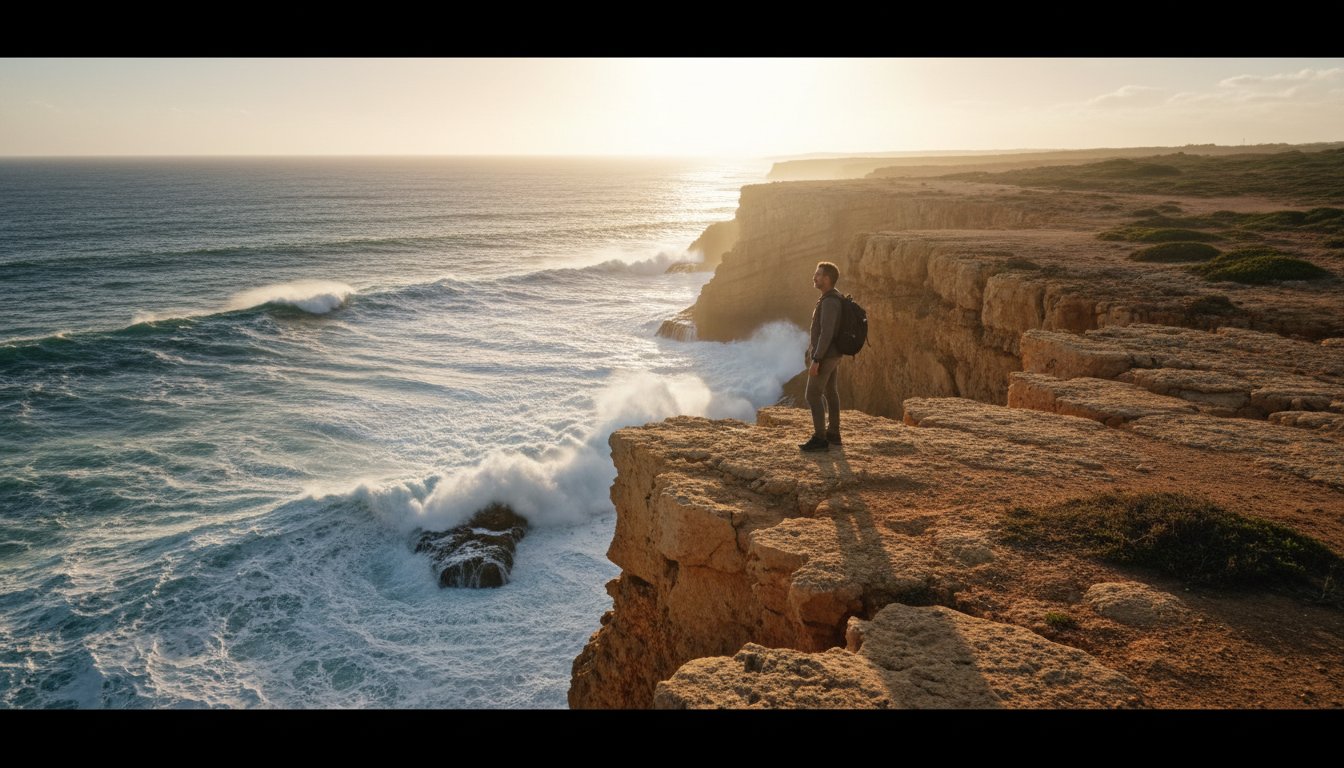
You haven't truly stood at the edge of the world until you've felt the spray of the Atlantic against the towering cliffs where 15th-century explorers once plotted their courses. Finding the best way to see Sagres coast means moving far beyond the crowded viewpoints and standard tourist paths that most visitors follow. You likely want to uncover the raw beauty of the Vicentine Coast Natural Park and touch the history of the Age of Discovery without the stress of missing the most significant hidden gems. It's easy to feel overwhelmed by the scale of the landscape or miss the historical context that makes these landmarks so powerful.
We understand that your time is precious and you deserve an experience that feels both authentic and expertly curated. This guide shows you how to see the southwestern tip of Portugal through a professional, nature-focused lens. You'll discover how to witness the legendary sunset at Cabo de São Vicente and explore the Fortaleza de Sagres, a site that welcomed over 427,000 visitors in 2023, while still finding peace in the landscape. Get ready to dive into the maritime heritage and pristine nature that make this region the definitive highlight of any Portuguese adventure.
Key Takeaways
- Discover why the unique intersection of Atlantic and Mediterranean currents creates a wild frontier unlike anywhere else in Europe.
- Learn why a morning exploration of the historic Sagres Fortress followed by a trek along the western cliffs is the best way to see Sagres coast.
- Contrast the sheltered southern beaches with the raw, rugged power of the Vicentine Coast to gain a complete geographical perspective.
- Understand how the harsh coastal environment dictated centuries of local traditions and unique architectural styles.
- Access 25 years of specialized local expertise to uncover hidden heritage sites that are frequently missed by self-navigating visitors.
Beyond the Horizon: Why the Sagres Coastline Demands a Deeper Perspective
Sagres is the ultimate geographical finale. It's the extreme southwestern tip of mainland Europe, a place where the land doesn't just end; it reaches out into the Atlantic with a defiant, rocky fist. This isn't a standard beach destination. It's a collision of massive natural forces. Here, the cold, nutrient-rich waters of the Atlantic Ocean meet the subtle, warmer influences of the Mediterranean. This intersection creates a unique microclimate and a rugged, wind-sculpted landscape that demands your full attention. To truly grasp the scale of this place, you must look through the lens of ethnocultural geography. This perspective reveals how the history of Sagres, its geology, and its people have merged to create a wild frontier that feels separate from the rest of the Algarve.
The 'End of the World' Mythos
For ancient civilizations, Cape St. Vincent was the literal edge of the habitable world. They called it the Promontorium Sacrum, a sacred space where the sun hissed as it sank into the ocean. Today, when you stand atop the 75-meter high cliffs, that raw, elemental power is still palpable. These vertical walls of limestone didn't just protect the coast; they forged a maritime identity that eventually launched the Age of Discovery. The best way to see Sagres coast is to acknowledge this history. Every gust of wind and every crashing wave tells a story of explorers who looked at this horizon and saw opportunity instead of an end. This is where you'll find one of Europe's brightest lighthouses, with a beam that cuts through the dark for 60 miles, guiding ships just as the stars once did for early mariners.
Why Self-Guided Tours Often Miss the Essence
Navigating the Vicentine Coast Natural Park without expert guidance often leads to a surface-level experience. Many visitors stick to the main roads and the most famous overlooks, missing the intricate details that make this park a wild coastal frontier. Hidden trails, unmarked viewpoints, and ancient ruins are frequently tucked away behind dense scrubland and rocky outcrops. Without local knowledge, you risk missing the environmental heritage that defines the region. Our Southwest coast Portugal tour provides the professional perspective needed to interpret these landmarks. We focus on the educational and sustainable aspects of travel, ensuring you see the hidden gems that standard maps ignore. Experience the thrill of discovery with guides who have spent 25 years uncovering the secrets of these cliffs!
Deciphering the Landscape: The Ethnocultural Geography of the Southwest Tip
The relentless Atlantic winds and salt-heavy air haven't just shaped the limestone cliffs; they've dictated the very soul of the people living here. Life on the Sagres peninsula is a masterclass in adaptation. Architecture in nearby villages like Vila do Bispo features thick, whitewashed walls and small windows, designed specifically to withstand the brutal winter gales. This isn't just about survival; it's about a deep-rooted connection to a wild frontier. Exploring this cultural resilience is the best way to see Sagres coast as more than just a scenic backdrop. It's an invitation to understand a landscape that has remained stubbornly authentic for centuries.
The biodiversity here is equally resilient. Within the protected boundaries of the Vicentine Coast Natural Park, you'll find rare botanical species that exist nowhere else on Earth. Low-lying shrubs and hardy succulents cling to the rocks, surviving on little more than sea mist. This ruggedness extends to the local plate. Gastronomy here is defined by the "percebes" (goose barnacles), a dangerous delicacy harvested by local divers who risk their lives on the jagged rocks below. We view the preservation of our Southwest coast Portugal tour as a way to honor this wild frontier and share its secrets with those who value true discovery.
Prince Henry and the Maritime Legacy
The Sagres Fortress stands as a testament to the intellectual fire that fueled the Age of Discovery. Legend places Prince Henry the Navigator here, establishing a center for maritime study that changed the course of history. The massive stone 'Rosa dos Ventos' (wind compass) on the ground isn't just a monument; it represents the calculation and courage required to sail into the unknown. The cliffs themselves served as a training ground, where the orientation of the land and the behavior of the currents were studied with religious intensity by 15th-century explorers.
The Living Traditions of the Southwest
Tradition isn't a museum piece in Sagres; it's a daily reality. Look closely at the cliff edges and you might spot local fishermen perched on narrow ledges 75 meters above the churning sea. This daring practice has been passed down through generations. The lighthouse at Cape St. Vincent remains a cultural beacon, symbolizing the transition from the known world to the vast Atlantic. Seeing the landscape through these human stories is truly the best way to see Sagres coast. If you want to dive deeper into these narratives, our Southwest coast Portugal tour offers an immersive way to connect with this enduring heritage!
Navigating the Vicentine Coast: Comparing Clifftop Trails and Heritage Routes
The Sagres coastline is a study in dualities. On the southern edge, you'll find golden sands and crystal-clear bays sheltered from the dominant northerly winds. Turn the corner toward the west, and the environment transforms into a theater of raw power. Massive swells from the Atlantic crash into dark, jagged cliffs that have stood for millennia. This contrast is why a multi-stop approach is essential. You can't claim to have seen the region by visiting just one beach. To fully appreciate the diversity of Algarve cultural tours, you must bridge the gap between these two worlds.
Finding the best way to see Sagres coast involves timing your visit with the seasonal "Nortada" winds. These winds can be fierce in mid-summer, making clifftop walks challenging but offering spectacular views of the sea spray. Land-based viewing allows you to feel the vibration of the waves hitting the rocks, while sea-based perspectives reveal deep sea caves and the true verticality of the 75-meter precipices. Both angles are necessary to grasp the scale of this wild frontier.
The Fishermen’s Trail vs. Historic Way
The Rota Vicentina offers two distinct paths for the curious explorer. The Fishermen's Trail is a demanding coastal route that follows the actual paths used by locals to reach the best fishing spots. It's not suitable for bicycles and requires a steady foot on sandy tracks. The Historic Way moves inland through cork oak forests and sleepy villages, offering a glimpse into the rural life of the Alentejo and Algarve borders. For the most panoramic coastal views, head to Ponta da Atalaia. This headland offers a 360-degree view of the horizon, but be prepared for a 3-4 hour commitment if you're exploring on foot.
The Advantage of Professional Heritage Excursions
Navigating these remote trails safely requires more than just a map. Professional journeys maximize your time by connecting the most significant landmarks into a single day without the stress of self-navigation. Accessing the most pristine nature in the Vicentine Coast Natural Park is safer and more enriching when you have local experts leading the way. Consider these advantages of a guided journey:
- Deep educational commentary on geological shifts and 15th-century maritime history.
- Safe access to remote clifftop ledges that are not marked on standard maps.
- Efficient routing that combines the best of the south and west coasts in one day.
Join us for a Southwest Coast, Lagos & Sagres Tour to see the very best of this legendary coastline! We focus on the quality of the experience, ensuring you leave with a profound understanding of the land's hidden heritage.
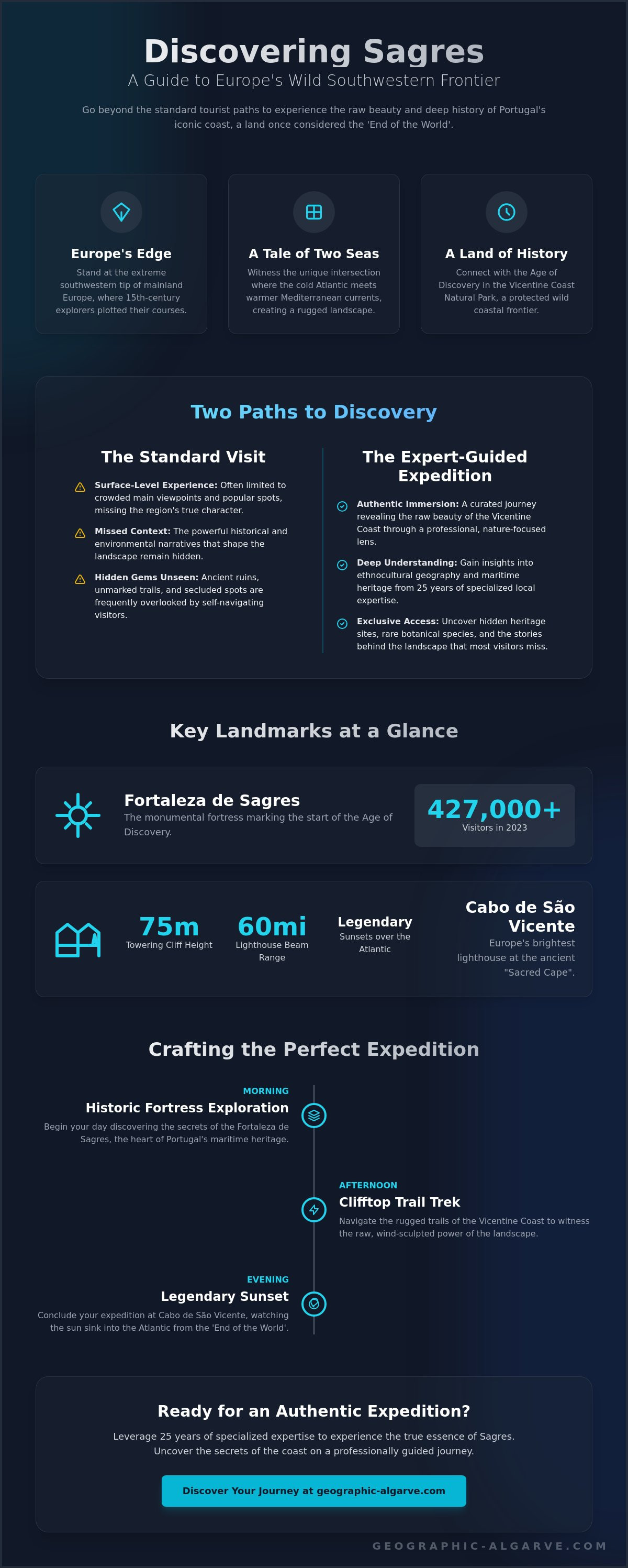
Step-by-Step: Crafting Your Perfect Expedition to the 'End of the World'
The best way to see Sagres coast isn't about ticking boxes on a generic map. It's about a structured methodology that respects the harsh environment and honors the shifting light. Generic lists often suggest a random assortment of stops, but a true expedition follows a logical flow from the fortified past to the wild, natural present. By following a deliberate path, you ensure that the most significant historical sites and natural wonders are experienced when they are most impactful.
Morning: Maritime History and Fortifications
Begin your journey at the Fortaleza de Sagres as soon as the gates open. This early start helps you avoid the intense midday sun and the largest groups of visitors. The individual entrance fee is €10.00, granting you access to a site that served as the second most visited monument in Portugal in 2023. The Fortress is the best place to understand the 15th-century mindset because its expansive, open design reflects the limitless ambition of the Age of Discovery. Walk the entire 2-kilometer perimeter trail to experience the vastness of the peninsula. This path offers 360-degree Atlantic views and allows you to see the unique limestone formations from every angle.
Afternoon: Hidden Coves and Botanical Wonders
Transition to the wilder stretches of the Vicentine Coast for nature observation. Descend the steep steps to Praia do Beliche to gain a rare perspective from the bottom of the 75-meter cliffs. Looking up at the jagged limestone provides a profound sense of the earth's raw power that you simply can't get from the top. While exploring the limestone scrubland, keep an eye out for the rare Cistus palhinhae, a rockrose endemic to this specific peninsula. For a deeper look into the pre-maritime past, locate the Megalithic monuments near Vila do Bispo. These ancient standing stones prove that humans have found this 'end of the world' spiritually significant for thousands of years.
Incorporate a stop in a local village like Vila do Bispo to experience authentic regional gastronomy. Order the fresh 'percebes' or grilled sea bream to taste the Atlantic. Finally, time your arrival at Cape St. Vincent for the iconic sunset. Access to the Cape is free, and watching the sun disappear behind one of Europe's brightest lighthouses is a definitive highlight. Ensure all your explorations respect the environmental regulations of the Natural Park. Stay on marked paths and avoid prohibited activities like wild camping to protect this fragile ecosystem. Experience this curated journey without the stress of planning by booking our Southwest Coast, Lagos & Sagres Tour today!
Why a Specialized Guided Journey is the Ultimate Way to Experience Sagres
Choosing a specialized journey is the best way to see Sagres coast if you want to move beyond the surface of a standard day trip. While self-navigation is possible, it often lacks the connective tissue that turns a scenic view into a profound memory. Geographic Algarve brings 25 years of local expertise to every excursion, transforming a walk along the cliffs into a deep dive into Portugal's maritime soul. Our focus on sustainable tourism ensures that your visit supports the preservation of the Vicentine Coast Natural Park, protecting the very flora and fauna you've come to admire.
Educational travel is at the heart of what we do. Our multilingual guides don't just point at landmarks; they translate the deep history of the region into stories that resonate. Understanding the socio-economic shifts from 15th-century exploration to modern-day cliff-fishing requires a guide who lives and breathes this landscape. This expert perspective positions your journey as the definitive highlight of your entire Portugal itinerary, ensuring no detail of the ethnocultural geography is overlooked. You aren't just visiting a location. You're participating in a legacy of discovery that has defined this coast for over 500 years.
The Geographic Algarve Difference
The Southwest Coast, Lagos & Sagres Tour is designed as a curated experience rather than a checklist. We prioritize an immersive, small-group feel that fosters genuine discovery. Instead of rushing between sites, we connect the dots between the rugged geography, the ancient history of the Fortress, and the modern life found in the village squares. This approach allows for a fluid conversation with the land, making every stop feel purposeful and enriching. We pride ourselves on showing you the hidden corners that mass-market offerings simply cannot access.
Planning Your 2026 Adventure
If you're planning a visit in 2026, we encourage booking your expedition well in advance. The shoulder seasons of spring and autumn remain the most sought-after times due to the pleasant weather and reduced crowds. Remember that the Atlantic is unpredictable. Even on sunny days, the coastal winds can be sharp, so bringing appropriate layers is essential for staying out on the cliffs until the final light fades. Don't leave your experience to chance. Join our expert-led Sagres expedition for an unforgettable journey!
Claim Your Place on the Sagres Horizon
You've discovered how the Sagres coast is far more than a collection of dramatic cliffs; it's a living landscape of maritime myth and environmental resilience. By bridging the gap between the 15th-century history at the Fortress and the wild biodiversity of the Vicentine Coast, you gain a perspective that few travelers ever achieve. Following a structured methodology ensures you witness the legendary light of Cape St. Vincent without the stress of missing the region's most significant hidden heritage. This journey is about connecting with the raw power of the Atlantic while honoring the traditions that have shaped this wild frontier for centuries.
Choosing an immersive, education-focused path is the best way to see Sagres coast and ensure your visit leaves a positive impact on this fragile ecosystem. Geographic Algarve offers over 25 years of local expert guidance with a deep focus on ethnocultural geography. Our multilingual local guides are dedicated to sustainability and providing high-value, educational travel experiences that stand out as the definitive highlight of your trip. We take pride in our local landscape and want to make every second of your time feel precious and well-spent.
Don't let your time at the edge of the world be anything less than extraordinary. Book your expert-led Southwest Coast & Sagres Tour today! We are eager to share the secrets of our rugged coastline with you!
Frequently Asked Questions
What is the best time of day to visit the Sagres coast?
The best time of day to visit is early morning or late afternoon to experience the most dramatic lighting and avoid the peak heat. Arrive at the Sagres Fortress right at opening time to beat the midday crowds. Later, head to Cape St. Vincent for the legendary sunset. This schedule helps you see the coastline's raw beauty under the golden hour light!
Is Sagres worth visiting if I am staying in Portimão or Lagos?
Sagres is a vital day trip that offers a completely different atmosphere from the central Algarve hubs. You'll trade sheltered, busy beaches for the raw power of the Atlantic and massive vertical cliffs. It's a necessary journey for anyone who wants to see the wilder side of Portugal. The contrast between the central coast and this southwestern tip is truly spectacular!
How much time should I spend at Cape St. Vincent?
Plan to spend at least one to two hours at Cape St. Vincent to fully explore the grounds and the museum. The museum is open Tuesday to Sunday, from 10 am to 5 pm. If you visit on a Wednesday between 2 pm and 4 pm, you might even get to see the lighthouse interior. Don't rush the views of the horizon where the land finally meets the sea.
Can I see the Sagres coast without a lot of walking?
You can enjoy spectacular views with minimal walking by visiting the main lighthouse area or the entrance of the Sagres Fortress. However, the best way to see Sagres coast involves exploring the perimeter trails to find the most significant hidden viewpoints. Most major landmarks have accessible viewing areas, but sturdy footwear helps you navigate the uneven limestone surfaces safely.
What should I wear for a coastal expedition in the Algarve?
Wear versatile layers and sturdy, closed-toe shoes to handle the variable coastal winds and rocky terrain. Even in summer, the Atlantic breeze can be sharp and cool once you are on the cliff edge. A windproof jacket is a smart addition to your pack. Protect yourself from the intense sun with a hat and high-SPF sunscreen while you explore the exposed paths!
Is the Sagres Fortress open every day for visitors?
The Sagres Fortress is generally open daily for explorers wanting to walk the historic grounds and see the fortifications. It is a massive site that requires about an hour to walk the full perimeter trail. Check for seasonal timing changes before your trip to ensure you don't miss this maritime masterpiece. It's a fantastic place to feel the scale of the 15th-century history!
Are there any entrance fees for the main coastal landmarks?
Landmarks like the Cape of São Vicente are free to access, allowing everyone to witness the 'end of the world' without a ticket. The Sagres Fortress does require a paid entry fee, with various discounts available for seniors, families, and young people. These funds help maintain the site's unique architecture. Most natural viewpoints along the Vicentine Coast are free to explore!
Is it safe to visit the cliffs with children?
Visiting the cliffs with children is safe as long as they are under constant, close supervision by an adult. The vertical drops are significant and most natural areas do not have safety railings or fences. Stick to the wider, inland paths within the Sagres Fortress for a more controlled experience. Teach them about the unique plants and the history of the explorers to keep them engaged!
Article by
Kim
To conclude her studies Tourism and Recreation Management, Kim came to Portugal in 2006 for a three month internship and then simply never left! She took a few years exploring the country, living in Porto and the Algarve, while gaining experience working for the main international tour operators. Since 2013 she is a full-time local guide for Geographic Algarve, where she can share her love for and knowledge of Portugal in the best way. Both on tour and here in the blog, she shares crucial tips to get the most out of your stay in the Algarve. Kim creates her articles and photos with the help of AI, so she has more time left to show you around in the wonderful Algarve!
Disclaimer - AI generated content
This article was created by AI (including photos), within guidelines set by Geographic Algarve. Geographic Algarve checks to the best of her abilities all articles for incongruencies, but may not succeed to correct all inaccurate details before publishing. In no way or form, are these articles part of any contract when booking one of our trips. Only the specific tour information as stated on www.geographic-algarve.com is valid. In case of any doubt, please contact us via [email protected].


