

What if your most cherished holiday memory wasn't a photo, but the rhythmic sound of a weaver's loom in a hidden mountain village? You want to bring home the true essence of Portugal, yet the fear of accidentally buying mass-produced trinkets is real. It's often overwhelming to track down shifting market dates or find your way to the remote workshops during an Algarve handicraft markets tour without expert local guidance.
We understand that your time is precious and you deserve a premium cultural experience. This curated journey is your definitive gateway to the region's hidden soul, moving beyond the tourist path to the authentic Artisan Triangle. You'll discover the secrets of Loulé’s palm weaving, Monchique’s traditional woodwork, and Silves’ historic copperware. We've organized the essential 2026 schedules and expert insights to ensure your exploration of ethnocultural geography is the absolute highlight of your trip. Get ready to meet the masters and secure genuine treasures that tell a story of heritage and passion.
Key Takeaways
- Explore the Artisan Triangle of Loulé, Monchique, and Silves to witness how local geography defines traditional craftsmanship!
- Learn to distinguish genuine Algarve materials like hand-woven palm and authentic clay from machine-made imports.
- Access the verified 2026 schedule for major market days and seasonal fairs to ensure you never miss a historic event.
- Transform your visit with an Algarve handicraft markets tour that connects you with the hidden soul of Portugal through expert-led workshop visits.
The Cultural Significance of Algarve Handicraft Markets
Ethnocultural geography is the heartbeat of this region. It is the study of how the physical landscape shapes human culture. In the Algarve, this connection is most visible in its vibrant artisan markets. Every basket, tile, and copper pot tells a story of the soil it came from. An Algarve handicraft markets tour provides a window into this world. You'll see how the limestone coast and the volcanic peaks of the Monchique range dictate the materials used by local hands. This geographic diversity creates a rich tapestry of textures and colors that defines the regional identity.
Coastal regions naturally lean toward clay and sea-inspired aesthetics. You can see this legacy in the famous Porches Pottery, which revived traditional patterns that nearly disappeared. High in the hills, the focus shifts to wood and palm. These markets serve as vital community hubs. They preserve rural heritage that might otherwise vanish in our digital age. These historic market squares are the lungs of the village, where gossip and craftsmanship have mingled for centuries. Choosing a curated handicraft tour is a powerful way to practice sustainable travel. You're directly supporting the families who keep these traditions alive. It’s a purposeful way to explore the landscape.
Why Artisanal Heritage Matters in 2026
Today's travelers crave authenticity over mass production. Slow travel is no longer a trend; it's a commitment to the local economy. Preserving ancient techniques is vital for cultural survival. Using local, natural materials like cork and clay offers massive environmental benefits. It's a greener way to shop. You get a unique piece of history while protecting the landscape you came to admire. Every purchase at a local market square fuels a cycle of sustainability that keeps the Algarve vibrant for future generations. It ensures these skills aren't lost to time.
What to Expect on a Professional Cultural Excursion
Step away from the shoreline to discover the "Real Algarve" found in the inland villages. Booking an Algarve handicraft markets tour ensures you reach these hidden inland gems that most visitors miss. These excursions focus on education and environmental heritage. You won't just see the finished product. You'll meet the master artisans in their workshops. Listen to their stories. Watch their hands move with a precision passed down through generations. This is a journey of discovery that prioritizes the history behind the craft. It's a chance to spend your time wisely on a high-quality, enriching experience. You'll return home with a deeper understanding of Portugal's soul.
The Artisan Triangle: Loulé, Monchique, and Silves
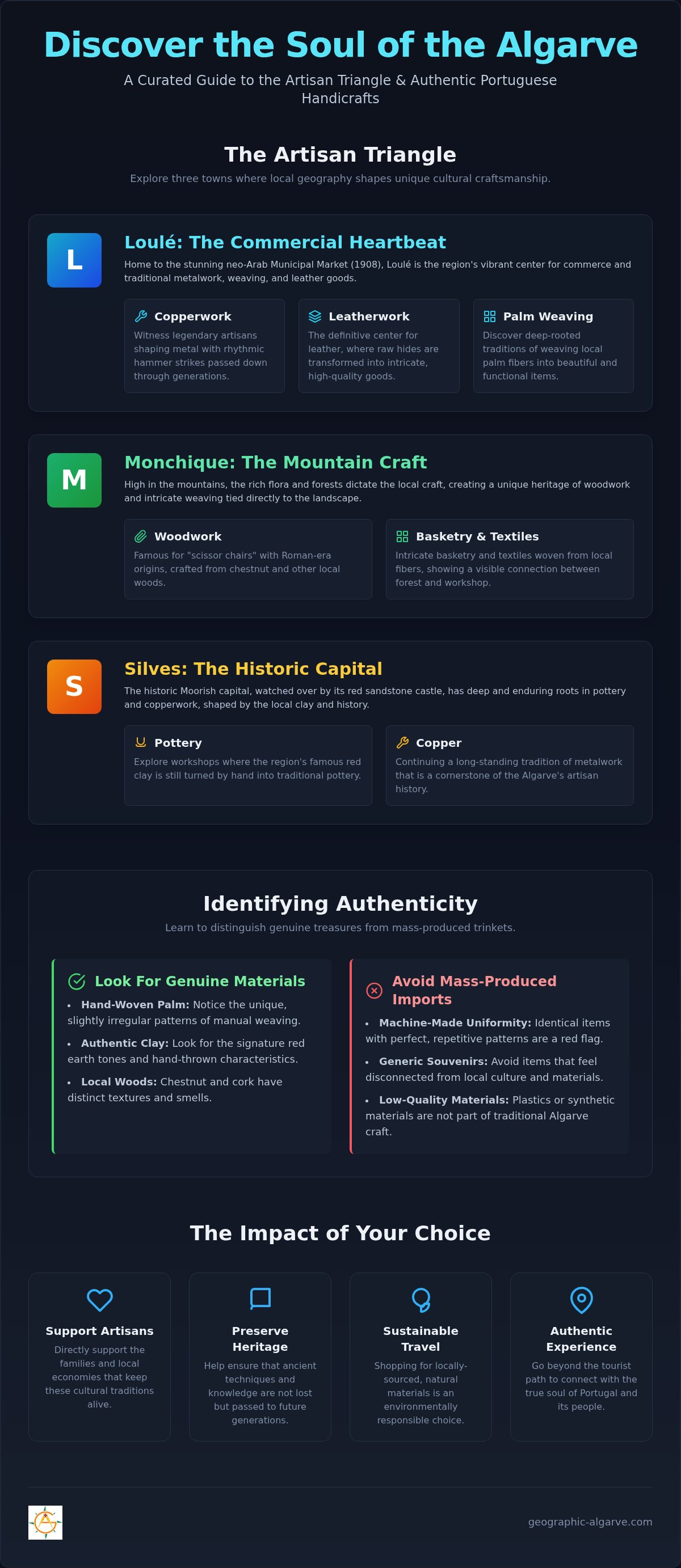
The Artisan Triangle isn't just a map coordinate. It's a journey through time. Loulé, Monchique, and Silves represent the three pillars of regional identity. Together, they offer the most comprehensive Algarve handicraft markets tour available. Each town uses the materials provided by its unique geography to create something extraordinary. You'll see how the red clay of Silves, the cork of Monchique, and the copper of Loulé define the local way of life. This itinerary allows you to witness the full spectrum of Algarve craftsmanship in a single, curated experience.
Loulé Municipal Market: A Masterclass in Copper and Leather
Loulé stands as the heartbeat of Algarve commerce. Its Municipal Market, built in 1908, is a stunning neo-Arab structure that dominates the skyline. Inside, the energy is infectious. You'll find the legendary copper workers here. They shape metal with rhythmic hammer strikes passed down through generations. It's a masterclass in tradition. This city is also the definitive center for leatherwork and palm weaving. You can dive deeper into these traditions on Algarve cultural tours. Don't miss the chance to see a master artisan transform raw hides into intricate goods right before your eyes.
Monchique Mountain Markets: Wood and Weaving
Climb into the Monchique mountains to see a different world. Here, the landscape dictates the craft. Artisans create the famous "scissor chairs" with Roman-era origins. These wooden wonders are both functional and historic. The mountain's rich flora also fuels a legacy of intricate basketry and textile work. You'll see how chestnut wood and local fibers are transformed into everyday art. Experience this unique heritage firsthand on a Monchique and Silves tour. The connection between the forest and the workshop is visible in every hand-woven piece.
Silves completes the triangle as the historic Moorish capital. Its roots in pottery and copper are deep and enduring. The red sandstone castle watches over workshops where clay is still turned by hand. These three locations form the perfect Algarve handicraft markets tour because they offer a complete picture of the region's ethnocultural geography. You move from the bustling coastal commerce of Loulé to the serene mountain traditions of Monchique and the ancient history of Silves. It's a curated journey through the soul of Portugal. If you're ready for an adventure that prioritizes heritage, consider booking an expertly guided excursion to see these masters in action. You won't just find souvenirs; you'll find artifacts of a living culture.
Identifying Authenticity: A Guide to Algarve Materials
The soul of the Algarve is forged in three essential materials: cork, copper, and clay. When you join an Algarve handicraft markets tour, you aren't just shopping. You're learning to read the landscape through the objects it produces. The region's ethnocultural geography is written into every texture. While coastal towns mastered the firing of clay, the mountain regions became world leaders in cork production. Understanding these materials is the first step in ensuring you bring home a piece of genuine Portuguese heritage rather than a mass-produced imitation.
Distinguishing authentic hand-woven palm, known as Empreita, requires a keen eye. Machine-made imports often flood tourist stalls with perfectly symmetrical patterns that lack character. Real Empreita, a specialty of Loulé, features slight variations in the braid width and visible starts where the artisan added new fibers. These aren't flaws; they're the fingerprint of the maker. Similarly, the western "Olaria" (pottery) traditions rely on local clay that feels heavy and substantial in your hand. It carries a thermal quality that thin, industrial ceramics simply can't match.
The Cork Revolution: Sustainable and Traditional
Cork is perhaps the Algarve's most famous export. The specific climate of the Serra do Caldeirão creates a slow growth rate for the cork oak, resulting in the world's finest, high-density bark. Harvesting is a patient art. A tree isn't touched until it's 25 years old. After that, the bark is stripped by hand only once every nine years. You'll see the numbers painted on the trunks, marking the year of the last harvest. Innovative makers now transform this flexible bark into everything from sophisticated jewelry to durable umbrellas. High-quality cork should feel smooth and supple like leather. If a product feels brittle or starts to crumble, it's likely a low-grade composite rather than solid bark.
The Authenticity Checklist for Travelers
Authenticity is found in the details. Seek out the "Loulé Criativo" stamp or individual artisan signatures on the base of ceramic pieces. These marks guarantee the item was produced in a local workshop. During your Algarve handicraft markets tour, use your senses to evaluate every potential purchase. Real copper is heavy and produces a deep, resonant ring when tapped. If it feels light or sounds tinny, it's probably plated steel. Perfect imperfections are your best friend. A hand-thrown pot might have a slight wobble or a variation in the glaze. These traits prove that a person, not a machine, created the piece. It’s these small nuances that make your find a true artifact of the "Real Algarve."
Planning Your Itinerary: Market Days and Seasonal Fairs
Timing is the most critical element of a successful Algarve handicraft markets tour. Most municipal markets, including the iconic Moorish-inspired building in Loulé, operate from 07:00 to 15:00, Monday through Saturday. To see these hubs at their peak, arrive early. Saturday is the definitive day for Loulé, as the town expands to include the bustling Gypsy Market and the outdoor Farmers Market. If your visit falls between March 14 and June 13, 2026, you can also explore the Loulé Small Market in the historic center on selected Saturdays. These events offer a concentrated look at regional creativity in a single morning.
Planning a multi-stop day trip from coastal hubs like Portimão or Lagos requires a strategic approach to the local geography. The Monchique market traditionally takes place on the second Friday of each month, offering a quieter, more mountain-focused experience. Navigating these schedules while trying to reach remote inland villages can be challenging without local expertise. Professional guides ensure you don't arrive to find closed doors or empty squares, allowing you to focus entirely on the cultural discovery at hand.
Annual Highlights: The Medieval Festival and Beyond
Seasonal festivals transform the region into a living museum. Mark your 2026 calendar for the Silves Medieval Fair, running from August 7 to 15. This nine-day event is a spectacular showcase for ancient handicraft techniques, where artisans work under the stars near the red sandstone castle. In the mountains, the "Vamos à Vila" festival celebrates Monchique’s traditions from May 30 to June 1, 2026. You'll find everything from smoked sausages and honey to intricate woodcrafts. Summer street markets in Lagoa and Carvoeiro offer a vibrant evening atmosphere, while winter Christmas markets are the best places to find unique, seasonal cork and ceramic gifts.
Combining Culture and Nature in One Day
Maximize your vacation by pairing your market visits with the Algarve’s stunning natural landscapes. A morning in Loulé pairs perfectly with a walk through the salt marshes and lagoons of the Ria Formosa Natural Park. For those wanting to see where the raw materials originate, a private safari expedition in the Algarve can take you deep into the cork oak forests of the interior. These excursions reach remote workshops that are often invisible to the average traveler. Local guides provide a distinct advantage by opening doors to "invitation-only" artisan studios, ensuring your Algarve handicraft markets tour is a deep dive into heritage. To secure your place on a curated journey that balances history and nature, book your expert-led cultural excursion today and experience the region's hidden soul.
The Geographic Algarve Difference: Expert-Led Craft Tours
Vasco Salgueiro founded Geographic Algarve on a simple, powerful principle: ethnocultural geography. This philosophy treats the landscape as a living history book. Every Algarve handicraft markets tour we lead is a deep dive into this heritage. We don't just show you the markets. We explain how the geology of the Southwest coast shaped the lives and tools of the people who live here. This is about understanding the "why" behind the craft. With over 25 years of experience, we've built unbreakable bonds with the region's most skilled artisans. This expertise is essential for navigating a craft scene that remains largely hidden from the casual traveler. Our guides act as your definitive gateway to these premium leisure experiences!
Our approach is grounded in a commitment to sustainable tourism. We believe that by connecting visitors with authentic traditions, we help preserve the Algarve’s environmental and cultural heritage. This isn't just a walk through a square. It's a curated journey that supports the local economy and keeps ancient techniques alive. We take immense pride in the local landscape. We want you to feel that your time is precious and well-spent. By choosing a professional guide, you bypass the confusion of market schedules and gain access to the true soul of Portugal. It's an organized, adventurous way to explore the region's hidden gems.
Deep Insights from Multilingual Local Experts
Our multilingual local guides are more than just navigators. They are passionate storytellers who know the masters personally. You'll hear the educational commentary on the history of the Southwest coast that you won't find in any guidebook. This is a personalized, human experience! We pride ourselves on the deep knowledge of our staff. Want to focus purely on the red clay pottery of the west or the intricate palm weaving of the interior? We specialize in Private Tailor-made Tours. You can customize your route based on your specific craft interests. This ensures your time is maximized for discovery and cultural enrichment. It's the most efficient way to see the "Real Algarve."
Booking Your 2026 Algarve Expedition
Planning your cultural journey is simple and stress-free. We offer flexible options for per-person guided fees or exclusive private group excursions. You can start your journey easily from major hubs like Lagos, Portimão, or Albufeira. We handle all the logistical details so you can focus on the excitement of discovery. Our team takes personal accountability for your outing's success! Don't settle for a generic outing when you can have a curated highlight of your entire trip. Discover the Southwest coast Portugal tour and its artisan secrets today. Your premium leisure experience is just a click away!
Secure Your Piece of Algarve History
Finding genuine treasures requires more than just a map; it requires an eye for the "Big Three" materials and an understanding of the regional calendar. You've learned how to spot the mark of a master artisan and why the Artisan Triangle of Loulé, Monchique, and Silves is the definitive route for culture seekers. Embarking on an Algarve handicraft markets tour isn't just about shopping. It's a commitment to sustainable tourism that keeps ancient traditions alive for future generations.
Geographic Algarve brings 25 years of local expertise to every outing. As specialists in ethnocultural geography, we open doors to private studios and hidden workshops you won't find on any tourist map. Our multilingual guides ensure your time is spent wisely, focusing on the history and passion behind every piece of cork, copper, and clay. Book your expert-led Algarve cultural tour today and let us lead you to the region's hidden soul. Your 2026 adventure is waiting, and we can't wait to share these artisan secrets with you!
Frequently Asked Questions
What are the best days to visit handicraft markets in the Algarve?
Saturday is the definitive highlight for any Algarve handicraft markets tour. This is when Loulé expands to include the Gypsy and Farmers markets. Most municipal buildings open Monday through Saturday from 07:00 to 15:00. If you prefer a mountain setting, the Monchique market is held on the second Friday of each month. Always aim for morning visits to see the widest selection of handmade goods before the crowds arrive.
How can I tell if a cork product is actually made in Portugal?
Authenticity lies in the texture and construction. Genuine Portuguese cork products feel supple and smooth, similar to high-quality leather. Look for items made from solid bark rather than compressed composites, which can feel brittle. Check for local artisan stamps or the "Loulé Criativo" mark. Buying directly from workshops ensures you are getting a sustainable, locally harvested product that supports the regional economy and traditional bark stripping techniques.
Are the markets in Loulé and Monchique open year-round?
Yes, the municipal market buildings in both Loulé and Monchique operate year-round. They are vibrant community hubs every week, usually closing only on Sundays and public holidays. While the massive seasonal festivals like the Silves Medieval Fair have specific dates in August, the daily commerce of traditional trades continues regardless of the season. This makes the region a perfect destination for cultural discovery during the quieter winter months.
Can I visit artisan workshops directly instead of just markets?
Absolutely, and this is often the most rewarding part of a cultural excursion. While markets display finished goods, visiting an "Olaria" or a weaving studio allows you to see the process firsthand. Our expert-led tours specialize in these "invitation-only" experiences. You'll meet the masters who have spent decades perfecting their trade. It’s a rare chance to ask questions and witness the rhythmic hammer strikes or intricate braiding that defines the region.
What is the most traditional handicraft to buy in the Algarve?
Palm weaving, known as "Empreita de Palma," is arguably the most iconic craft. Artisans in the Loulé region transform dried dwarf fan palm leaves into intricate baskets, mats, and hats. Copperware is another legendary choice, specifically the "Cataplana" cookware used in local kitchens. These items are more than just souvenirs; they are functional pieces of history that reflect the ethnocultural geography of the Southwest coast and its ancient Moorish influences.
Is there a specific market for traditional Algarve pottery?
While Porches is the historic center for ceramics, the Silves and Loulé markets are excellent places to find authentic pottery. Look for hand-painted "Azulejos" or heavy red clay pots from the western region. These items are distinguished by their substantial weight and unique glazes. Avoid generic stalls and head inland to find pieces stamped by local workshops, ensuring your Algarve handicraft markets tour yields genuine artifacts of the region.
How do I get to the mountain markets in Monchique from the coast?
Reaching the mountain markets requires navigating winding routes that lead away from the coastline. Choosing an expert-led tour is the most efficient way to reach these elevated villages. Local guides know the hidden paths that lead to remote artisan studios tucked away in the forest. This approach takes the stress out of planning and ensures you don't miss the small, family-run workshops that aren't listed on standard tourist maps or digital apps.
What should I bring on an Algarve handicraft markets tour?
Preparation is key for a successful day of discovery! We recommend bringing:
- Cash in small denominations, as many traditional artisans don't accept digital payments.
- A sturdy, reusable bag for your ceramic or copper finds.
- A camera to document the workshop processes.
- A refillable water bottle to stay hydrated during your morning exploration.

Article by
Kim
To conclude her studies Tourism and Recreation Management, Kim came to Portugal in 2006 for a three month internship and then simply never left! She took a few years exploring the country, living in Porto and the Algarve, while gaining experience working for the main international tour operators. Since 2013 she is a full-time local guide for Geographic Algarve, where she can share her love for and knowledge of Portugal in the best way. Both on tour and here in the blog, she shares crucial tips to get the most out of your stay in the Algarve. Kim creates her articles and photos with the help of AI, so she has more time left to show you around in the wonderful Algarve!
Disclaimer - AI generated content
This article was created by AI (including photos), within guidelines set by Geographic Algarve. Geographic Algarve checks to the best of her abilities all articles for incongruencies, but may not succeed to correct all inaccurate details before publishing. In no way or form, are these articles part of any contract when booking one of our trips. Only the specific tour information as stated on www.geographic-algarve.com is valid. In case of any doubt, please contact us via [email protected].


