
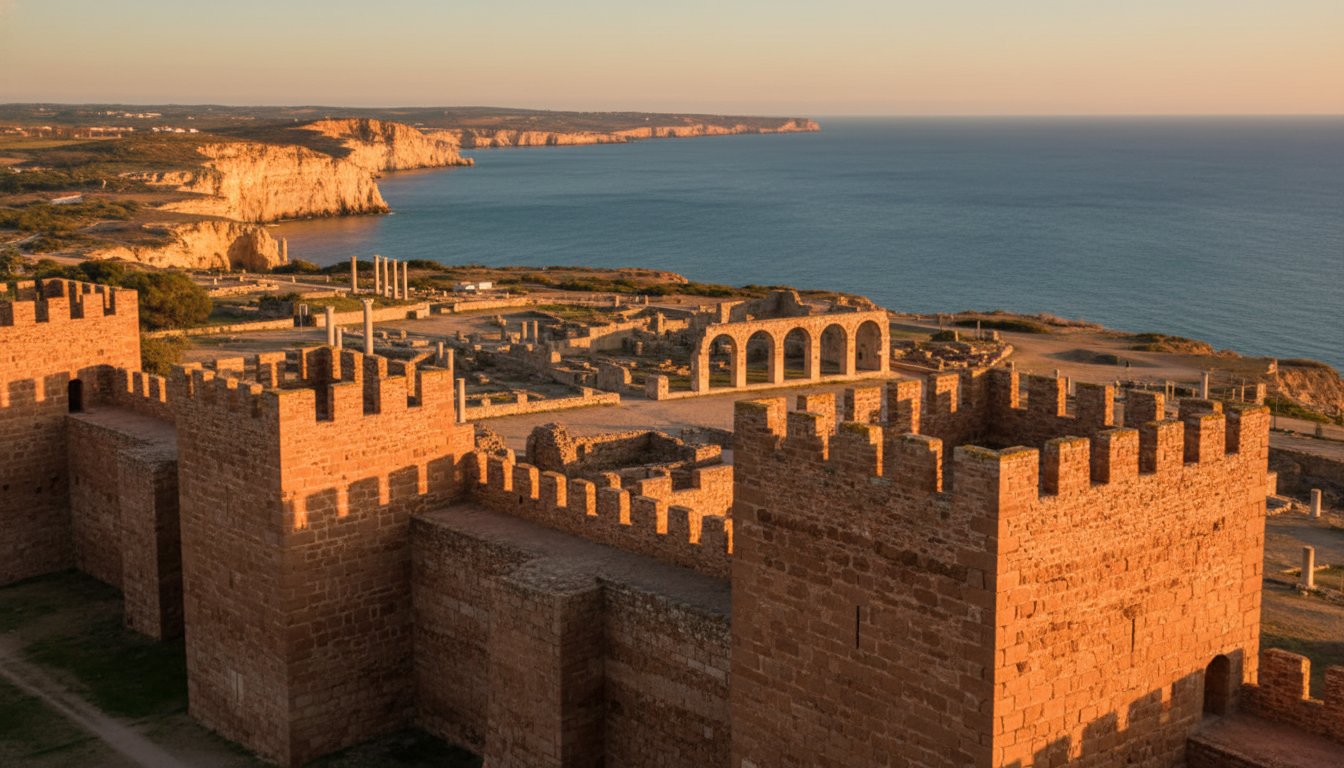
What if the sun-bleached walls of the south coast held more secrets than the Atlantic itself? Most travelers spend their days on the sand while missing the deep ethnocultural history right under their feet. It's easy to feel like just another tourist when every website repeats the same generic facts. You deserve to see the real Algarve. We understand that you're looking for a deeper connection to our traditions and the hidden stories of our inland villages.
This guide promises to unlock the most iconic Algarve historical landmarks by revealing the layers of Roman, Moorish, and Christian influence. You'll discover how the 1755 earthquake reshaped our cities and why the Silves Castle is celebrated as the best-preserved Moorish fortress in Portugal. We'll take you from the maritime legends of Sagres to the sacred halls of the Faro Cathedral. It's time to maximize your vacation with high-quality experiences that turn a simple trip into a legendary adventure!
Key Takeaways
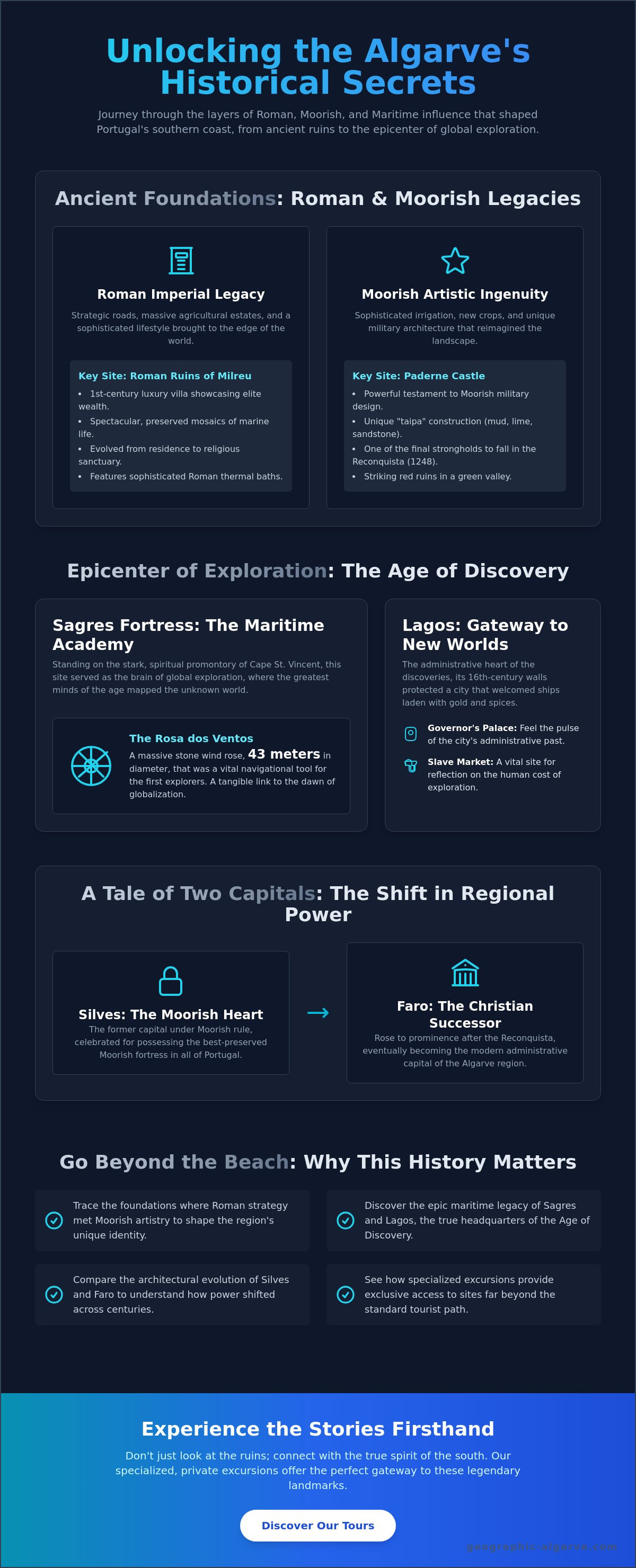
- Trace the ancient foundations where Roman strategy met Moorish artistry to shape the southern coast.
- Discover the epic maritime legacy of Sagres and Lagos, the true headquarters of the Age of Discovery!
- Compare the architectural evolution of Silves and Faro to understand how power shifted across the region.
- Identify the best Algarve historical landmarks hidden within rural landscapes and mountain peaks.
- See how specialized excursions like our Monchique & Silves Tour provide exclusive access to sites far beyond the standard tourist path!
The Roman and Moorish Foundations: Where the South Began
The Algarve isn't just a sun-soaked destination. It's a deep, complex crossroads where the greatest empires of the Mediterranean met. To understand our identity, you have to look beneath the surface of the modern resorts. The history of the Algarve began as a strategic jewel for the Roman Empire. They prized this land for its fertile soil and direct access to Atlantic trade routes. They built the roads and the massive agricultural estates that anchored the region for centuries. Then came the Moors in the 8th century. They didn't just occupy the land; they reimagined it entirely. By introducing sophisticated irrigation systems and new crops like almonds and citrus, they turned dry hills into lush, productive landscapes. This transition from Roman structured occupation to the artistic and agricultural influence of the Islamic Caliphate created a unique ethnocultural geography that still defines the region today.
The Roman Ruins of Milreu: An Imperial Legacy
Milreu is a premier example of the most significant Algarve historical landmarks. Located near Estoi, this 1st-century villa was far more than a simple farmhouse. It was a sprawling, luxury estate that showcased the wealth of the Roman elite. The mosaic art here is spectacular! You'll see incredibly detailed depictions of colorful fish and marine life that have survived for nearly two thousand years. It's fascinating to witness the site's evolution. What began as a lavish private residence eventually transformed into a religious sanctuary and later a Christian basilica. The thermal baths remain a highlight, proving that the Romans brought their sophisticated lifestyle to the very edge of the known world. Visit this site to see how the imperial spirit left an indelible mark on our soil.
Paderne Castle: The Red Sandstone Sentinel
Paderne Castle is a must-see for travelers who crave authentic, untouched history. This fortress stands as a powerful testament to Moorish military ingenuity. The Moors used a specific "taipa" construction method here, which involved packing mud, lime, and red sandstone into wooden molds. This created walls that were both flexible and incredibly strong! The castle sits in a strategic position overlooking the Quarteira stream, which provided a natural defense against invaders. During the Christian Reconquista of 1248, Paderne was one of the final strongholds to fall, marking a major turning point in the region's history. Today, the red ruins offer a striking contrast against the green valley, inviting you to imagine the battles that once raged across these hills.
Exploring these ancient sites is the best way to connect with the true spirit of the south. If you want to see these layers of history up close, our specialized excursions offer the perfect gateway. Join us for a private tailor-made tour to dive deeper into these ruins, or choose our Loulé & Ria Formosa Tour to see how these ancient foundations influenced our local markets and coastal traditions. Don't just look at the ruins; experience the stories they tell!
Sagres and Lagos: The Epicenter of the Age of Discovery
The 15th century marked a radical shift for the Algarve. We moved from simple coastal defense to becoming the brain of global exploration! This era transformed the region into a launchpad for empires. The unique geography of the Southwest coast, with its rugged cliffs and relentless winds, dictated the very future of maritime history. Prince Henry the Navigator saw this potential. He chose these shores to gather the greatest cartographers and astronomers of the age. Together, they mapped the unknown world from the edge of the European continent. These sites are not just ruins; they are the birthplace of modern globalization.
Sagres Fortress: A Mythical Maritime Academy
Standing on the Cape St. Vincent promontory feels like standing at the end of the world! The atmosphere is spiritual and stark. Inside the fortress, you'll find the massive Rosa dos Ventos, a wind rose measuring 43 meters in diameter. This isn't just a stone circle; it was a vital navigational tool for early explorers. For just €3.00, you can walk the same ground where sailors planned expeditions to Africa and the Americas. The architectural simplicity here reflects the raw power of the Atlantic. The historical weight of this site makes it one of the most essential Algarve historical landmarks for any serious traveler.
Lagos Old Town: The Gate of New Worlds
Lagos was the administrative heart of the discoveries. Its 16th-century walls still stand as a proud reminder of its former glory. Walk past the Governor’s Palace to feel the pulse of a city that once welcomed ships laden with gold and spices. However, history here is layered. The first slave market in Europe serves as a vital site of reflection, reminding us of the human cost of exploration. To see the rewards of this era, visit the Church of St. Anthony. Its "Golden" Baroque interior is breathtaking! The intricate wood carvings covered in Brazilian gold leaf represent the peak of Portuguese craftsmanship. The blend of maritime grit and religious opulence mirrors the complexity of Tavira's Moorish and Portuguese influences found further east.
Understanding these stories requires more than a map. You need the insight of a local expert who knows the hidden details of these walls. If you want to maximize your time and uncover every secret, consider joining our Southwest Coast, Lagos & Sagres Tour. It's the definitive way to connect these Algarve historical landmarks to the living traditions of our people! Experience the thrill of discovery without the stress of planning.
Silves vs. Faro: Comparing the Algarve’s Power Centers
While the coast offers discovery, the inland hills hold the military heartbeat of the past. Silves and Faro represent two contrasting visions of power. Silves was the inland military capital, a red-walled fortress built to dominate the Arade river valley. Faro, by contrast, evolved into the coastal administrative hub, connecting the region to the Mediterranean and beyond. These cities are prime examples of Algarve historical landmarks that showcase how urban identity shifts from defense to diplomacy. Both cities had to reinvent themselves after the devastating 1755 earthquake, leaving us with the fascinating architectural layers we see today.
Silves: The Moorish Capital of Xelb
The silhouette of Silves is unmistakable! The Grés de Silves, a unique red sandstone, gives the castle its fiery hue against the green hills. It’s the best-preserved Moorish fortress in the country. To survive long sieges, the Moors engineered incredible Almohad-style cisterns. One, the Cisterna Grande, is so vast it could once supply the entire population for a year. If you find such feats of historical engineering and design fascinating, you can visit Global Engineering Office to see how modern firms apply similar multidisciplinary expertise. Today, this heritage comes alive every August during the Medieval Festival. It’s a spectacular way to see the castle reclaimed by history! Entrance is just €2.80 for adults, making it an accessible peak into the 11th century.
Faro: The Renaissance and Religious Heart
Faro tells a different story. Enter through the Arco da Vila, a 9th-century Arab gate, to find "Vila Adentro." Here, the Faro Cathedral stands as a resilient survivor. Originally built in 1251, it sits on a site that has hosted Roman temples and mosques. The interior is a beautiful mix of Gothic, Renaissance, and Baroque elements. Don't miss the Bone Chapel (Capela dos Ossos) nearby! It serves as a striking religious expression, with walls lined with human remains to remind us of mortality. For €3.50, you can explore the cathedral and climb the tower for a view of the city's Renaissance evolution.
The survival of these cities after the 1755 earthquake was a turning point for the region. While Silves saw its river silt up and lost its status as a major port, Faro seized the opportunity to grow as the new capital. This shift from the river to the sea changed the ethnocultural geography of the region. It moved the focus of power from the deep red soil of the interior to the white-washed limestone streets of the coast. Understanding this rivalry helps you see Algarve historical landmarks as a living history rather than a collection of static ruins.
Seeing these power centers side-by-side reveals the true layers of our history. Our Monchique & Silves Tour offers an expert look at the red fortress, while a Private Tailor-made Tour can help you bridge the gap between the military hills and the coastal capital. Experience the history that shaped our modern identity!
Beyond the Walls: Ethnocultural Geography of the Rural Algarve
Step away from the Atlantic breeze to discover the soul of the south. While the coastal fortresses guarded our borders, the inland hills preserved our spirit. The ethnocultural geography of the rural Algarve is a fascinating map of human resilience and tradition. Here, history isn't just found in stone; it's etched into the cork forests and mountain peaks of the Monchique range. This isolation wasn't a barrier. It was a shield that kept ancient customs alive for centuries. You'll find that our Algarve historical landmarks in the interior are deeply connected to the land itself, from the way we harvest cork to the fiery taste of our local Medronho spirit.
Monchique: The Mountain Heritage
Rising high above the plains, Monchique offers a spiritual connection to the past. The Romans were the first to truly appreciate this landscape, specifically the thermal waters of Caldas de Monchique. They recognized the healing power of these volcanic springs nearly two thousand years ago! Further up the slopes, the ruins of the Convent of Nossa Senhora do Desterro stand in haunting silence. Built in the 17th century, this site offers a glimpse into a life of secluded devotion. The surrounding forest is a living museum of cork harvesting, an industry that has shaped our rural economy for generations. Don't leave without tasting the local gastronomy, which relies on the rugged flavors of the mountain.
The Artisan Legacy of Loulé
Loulé is a vibrant hub where history meets modern creativity. The city's crown jewel is the Loulé Market, an iconic structure featuring striking Islamic-inspired design. It's a bustling center of community life! Inside the Castle of Loulé, you won't just find old walls; the site serves as a community museum that tells the story of our people. The real magic happens in the narrow side streets. We are proud to support the preservation of our local artisans tour Algarve, where masters of copper work and palm weaving still practice their craft. These skills are essential Algarve historical landmarks of the mind and hand, passed down through the ages to keep our heritage breathing.
Preserving this heritage requires active participation from guests like you. By visiting these rural sites, you help ensure that these traditions don't fade into the past. Ready to see the artisan heart of the region for yourself? Book our Loulé & Ria Formosa Tour today to witness the incredible intersection of Moorish architecture and living local crafts! It's the ultimate way to feel like a guest, not just a tourist.
Navigating the Algarve’s Heritage with Local Experts
A pile of stones is just a ruin until a voice gives it life. To truly understand Algarve historical landmarks, you need more than a map. You need a narrative! Multilingual experts bridge the gap between ancient stone and modern understanding. They translate the whispers of the past into stories that resonate today. This expert guidance ensures your time is precious and well-spent. It turns a simple walk through Silves or Sagres into a transformative journey. Our specialized excursions provide access to sites off the standard path, where the "hidden" history of the region still breathes. We believe that every visitor should feel like a guest, not just a tourist.
Why Ethnocultural Insight Matters
Guidebooks give you dates. Algarve cultural tours give you the "why." Local experts like Vasco Salgueiro are the guardians of our oral history. They preserve the stories that aren't written in the official records! This is the difference between sightseeing and deep cultural immersion. You aren't just looking at a wall; you're understanding the human struggle that built it. Sustainable, low-impact tourism is at the heart of this approach. We prioritize the preservation of our heritage. By choosing an expert-led experience, you support the local economy and the ongoing conservation of these sacred sites. It's about connecting landmarks to local traditions in a way that lasts.
Planning Your Historical Expedition
Success requires a plan. Don't rush! To get the full perspective, you must combine coastal and inland destinations. This balance helps you understand the layers of Roman, Moorish, and Christian history that define us. Follow this simple checklist for a better experience:
- Timing: Arrive at the Silves Castle early to enjoy the red sandstone glow before the midday sun.
- Respect: These are living monuments; please keep voices low in sacred spaces like the Faro Cathedral.
- Strategy: Pair a visit to the Lagos slave market with a trip to the Monchique mountains to see the contrast between maritime power and rural resilience.
Booking Private Tailor-made Tours offers the highest level of personalized education. You set the pace. You ask the questions. Our team of enthusiasts is eager to share regional highlights with professional efficiency and genuine love. This isn't just a tour; it's the definitive highlight of your entire trip! Don't settle for generic information that repeats across every site. Choose an expert partner to unlock the true meaning of Algarve historical landmarks. Book your next adventure today and maximize your vacation experience!
Step Into the Living History of the South
From the intricate Roman mosaics of Milreu to the red sandstone walls of Silves, you've seen the layers that define our region. The Algarve is a story of resilience and discovery! You've learned how power shifted from the river valleys to the Atlantic coast. You've discovered the artisan traditions hidden in our mountain peaks. These experiences turn a simple vacation into a profound connection with the past. It's time to see these stories for yourself!
Unlocking the true meaning of Algarve historical landmarks takes a partner who lives and breathes this heritage. We bring 25+ years of local expertise to every journey. Our team specializes in ethnocultural geography to provide the context that guidebooks simply miss. With our multilingual guides, you'll gain deep regional knowledge that transforms every site into a vibrant story. We take the stress out of planning so you can focus on the thrill of discovery. We make sure your time is precious and well-spent!
Book your expert-led cultural journey through the Algarve today! We're eager to share the regional highlights that make our home so special. Your legendary journey starts now!
Frequently Asked Questions
What is the oldest historical landmark in the Algarve?
The megalithic monuments of Alcalar and the Roman Ruins of Milreu are among the oldest Algarve historical landmarks you can visit. Alcalar dates back over 5,000 years to the Copper Age, while sites like Milreu showcase 1st-century imperial luxury. These locations offer a fascinating look at the prehistoric and ancient foundations of our region. Exploring these ruins helps you connect with civilizations that shaped the south long before the modern era began!
Are the historical sites in the Algarve accessible for children?
Yes, most historical sites are very welcoming for families and children. Castles like Silves and the fortress at Sagres provide wide-open spaces that spark the imagination of young explorers! It's also budget-friendly for families. For example, children up to age 12 can enter the Sagres Fortress for free. These educational experiences are a great way to maximize your vacation while teaching kids about the Age of Discovery and Moorish legends.
Which Algarve castle has the best views?
Silves Castle offers some of the most spectacular inland views in the entire region. From its red sandstone battlements, you can see across the lush Arade river valley and the rolling green hills of the interior. If you prefer dramatic coastal scenery, the Sagres Fortress provides an unparalleled 360-degree view of the Atlantic Ocean. Both sites are perfect for capturing high-value photos of our diverse and beautiful landscape!
Can I visit Silves and Monchique in a single day trip?
You can absolutely visit both Silves and Monchique in a single day trip. Since they are located in close proximity, it's easy to explore the Moorish history of the castle in the morning and the mountain traditions of the Monchique range in the afternoon. We actually offer a specialized Monchique & Silves Tour designed to help you experience this perfect blend of military history and rural ethnocultural geography without any planning stress!
Why is Sagres important to Portuguese history?
Sagres is the spiritual heart of the Portuguese Age of Discovery. It was here that Prince Henry the Navigator gathered experts to map the unknown world in the 15th century. The site served as a vital maritime academy where navigational tools were perfected for expeditions to Africa and the Americas. Visiting the fortress allows you to stand where global exploration began, making it one of the most significant Algarve historical landmarks for history enthusiasts.
Is it better to visit Faro or Lagos for history?
Both cities offer rich but distinct historical experiences. Visit Faro if you want to explore administrative power, Renaissance architecture, and the resilient Faro Cathedral. Choose Lagos if you're more interested in maritime legends, 16th-century walls, and the dramatic stories of the global spice trade. For a full perspective, many guests choose our Southwest Coast, Lagos & Sagres Tour to dive deep into the maritime side of our heritage!
What should I wear when visiting religious landmarks in Portugal?
We recommend wearing modest clothing when visiting religious sites like the Faro Cathedral or the Church of Saint Anthony in Lagos. It's respectful to cover your shoulders and knees. Since you'll be walking on ancient cobblestones and castle ramparts, sturdy footwear is a must! Bringing a light scarf is a smart way to stay respectful in sacred spaces while remaining prepared for the sunny coastal breeze during the rest of your adventure.
Are there entry fees for most Algarve historical landmarks?
Most historical landmarks in the region do require a small entry fee, which supports the ongoing preservation of these sites. For example, adult entry to Silves Castle is €2.80, while the Faro Cathedral costs €3.50. Sagres Fortress has a standard fee of €3.00. These low costs provide incredible value for such deep educational experiences! Many sites also offer combined tickets, allowing you to visit multiple museums and landmarks for a discounted price.

Article by
Kim
To conclude her studies Tourism and Recreation Management, Kim came to Portugal in 2006 for a three month internship and then simply never left! She took a few years exploring the country, living in Porto and the Algarve, while gaining experience working for the main international tour operators. Since 2013 she is a full-time local guide for Geographic Algarve, where she can share her love for and knowledge of Portugal in the best way. Both on tour and here in the blog, she shares crucial tips to get the most out of your stay in the Algarve. Kim creates her articles and photos with the help of AI, so she has more time left to show you around in the wonderful Algarve!
Disclaimer - AI generated content
This article was created by AI (including photos), within guidelines set by Geographic Algarve. Geographic Algarve checks to the best of her abilities all articles for incongruencies, but may not succeed to correct all inaccurate details before publishing. In no way or form, are these articles part of any contract when booking one of our trips. Only the specific tour information as stated on www.geographic-algarve.com is valid. In case of any doubt, please contact us via [email protected].


