

What if the Algarve's most profound secrets aren't written in its sands, but within the rhythmic pulse of its hidden tidal channels? It's common to feel like a typical tourist when you're surrounded by generic groups, missing the historical significance of the landscape around you. You might even feel uncertain about which part of this massive 60km park to visit first. You deserve a connection that goes beneath the surface! A Ria Formosa Natural Park tour should be an expert-led masterclass in ethnocultural geography that honors the true soul of the region.
We understand that your time is precious and you want to maximize every vacation moment. This guide promises to reveal the hidden ecological treasures and artisan traditions of Portugal's most stunning lagoon system through local expertise. We will preview the best ways to explore this vast protected area, ensuring your journey is personalized, professional, and entirely unforgettable! Get ready to see rare wildlife in its natural habitat and grasp the significance of the traditions that have shaped this coast for centuries. Let's dive into the coastal soul of the Algarve!
Key Takeaways
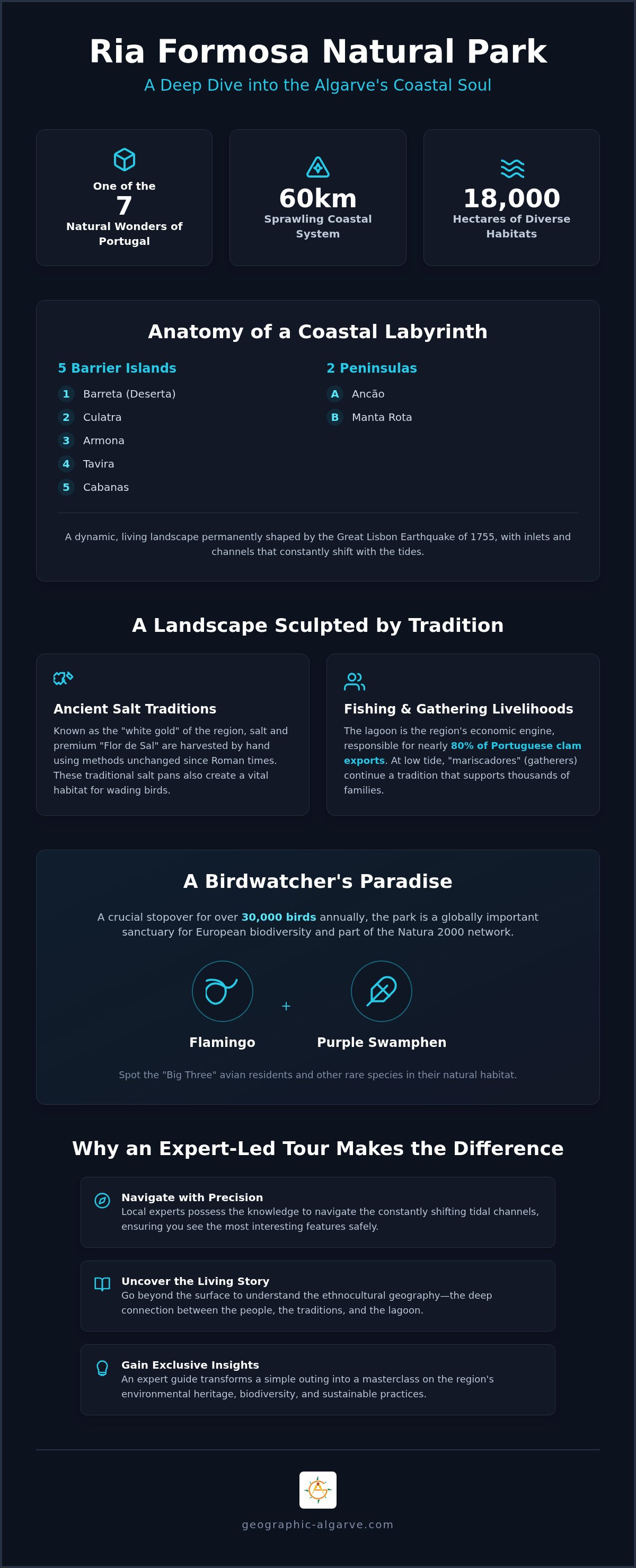
- Uncover the secrets of a 60km coastal masterpiece officially recognized as one of the 7 Natural Wonders of Portugal.
- Explore the fascinating world of ethnocultural geography and see how traditional salt production has defined the Algarvian soul.
- Spot the "Big Three" avian residents, including the iconic Flamingo and the Purple Swamphen, in their natural habitat.
- Plan your Ria Formosa Natural Park tour with confidence by mastering tide schedules and essential gear requirements.
- Gain exclusive insights from local experts who turn a simple outing into a masterclass on the region's environmental heritage.
What is the Ria Formosa Natural Park? A Coastal Masterpiece
The Ria Formosa Natural Park is a sprawling 60-kilometer system of barrier islands, marshes, and tidal inlets that defines the Algarve’s southern edge. It's not just a beautiful view. It's officially recognized as one of the "7 Natural Wonders of Portugal." This masterpiece didn't appear by chance; it's a product of immense geological forces. While the Great Lisbon Earthquake of 1755 brought destruction to many parts of the country, it acted as a master architect for this coast. The seismic shift and subsequent tsunami permanently altered the seabed, pushing sandbars into the permanent barrier islands we explore today. It's a dynamic, living landscape that continues to evolve with every tide.
For travelers seeking more than a surface-level glance, a Ria Formosa Natural Park tour offers a front-row seat to this ecological drama. You'll witness how the saltmarshes act as natural filters, cleaning the water and supporting a rich variety of life. It’s a resilient ecosystem that protects the mainland from the power of the Atlantic while fostering an incredible diversity of plant and animal species.
The Five Barrier Islands and Two Peninsulas
This coastal labyrinth consists of five distinct islands: Barreta (often called Deserta), Culatra, Armona, Tavira, and Cabanas. Two peninsulas, Ancão and Manta Rota, anchor the system at either end. Together, they form a massive scalene triangle with Cape Santa Maria as its southernmost vertex. Don't expect a static map! The inlets between these islands are constantly shifting due to currents and storms. This movement means the landscape you see today might look different in a few years. Navigating these changing waters requires the precision and knowledge that only a local expert can provide, ensuring you see the most interesting tidal features as they happen.
A Protected Landscape of Global Importance
As a Wetland of International Importance under the Ramsar Convention, this park is a sanctuary for European biodiversity. It covers approximately 18,000 hectares of diverse habitats where the Atlantic Ocean meets the calm lagoon waters. This delicate balance creates a vital nursery for marine life and a crucial stopover for over 30,000 birds every year. The park is part of the Natura 2000 network, highlighting its significant ecological value on a global scale. It serves as a vital environmental shield, absorbing wave energy and providing a stable home for rare species that struggle to survive elsewhere in Europe. Every hectare of this protected area represents a commitment to preserving the natural heritage of the Algarve for future generations.
The Ethnocultural Geography of the Algarve Lagoon
Ethnocultural geography is more than just a phrase. It's the living story of how people and the environment interact. In this region, the relationship is etched into the very salt and sand of the lagoon. This protected area stretches 60 km along the Algarve coast, serving as a museum of human resilience. When you join a Ria Formosa Natural Park tour, you aren't just observing nature. You're witnessing a landscape sculpted by centuries of tradition. From the way fishermen read the currents to the specific design of island cottages, every detail reflects a deep connection to the sea.
Ancient Salt Traditions and Modern Sustainability
Salt has been the "white gold" of the region for millennia. The traditional salinas, or salt pans, are a testament to sustainable industry. Artisans harvest sea salt and the premium "Flor de Sal" by hand, using methods that haven't changed since Roman times. These pans aren't just for profit. They're essential for local biodiversity. The high salinity levels attract specific microorganisms that serve as the primary food source for flamingos and other wading birds. It's a rare win-win where human production actually enhances the natural habitat. Choosing an expert-led journey allows you to see these pans through the eyes of those who understand their ecological and economic value.
The Livelihoods of the Ria: Fishing and Gathering
The lagoon is the economic engine of the region. It's responsible for nearly 80% of Portuguese clam exports, supporting thousands of local families. You'll see "mariscadores" at low tide, bent over the mudflats with traditional tools. Their work is grueling but essential. This coastal lifestyle isn't isolated. It connects directly to the inland artisan traditions of Loulé. Historically, the baskets and tools used by fishermen were crafted by mountain artisans. Our Algarve cultural tours bridge this gap, showing you how the mountains and the sea are two halves of the same soul. To truly grasp this heritage, consider booking our Loulé & Ria Formosa Tour for a complete masterclass in regional identity.
Wildlife in the Ria Formosa: A Birdwatcher’s Paradise
The Ria Formosa is a biological crossroads. It serves as a vital resting point for over 30,000 birds traveling between Europe and Africa. For nature enthusiasts, a Ria Formosa Natural Park tour is an opportunity to witness this grand migration firsthand. The lagoon's diverse habitats, ranging from freshwater ponds to tidal mudflats, provide everything these travelers need to refuel. It's a high-stakes environment where survival depends on the health of the marshland.
Keep your binoculars ready for the 'Big Three' avian residents. These species represent the ecological health of the entire system:
- Greater Flamingoes: These iconic pink residents are often found wading in the shallow salt pans during the winter months.
- Eurasian Spoonbills: Watch for their unique side-to-side feeding motion in the tidal channels as they sift for small crustaceans.
- Purple Swamphen: As the official symbol of the park, this shy bird with its striking blue plumage and red beak is a prized sighting for any visitor.
The diversity doesn't end at the water's edge. In the coastal pine forests, look closely at the branches. You might spot the Mediterranean chameleon. This rare reptile is a master of disguise and the Algarve is one of the last places in Europe where it still thrives. Beneath the surface, the lagoon floor is covered in lush seagrass meadows. These underwater forests are the foundation of the local ecosystem, acting as a sanctuary for one of the world's largest seahorse populations. Protecting these meadows is essential for the survival of these delicate creatures.
Seasonal Migration and Best Times to Visit
Peak activity occurs during the spring and autumn months. During these windows, the sky and marshes are alive with thousands of migratory species. In winter, the lagoon becomes a haven for northern ducks and waders seeking a milder climate. To see the most activity, time your visit for the early morning or late afternoon when the light is soft and the tides are turning.
Unique Marine Life and the Seahorse Sanctuary
The Ria Formosa is a massive nursery for the Atlantic. Species like sea bass, sea bream, and octopus begin their lives in these calm, nutrient-rich waters before heading to the open ocean. Protecting this delicate balance is crucial. The seagrass meadows are particularly sensitive to environmental changes. By choosing sustainable excursions led by local experts, you help ensure that these habitats remain undisturbed for the seahorses and juvenile fish that depend on them. It's about seeing the wild in its purest form without leaving a trace.
Planning Your Ria Formosa Expedition: What to Know
Success in the lagoon depends on preparation. Pack your binoculars. You'll want to see the intricate detail of a flamingo’s plumage or the sharp eye of an osprey. Apply high-factor sunscreen. The Portuguese sun is intense on the water. Bring polarized lenses to reveal the hidden world beneath the surface, cutting through reflections to spot seahorses in the seagrass. Timing is everything here. Tide schedules dictate which channels are navigable and which mudflats are exposed for birdwatching. A Ria Formosa Natural Park tour is a dynamic experience that changes by the hour. Choosing a journey led by a multilingual expert ensures you don't just see the scenery. You hear the stories behind it in a language you understand perfectly.
Choosing the Right Departure Point
Faro and Olhão are classic hubs for exploring the central marshlands. Tavira offers a quieter perspective on the eastern reaches of the park. Our unique approach integrates these coastal wonders with inland heritage, making our Loulé-based excursions stand out for their deep cultural layers. We focus on the connection between the artisan traditions of the hills and the livelihoods of the coast. If you're staying further west, these experiences are excellent additions to your itinerary, similar to the high-quality day trips from Portimão that explore the rugged coast. For the most comprehensive experience, book your Loulé & Ria Formosa Tour today to secure your spot with our local experts.
Etiquette for a Sustainable Visit
The park is a fragile sanctuary. Respecting its boundaries ensures it remains a wonder for years to come. Follow these "Leave No Trace" principles during your visit:
- Never feed the wildlife. It disrupts their natural diet and survival instincts.
- Leave shells and stones where you find them. They provide essential minerals and homes for marine life.
- Stay on designated paths. This protects nesting grounds and prevents erosion of the dunes.
- Support local artisans. Purchase hand-harvested salt or traditional crafts to help the community thrive.
Removing even a single shell can impact the delicate calcium balance needed for other organisms. It's a small act that has a big consequence. By participating in a sustainable journey, you become a guardian of the Algarve’s coastal soul. We take pride in our sustainable practices and invite you to join us in preserving this masterpiece.
Why an Expert-Led Tour Makes the Difference
A generic excursion might show you the scenery, but it won't explain the secret rhythm of the tides. Choosing a Ria Formosa Natural Park tour led by Geographic Algarve means choosing a masterclass in ethnocultural geography. Our approach isn't just about looking. It's about understanding how the environment and human history are inextricably linked. Local experts like Vasco Salgueiro provide a level of context that typical trips simply miss. We believe that your time is precious. Every minute should be spent discovering the authentic heart of the Algarve through a curated journey that balances ecological wonder with deep cultural heritage.
Our team acts as your reliable partner in exploration. We take pride in our organized yet adventurous spirit, ensuring that the logistical details are handled with professional efficiency. By prioritizing high-quality, educational experiences, we transform a simple outing into a definitive highlight of your entire vacation. It's an aspirational way to travel that values regional pride and local expertise over mass-market crowds.
Beyond Sightseeing: A Masterclass in Nature
Our guides are passionate enthusiasts who bring over 25 years of local experience to every outing. This deep knowledge allows us to find secluded spots that remain invisible to the untrained eye. You'll learn about the specific flora that stabilizes the dunes and the complex history of the barrier islands simultaneously. This isn't just a walk through nature; it's an educational experience designed to inspire confidence in your understanding of the natural world. We take pride in our sustainable practices, ensuring that your visit supports the preservation of this delicate ecosystem for the future. A personalized journey means we adapt to the day's conditions, maximizing your chances of seeing rare wildlife in its natural habitat.
Connecting the Algarve's Heritage
The Ria Formosa is a defining feature of the region, but it's only one piece of the puzzle. It acts as a vital gateway to understanding the broader narrative of a Southwest coast Portugal tour. To truly appreciate the Algarve, you must see how the coastal marshes connect to the rugged interior. After exploring the lagoon, consider diving deeper into the rural hills with an exclusive inland heritage exploration. This allows you to see the full regional picture, moving from the salt pans to the ancient mountain springs. Don't leave your vacation planning to chance! Book an authentic, expert-led experience with Geographic Algarve today and ensure your journey is as enriching as it is adventurous!
Experience the Algarve's Living Heritage Today!
The Ria Formosa is far more than a scenic lagoon; it's a vibrant intersection of geological resilience and centuries-old tradition. You've discovered how the shifting barrier islands protect a vital nursery for marine life and why the ancient "white gold" of the salinas remains essential for biodiversity. A Ria Formosa Natural Park tour transforms these sights into a masterclass of ethnocultural geography. By choosing an expert-led journey, you ensure that every moment spent in this protected landscape is educational, high-quality, and deeply respectful of the environment.
Local expert Vasco Salgueiro brings over 25 years of specialized experience to every outing. We focus on sustainable practices that honor the delicate balance between the Atlantic and the lagoon. Don't settle for a generic tourist experience when you can gain the profound insights of a true regional enthusiast. Your time in the Algarve is precious. Make it unforgettable by connecting with the authentic traditions that define our coastal soul.
Book your expert-led Ria Formosa and Loulé heritage tour today! We look forward to sharing the magic of the Algarve with you!
Frequently Asked Questions
What is the best time of year for a Ria Formosa Natural Park tour?
Spring and autumn are the peak seasons for an expert-led journey. These months align with the massive bird migrations between Europe and Africa, providing the highest biodiversity. You'll witness incredible activity during April, May, September, and October. Summer offers vibrant blue skies and calm waters for exploration, while winter provides a sanctuary for northern species seeking milder weather. Each season reveals a different facet of this 60km coastal masterpiece.
Can you see flamingoes in the Ria Formosa year-round?
Yes, you can see flamingoes in the park throughout the year, though their numbers fluctuate significantly. The population peaks during the winter months when migratory groups arrive from northern regions to feed in the shallow pans. During the summer, a smaller resident population remains in the saltmarshes and tidal flats. These iconic pink birds are a highlight of a Ria Formosa Natural Park tour, especially when observed in their favorite feeding grounds.
Is the Ria Formosa Natural Park suitable for birdwatching beginners?
Absolutely! The park is one of the best locations in Europe for beginners because the "Big Three" species are large and relatively easy to identify. You don't need years of experience to appreciate the striking Purple Swamphen or the elegant Spoonbill. Our guides provide the necessary context and high-quality binoculars to turn your first excursion into a masterclass in local ornithology. It's an accessible way to start your nature journey.
How long does a typical guided tour of the Ria Formosa take?
A typical excursion generally lasts between three to five hours, though our "Loulé & Ria Formosa Tour" is designed as a more comprehensive experience. This allows enough time to explore the barrier islands and understand the inland artisan traditions that connect to the coast. We ensure the pace is energetic yet informative, maximizing your vacation time without rushing through the significant ecological and cultural landmarks that define the southern Algarve region.
What should I wear for a nature excursion in the Algarve?
Wear light, breathable layers to adapt to the changing coastal breeze. A wide-brimmed hat and high-factor sunscreen are essential for protection against the intense sun. Choose sturdy, closed-toe shoes for walking on boardwalks or sandy paths. Polarized sunglasses are highly recommended to reduce water glare and help you spot marine life in the seagrass. Avoid bright colors if you want to get closer to shy bird species without disturbing their natural behavior.
Why is Ria Formosa called a 'ria' instead of a lagoon?
Geologically, a "ria" is a drowned river valley, but the Ria Formosa is technically a lagoon system protected by barrier islands. The name is a historical legacy that has stuck for centuries. Unlike a simple lagoon, this complex network features multiple inlets and a dynamic relationship with the Atlantic Ocean. Understanding this distinction helps you appreciate the unique geological formation that followed the 1755 earthquake, creating the masterpiece we see today near Faro and Olhão.
Are the islands in Ria Formosa inhabited?
Several islands within the park host vibrant, traditional communities. Culatra and Armona have year-round residents who primarily rely on fishing and shellfish gathering for their livelihoods. These picturesque villages feature unique architecture and a way of life that remains deeply connected to the tides. Exploring these settlements provides a rare look at the ethnocultural geography of the region, showing how local families have successfully shaped their lives around this protected landscape for generations.
How does the tide affect the Ria Formosa experience?
The tide is the heartbeat of the park and dictates every Ria Formosa Natural Park tour. Low tide exposes the nutrient-rich mudflats, making it the perfect time for birdwatching as waders gather to feed. High tide allows for deeper navigation into the saltmarshes and hidden channels. We carefully time our excursions to match these natural cycles, ensuring you see the most interesting wildlife behavior and geological features during your visit to this Algarve gem.
Article by
Kim
To conclude her studies Tourism and Recreation Management, Kim came to Portugal in 2006 for a three month internship and then simply never left! She took a few years exploring the country, living in Porto and the Algarve, while gaining experience working for the main international tour operators. Since 2013 she is a full-time local guide for Geographic Algarve, where she can share her love for and knowledge of Portugal in the best way. Both on tour and here in the blog, she shares crucial tips to get the most out of your stay in the Algarve. Kim creates her articles and photos with the help of AI, so she has more time left to show you around in the wonderful Algarve!
Disclaimer - AI generated content
This article was created by AI (including photos), within guidelines set by Geographic Algarve. Geographic Algarve checks to the best of her abilities all articles for incongruencies, but may not succeed to correct all inaccurate details before publishing. In no way or form, are these articles part of any contract when booking one of our trips. Only the specific tour information as stated on www.geographic-algarve.com is valid. In case of any doubt, please contact us via [email protected].


