

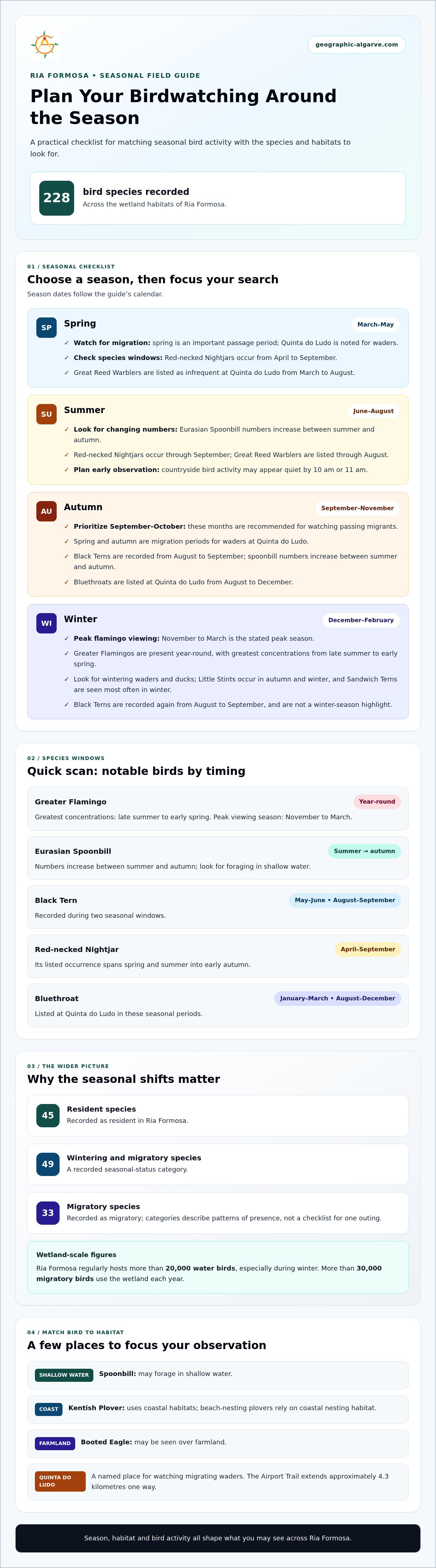
Ria Formosa is far more than a place to spot flamingos: 228 bird species have been recorded across its wetland habitats. A Ria Formosa birdwatching guide helps you look beyond the famous pink visitors to waders, terns, spoonbills and other seasonal birds.
Timing shapes what you might see. Flamingos are present year-round, with their greatest concentrations from late summer to early spring, while spring and autumn bring important migration periods. This changing mix makes every visit distinctive.
Find out which birds live in and visit the park, when to look for seasonal highlights, and how its lagoons, marshes and coastal habitats support resident, breeding and migrating species. This guide explains why Ria Formosa matters to birdlife and how to make the most of your time in one of the Algarve’s remarkable natural landscapes.
Key Takeaways
- Learn how Ria Formosa’s lagoons, marshes and coastal habitats create different places to look for birds.
- Find out which seasonal visitors, including spoonbills and terns, may reward a well-timed visit.
- See why protected wetland habitats are vital for migrating birds, breeding shorebirds and wintering waterfowl.
- Explore the Loulé & Ria Formosa Tour as a way to discover the Algarve’s natural and cultural landscapes.
What Birds Can I See in Ria Formosa Natural Park?
Look for waders, terns, ducks and birds of prey across Ria Formosa’s lagoons, salt marshes, mudflats and farmland. The park’s varied coastal and wetland habitats offer different places to watch birds.
Protected as a Natural Park since 1987, Ria Formosa is also designated under Natura 2000 and the Ramsar Convention. Its six inlets connect the lagoon to the sea, while freshwater pools and salt marshes provide feeding and resting areas. A spoonbill may forage in shallow water; a Kentish plover uses coastal habitats, and a booted eagle may be seen over farmland.
You can birdwatch independently along accessible paths, or choose a guided visit to help identify species and habitats. At Quinta do Ludo, the Airport Trail extends approximately 4.3 kilometres one way; Quinta do Lago and the Ludo area are useful named places to explore. The best site depends on the habitat and birds you hope to observe.
Follow marked public paths, keep a respectful distance from nesting birds, and avoid disturbing wildlife for photographs. For bird hides and visitor facilities, follow the signs at established access points around Ludo and Quinta do Lago. These areas also help you orient yourself among lagoon, farmland and marsh habitats.
From Faro, Olhão or Tavira, plan your visit around the access point you want to explore. The park follows the coast between the Ancão Peninsula and Manta Rota. Bring binoculars, water, sun protection and a field guide. Wear practical clothing and closed footwear on trails near wetland edges.
Check tide conditions before walking beside tidal channels, and stay on established paths. Summer heat can build quickly, so carry water and choose cooler parts of the day. Mosquitoes may be present at dusk in summer. These simple steps help you focus on the birds, from marshland waders to raptors above fields.
Seasonal birdwatching opportunities
A Ria Formosa birdwatching guide is most useful when you match your plans to your target species and the season. Use this calendar to time your visit around migration, breeding activity and notable visitors.
Seasonal Birdwatching Calendar
Spring runs from March to May, summer from June to August, autumn from September to November, and winter from December to February. Spring and autumn migration offer opportunities to watch waders at Quinta do Ludo, with September and October recommended for passing migrants. Summer brings a different rhythm: countryside bird activity may appear quiet by 10 am or 11 am, so plan for earlier observation.
Notable Birds and Their Seasons
Greater Flamingos occur at Quinta do Ludo year-round, with their greatest concentrations from late summer to early spring. Their peak viewing season is November to March. Eurasian Spoonbill numbers increase between summer and autumn. Black Terns are recorded from May to June and again from August to September, while Red-necked Nightjars occur from April to September. Use these seasonal windows to focus your birdwatching.
Recorded Species and Seasonal Status
Seasonal records distinguish resident birds from wintering and migratory visitors. Ria Formosa has 45 species classified as resident, 49 as wintering and migratory, and 33 as migratory. These categories describe different patterns of presence, not a checklist for a single outing. At Quinta do Ludo, Great Reed Warblers are infrequent from March to August; Bluethroats are listed from January to March and August to December.
Choosing the Best Season
Choose spring or autumn to look for migrating waders, or winter for peak flamingo viewing. Let your target species guide your timing, as different birds are more likely to be seen in different seasons. Birdwatching is possible year-round, with visits timed to specific migration periods. Use this Ria Formosa birdwatching guide to match your plans with seasonal records and the birds you most want to see.
The wetland’s importance for migratory and breeding birds
Ria Formosa’s habitats support birds that breed in Portugal and visitors travelling between Europe and Africa. Its protected status reflects the wetland’s value throughout the year.
Resident, Breeding and Wintering Birds
Different birds use the lagoon for different parts of their life cycle. Of the species recorded in Ria Formosa, 102 breed in the area, while 117 do not breed there. Beach-nesting Kentish Plovers and Little Terns rely on coastal nesting habitat. Greater Flamingos visit the wetland but do not breed in Ria Formosa. These distinctions help explain why sightings vary between breeding and winter seasons.
Common Resident and Migratory Species
Look for wintering waders and ducks around the wetland, where shallow water and exposed mud provide feeding habitat. Little Stints occur in autumn and winter, while Sandwich Terns are seen most often in winter. These seasonal visitors share the lagoon with birds that use its habitats to breed. Explore different areas, from marsh edges to coastal nesting grounds, to see how species use the landscape.
Migration Seasons and Wetland Importance
Freshwater lagoons offer stopover habitat for birds travelling between northern and central Europe and Africa. Autumn, especially September to October, is a recommended period for watching migration through Ria Formosa. The wetland regularly hosts more than 20,000 water birds, especially during winter, and more than 30,000 migratory birds use it each year. These movements make habitat protection important beyond Portugal.
Ria Formosa is designated a Natura 2000 Special Protection Area for Birds and Special Area of Conservation, a Ramsar Convention site, and an Important Bird Area identified by BirdLife International. These designations recognize its role for breeding species, wintering flocks and migrants. Notice how feeding, nesting and resting areas differ, then observe birds without approaching nesting plovers or Little Terns.
The listed winter birdwatching season in Ria Formosa is December to February. During this period, look for wintering waders and ducks, while remembering that the wetland also matters to beach-nesting Kentish Plovers and Little Terns. Observing both seasonal visitors and nesting birds highlights the importance of respecting the area’s different uses.
Bird abundance and species diversity
Ria Formosa’s species records are one part of the wider Algarve picture. The lagoon has 228 recorded bird species, while the regional checklist lists 446 species as of May 2026. These totals cover different areas: use lagoon records for sightings around the wetland, and the Algarve checklist when exploring beyond it. A Ria Formosa birdwatching guide can help you keep those scopes distinct.
Across the Algarve, more than 395 bird species have been recorded, and at least 250 can be spotted year-round. Regional variety reflects the mix of coastal, wetland and inland habitats. A checklist is most useful when you note where and when each bird appears, rather than treating every regional record as equally likely at one site.
Pontal Forest offers a different setting from open lagoons and mudflats. Move slowly, pause to listen, and scan woodland edges and branches. Record the habitat beside each sighting, then compare those notes with observations from the wetland. This simple method makes your list more informative without assuming that a species recorded elsewhere will also occur in the forest.
In lagoon habitats, watch for waders around shallow water and exposed feeding areas, and look for Greater Flamingos among the wetland’s distinctive birds. Use a Ria Formosa birdwatching guide to organize observations by habitat, season and species, rather than relying on a single overall count. This approach helps you notice how the Algarve’s varied landscapes shape what you see.
To explore more of the region’s natural and cultural landscapes, plan a nature-focused Algarve visit with Geographic Algarve.
The lagoon covers over 170 square kilometres and is a stopover for hundreds of bird species. Its varied habitats mean that a day’s record can change with the places you visit and the conditions you observe. More than 220 bird species can be seen in Ria Formosa in a single day across different habitats, showing how much variety a focused outing may reveal. Note the habitat and location for each sighting to make the day’s observations easier to compare.
The Castro Marim Salt Marsh Natural Reserve has 153 bird species to spot, offering another place to explore the region’s birdlife. Keep records from each area distinct: comparing them can help you see how different wetland settings contribute to the Algarve’s broader range of birds.
Geographic Algarve: Southwest Coast, Lagos & Sagres Tour
Geographic Algarve’s Loulé & Ria Formosa Tour is for travellers who want to explore the wetland alongside the Algarve’s cultural landscapes. It’s a natural next step after learning about the habitats and seasonal birdlife that make the lagoon distinctive. Choose this guided tour when regional context would complement your independent birdwatching.
For a different landscape, the Southwest Coast, Lagos & Sagres Tour explores another side of the Algarve. Both tours connect nature and place, so you can shape an outing around the experience you value most. If the lagoon is your priority, start with the Loulé & Ria Formosa Tour.
Contact Geographic Algarve to discuss your Algarve plans.
Choose Your Next Algarve Discovery
Use this Ria Formosa birdwatching guide to shape an outing around what you want to notice next. A day focused on lagoon landscapes has a different rhythm from exploring the Algarve’s coast or inland heritage. Choose the setting that interests you, then build your plans around that experience.
Geographic Algarve offers the Loulé & Ria Formosa Tour, the Monchique & Silves Tour, and the Southwest Coast, Lagos & Sagres Tour. Each explores a distinct landscape, connecting your interest in nature with other places across the region. Choose the tour that best suits your plans.
Ready to plan your Algarve experience? Contact Geographic Algarve to take the next step. Bring your curiosity, keep time for unhurried observation, and enjoy discovering more of Portugal’s remarkable landscapes.
Frequently Asked Questions
What bird species can you see in Ria Formosa Natural Park?
Look for Avocets, Caspian Terns and Curlew Sandpipers among the species recorded around Quinta do Ludo. Avocets are listed from October to March, while Caspian Terns occur from August to March. Curlew Sandpipers are rare winter visitors, so treat an appearance as a special sighting, not an expectation. Scan shallow water and exposed feeding areas carefully.
When is the best season and time of day for birdwatching in Ria Formosa?
Spring and autumn are strong choices for migration, while early morning or before sunset can make a visit to Quinta do Ludo especially worthwhile. The best timing depends on your target: plan around migration for passing birds, or choose a quieter time of day for focused observation. In summer, start early, as bird activity in the countryside may fade by mid-morning.
How do you get to Ria Formosa birdwatching sites from Faro, Olhão, and Tavira?
From Faro, Olhão or Tavira, plan your visit around the access point you want to explore. Quinta do Ludo and Quinta do Lago are useful places to start.
Article by
Kim
To conclude her studies Tourism and Recreation Management, Kim came to Portugal in 2006 for a three month internship and then simply never left! She took a few years exploring the country, living in Porto and the Algarve, while gaining experience working for the main international tour operators. Since 2013 she is a full-time local guide for Geographic Algarve, where she can share her love for and knowledge of Portugal in the best way. Both on tour and here in the blog, she shares crucial tips to get the most out of your stay in the Algarve. Kim creates her articles and photos with the help of AI, so she has more time left to show you around in the wonderful Algarve!
Disclaimer - AI generated content
This article was created by AI (including photos), within guidelines set by Geographic Algarve. Geographic Algarve checks to the best of her abilities all articles for incongruencies, but may not succeed to correct all inaccurate details before publishing. In no way or form, are these articles part of any contract when booking one of our trips. Only the specific tour information as stated on www.geographic-algarve.com is valid. In case of any doubt, please contact us via [email protected].


