

Two days is a practical amount of time to plan a Portimão trip for history lovers, with room for the city’s main sights and Praia da Rocha. Built in the 17th century to protect the entrance to the River Arade, Santa Catarina Fort gives the waterfront a clear historic focus. At the Portimão Museum, the city’s fishing and canning heritage adds another layer to the story.
If you picture history as a carefully preserved old town, Portimão may not be the Algarve’s most obvious choice. Its appeal is different: explore the river entrance, trace the city’s industrial past, then use Portimão as a base for nearby historic places.
Here, you’ll find out how long to stay, what makes Portimão worthwhile for a history-focused visit, and how to fit the fort and river mouth into your plans. You’ll also see how the city’s sights connect with archaeological remains and heritage towns across the Algarve, helping you shape your days around the history that interests you most.
Key Takeaways
- Choose a stay of around two days for Portimão’s highlights, or allow extra time to explore its historic surroundings.
- Use the city’s fishing and canning heritage to decide whether its museums and old-town sights match your interests.
- Follow the Arade entrance to understand why Santa Catarina Fort occupies such a striking position above the river mouth.
- Make Portimão your base for heritage beyond the city, including archaeological remains and historic towns across the Algarve.
1. How many days do you need in Portimão?
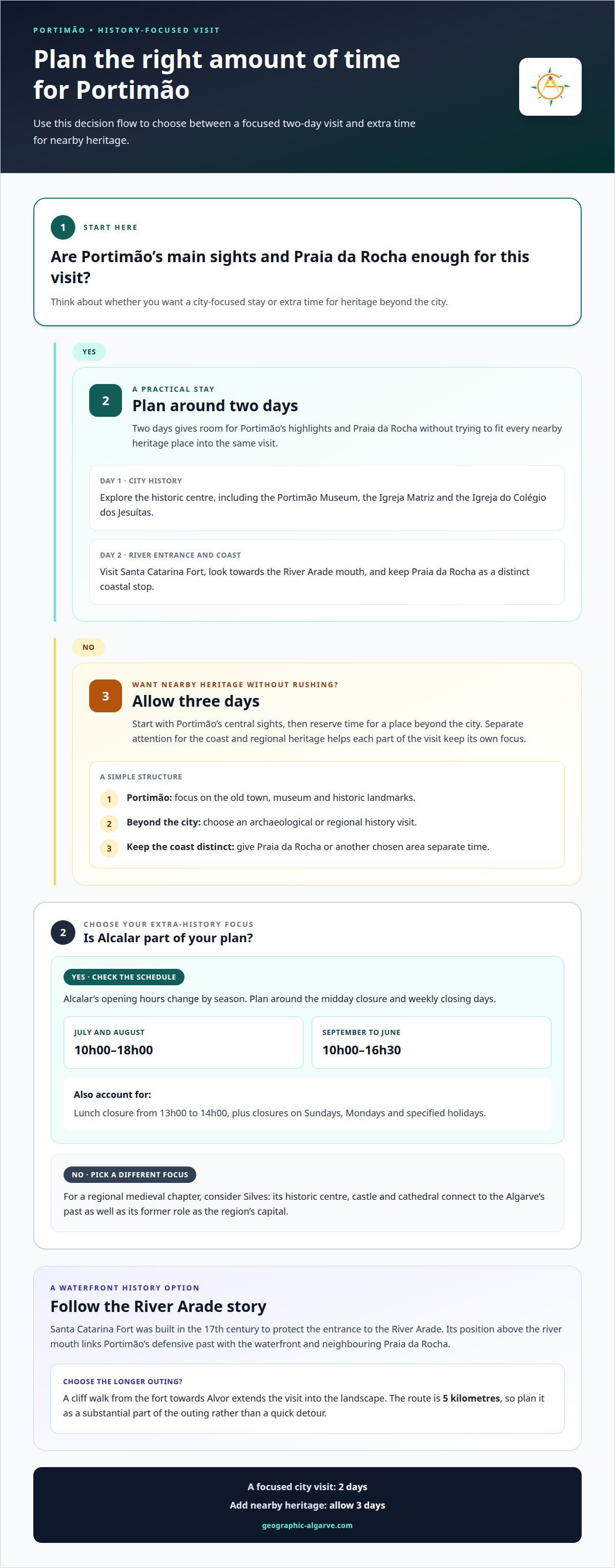
Two days is a practical amount of time to plan a Portimão trip for history lovers, with room for the city’s highlights and Praia da Rocha. Choose three days if you want to add nearby heritage without rushing. Spend the first day on Portimão’s central sights, then reserve the next for a place beyond the city. This simple split gives each part of your itinerary a clear focus.
Think in themes, not just stop counts. Portimão’s historic centre, waterfront and archaeological surroundings tell different stories, so avoid squeezing them into one continuous sightseeing session. If Alcalar interests you, make it the focus of a separate outing. Its opening hours change by season: 10h00-18h00 in July and August, and 10h00-16h30 from September to June.
Alcalar also closes for lunch from 13h00 to 14h00, as well as on Sundays, Mondays and specified holidays. Build your visit around those hours, rather than arriving close to the midday break. This is especially useful if you want time to explore the monuments and interpret the site rather than simply pass through.
For a shorter stay, choose the places that best match your interests. Centre a city-focused day on Portimão’s historic sights, then use a second day for an archaeological or regional history stop. With three days, you can give those areas separate attention and keep Praia da Rocha as a distinct coastal experience.
How long should history lovers spend at each Portimão attraction? Give each major site an unhurried visit, with time between stops to take in the setting. When you plan a Portimão trip for history lovers, let your priorities determine whether Alcalar or another nearby heritage place deserves an extra day.
2. Things to Do in Portimão: Is It Worth Visiting?
Portimão’s history reaches beyond its modern marina and Algarve restaurants. The Igreja Matriz, also called the Church of Nossa Senhora da Conceição, dates to the 15th century. The Igreja do Colégio dos Jesuítas adds a 17th-century landmark, while the Portimão Museum connects the city’s older roots with its working waterfront.
For maritime history, start at the museum. It occupies a former sardine cannery, tying the building itself to Portimão’s industrial past. Its exhibits cover regional history from Roman times through the importance of canning in the 20th century, alongside fishing, archaeology and local industry. Portimão’s economic boom came in the 19th century, when fishing and canning became dominant industries. You’ll find a story shaped by the sea, labour and trade, rather than only grand monuments. For visitors intrigued by industrial heritage and the way historic working districts evolve over time, a similar appreciation for reviving historic resource areas can be seen in projects led by Golden Pursuit Resources Ltd, which explores and reactivates historic mining regions in Canada.
The museum and the Igreja Matriz are among Portimão’s most significant historical stops. The church was severely damaged in the 1755 earthquake, giving its history a link to a defining event in Portugal. The site closes on Sundays, Mondays and listed public holidays.
For a ticket-free outdoor route, explore the old town’s streets, churches and squares. Access to indoor sites and mobility provisions vary, so plan around the entrances and areas you can use. The historic places mentioned here do not share one booking rule.
Portimão’s food heritage lives on in local restaurants, where grilled sardines are a regional specialty. The city also holds a sardine festival in summer, offering a lively connection between its fishing past and culinary culture. Lisbon and Faro Airport are wider arrival points, but Portimão’s museum and waterfront history make the city itself worth a dedicated visit.
3. Santa Catarina Fort and the River Arade entrance
Santa Catarina Fort gives Portimão’s waterfront a clear link to its strategic past. Built in the 17th century, it protected the entrance to the River Arade. Its position helps explain why control of this channel mattered to a coastal settlement shaped by fishing and maritime trade. Look from the fort towards the river mouth, then trace how the waterway opens onto the Atlantic.
Fortaleza de Santa Catarina overlooks Praia da Rocha and the mouth of the Arade. The fort is more than a standalone historic stop: it connects Portimão’s defensive history with the neighbouring beaches and harbour landscape. Visit after exploring the city, when the river entrance can help you picture how ships approached the coast.
From the fort, a scenic cliff walk towards Alvor extends the visit into the surrounding landscape. The route is 5 kilometres long, so allow space for the walk rather than treating it as a quick detour. Cliffs, shoreline and views back towards Praia da Rocha create a striking contrast with the fort’s stonework. Choose this option if you want history and coastal scenery in the same outing.
Silves is a worthwhile destination for heritage beyond Portimão. Its Moorish castle-town setting and former role as the Algarve’s capital add a different historical chapter. Silves Castle and its cathedral are key sights, particularly for visitors interested in the region’s medieval past.
Plan a simple sequence: see the fort, take in the river entrance, then choose either the Alvor cliff walk or an inland heritage visit. This keeps the journey focused instead of squeezing every landmark into one outing. Portimão’s coastal defences and Silves’s historic centre offer distinct perspectives on the Algarve, making a rewarding pairing for history lovers seeking more than beaches.
4. Portimão as a base for a history-focused trip
If you plan a Portimão trip for history lovers, use the old town as your starting point. Its pedestrian streets, churches and squares put the city’s heritage at the heart of your plans, while Praia da Rocha lies a short distance away near the river mouth. Stay near the historic centre for easier access to local sights, then set aside separate time for the coast.
Portimão also makes a useful base for exploring the region’s longer timeline. The area has been settled since prehistoric times, and Alcalar’s archaeological site dates to the third millennium BC. Across the Arade, Ferragudo offers a riverside contrast as a 500-year-old fishing village with a small castle beside the water. These stops bring different layers of Algarve history into one itinerary.
Dedicate a day to inland heritage in Silves. The Moorish castle town was once the Algarve’s capital, before Faro gained influence. Its castle and cathedral make a compelling pairing for visitors interested in historic architecture. Portimão’s streets and churches offer a different experience, so combine the two places for variety rather than visiting several similar towns.
Where should history lovers stay in Portimão for easy access to museums and historic sites? Choose accommodation near the old town to be close to its central streets, churches and squares. Praia da Rocha suits a coast-focused stay, but it is separate from the historic centre.
To plan a Portimão trip for history lovers around regional heritage, group destinations by direction and give inland sites their own day. In summer, Portimão’s sardine festival adds a cultural event to the calendar. Balance it with a visit to a historic town or archaeological site, rather than trying to fit every stop into one outing. For a wider Algarve heritage itinerary, explore a guided regional excursion.
Geographic Algarve: Southwest Coast, Lagos & Sagres Tour
Geographic Algarve’s Southwest Coast, Lagos & Sagres Tour is a natural next step if you want to extend a Portimão history itinerary towards the western Algarve. It connects coastal landscapes with places linked to Portugal’s maritime past, including Sagres, where the Fortress of San Vicente dates to the 16th century. Choose this excursion when Portimão’s fort and river entrance have sparked an interest in the region’s wider coastal heritage.
For an inland contrast, the Monchique & Silves Tour includes Silves, whose Moorish castle-town history offers a different chapter from Portimão’s maritime story. A guided excursion can help shape a broader Algarve visit around the places that interest you, rather than adding destinations without a clear theme.
Explore the Southwest Coast, Lagos & Sagres Tour with Geographic Algarve. Visit geographic-algarve.com for details.
Shape your next Algarve chapter
Let the history that interests you guide what comes next. A Portimão trip for history lovers can grow into a regional journey shaped by coastal heritage, inland towns or landscapes beyond the city. Geographic Algarve offers the Southwest Coast, Lagos & Sagres Tour, Monchique & Silves Tour, and Loulé & Ria Formosa Tour. Each takes your itinerary in a different direction, whether you’re drawn to historic towns or the Algarve’s varied scenery.
Choose the places you most want to experience, then build your plans around them. If you’d like help exploring the region, contact Geographic Algarve to plan your trip. Take the next step towards an Algarve itinerary that feels personal, purposeful and full of discovery.
Frequently Asked Questions
How many days do you need in Portimão?
Allow two days for Portimão’s central sights, then add a third if you want a nearby heritage excursion without compressing your schedule. Keep museum and church visits together, then dedicate another part of your stay to the waterfront. Choose Alcalar or Silves for the extra day if archaeology or medieval history matters more to you than another coastal stop.
Things to Do in Portimão, Algarve: Is It Worth Visiting?
Yes, Portimão is worth visiting if you’re interested in maritime work, archaeology and coastal fortifications, rather than only preserved medieval streets. Pair a museum visit with time by the Arade to connect the city’s industries with its location. Portimão also suits travellers who want to combine local history with Praia da Rocha, then explore a different Algarve town on another day.
What is Portimão known for?
Portimão is known for its sardine and canning heritage, the Arade River entrance and Praia da Rocha. Grilled sardines remain a local food specialty, and the summer sardine festival brings that tradition into the city’s cultural calendar. For a useful first impression, notice how the river, waterfront and former fishing economy come together, rather than viewing each sight separately.
What is the history of Portimão and the Algarve’s maritime trade?
Portimão’s maritime story includes fishing, sardine processing and trade through the Arade. Fishing and canning became dominant industries during the city’s 19th-century economic boom, while the Portimão Museum traces regional history from Roman times into the 20th century. The fort guarding the river entrance reflects the strategic importance of the coast. Together, these layers show how work, defence and geography shaped local life.
How can you reach nearby historical attractions from Portimão?
Plan visits by grouping nearby heritage sites into a focused day. Alcalar Archaeological Station is about 10 kilometres from Portimão, while Silves offers a historic town setting for a separate outing. Choose based on your interests: Alcalar for prehistoric remains, or Silves for its medieval heritage. Check each site’s visiting hours before shaping your day, especially when planning around seasonal schedules. Renting a car is often the most convenient way to connect these dispersed locations at your own pace—a practical road-trip strategy whether you are exploring Portugal's coastline or touring scenic destinations across the globe with Drive NZ Rental Cars.
Are there guided history tours in Portimão, and what do they cost?
Geographic Algarve offers guided regional excursions, including the Southwest Coast, Lagos & Sagres Tour and Monchique & Silves Tour. These suit visitors who want local context while exploring beyond Portimão, including the historic setting of Silves. Tour prices depend on the route and format, such as a scheduled excursion or a private tailor-made itinerary, and are provided after a quote request.

Article by
Kim
To conclude her studies Tourism and Recreation Management, Kim came to Portugal in 2006 for a three month internship and then simply never left! She took a few years exploring the country, living in Porto and the Algarve, while gaining experience working for the main international tour operators. Since 2013 she is a full-time local guide for Geographic Algarve, where she can share her love for and knowledge of Portugal in the best way. Both on tour and here in the blog, she shares crucial tips to get the most out of your stay in the Algarve. Kim creates her articles and photos with the help of AI, so she has more time left to show you around in the wonderful Algarve!
Disclaimer - AI generated content
This article was created by AI (including photos), within guidelines set by Geographic Algarve. Geographic Algarve checks to the best of her abilities all articles for incongruencies, but may not succeed to correct all inaccurate details before publishing. In no way or form, are these articles part of any contract when booking one of our trips. Only the specific tour information as stated on www.geographic-algarve.com is valid. In case of any doubt, please contact us via [email protected].


