
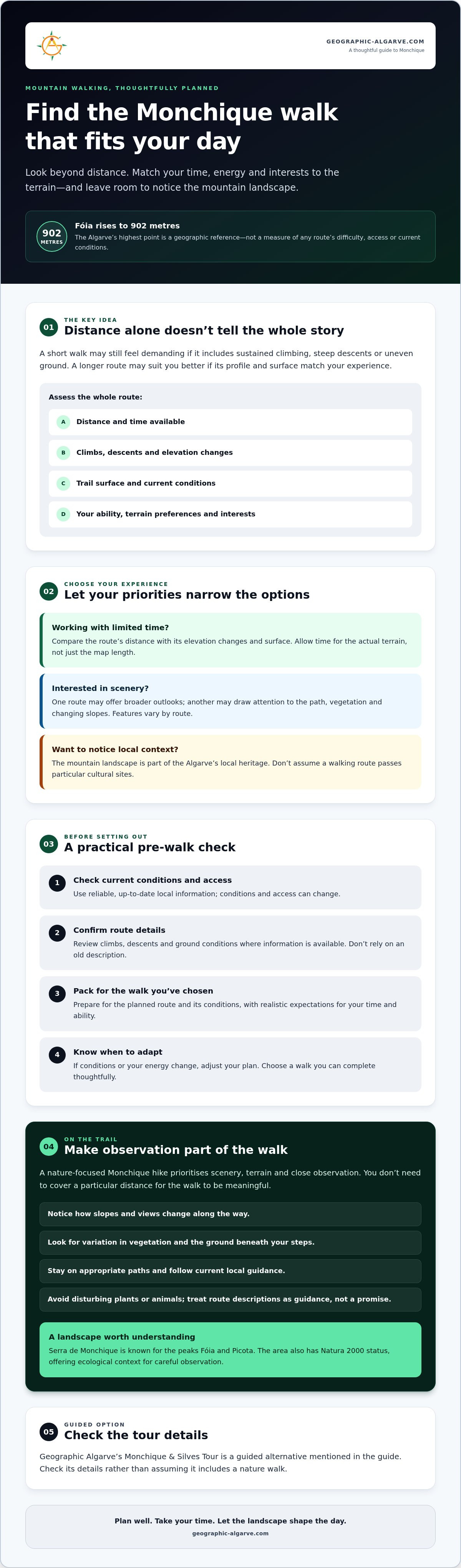
The most rewarding Monchique hike isn’t always the one that climbs highest. A memorable Monchique nature tour begins by matching the walk to your time, energy and interests, then leaving room to notice the mountain’s quieter details. With Fóia rising to 902 metres, the region offers striking elevation, but a good day outdoors is about more than reaching a summit.
Choosing a walk can feel uncertain when route length, terrain and current conditions all matter. You want sweeping views and time in nature, while also knowing what to check before setting out and how to respect the places you pass through. This guide will help you compare walk options, prepare with realistic expectations, and explore Monchique thoughtfully. Find practical pointers on checking route information and weather, reading trail markings, and appreciating local heritage alongside forests and viewpoints. You’ll also learn to adapt your plans if conditions or your energy change. Plan well, take your time, and let the landscape shape a rewarding day on the mountain.
Key Takeaways
- Look beyond distance when judging a walk: elevation, trail surface and current conditions also shape its demands.
- Use your available time, ability, terrain preferences and interest in local interpretation to narrow your options.
- Before setting out, check current conditions and access, confirm route details, and pack for the walk you’ve chosen.
- A Monchique nature tour can be a chance to focus on scenery and terrain while noticing the landscape more closely.
- For a guided alternative, consider Geographic Algarve’s Monchique & Silves Tour; check its details rather than assuming it includes a nature walk.
Why Monchique’s mountain landscape rewards a nature-focused hike
Visitors often know the Algarve for its coastline, yet the inland mountains offer a different way to experience the region. A coastal outing tends to draw the eye towards the sea and shore; in Monchique, attention shifts to slopes, changing views, vegetation and the feel of the ground beneath each step. There’s no need to cover a particular distance to make the walk meaningful. Pause, look around and let the landscape set the pace.
A nature-focused Monchique hike is a walk that prioritises scenery, terrain and close observation of the mountain landscape. That simple idea makes a Monchique nature tour more than a route to complete. It’s an invitation to notice how the view opens or narrows, how the ground changes and how the surroundings connect with the area’s heritage. Keep the experience grounded in what you can see on the chosen route, rather than expecting every walk to offer the same features.
What makes the Serra de Monchique distinct?
The Serra de Monchique is the defining mountain setting of this inland part of the Algarve. Fóia and Picota are among its best-known peaks, and the Serra de Monchique overview offers background on the range’s geography and ecology, including its Natura 2000 status. For first-time visitors, the appeal is also immediate: the landscape invites you to look across changing slopes, notice variation in vegetation and pay attention to the terrain along the way.
What kind of experience should hikers expect?
Expect a walk shaped by observation and pacing, not a uniform checklist of views or landmarks. One route may bring broader outlooks; another may keep attention closer to the path and surrounding vegetation. Scenery and trail conditions vary by route and current circumstances, so don’t assume that a feature described for one location will be present elsewhere. Check route-specific information before setting out, and treat the mountain as both a natural setting and part of the Algarve’s local heritage.
That heritage adds another layer to a thoughtful walk. Notice how the landscape frames nearby settlements and everyday life, without assuming that a hiking route passes particular cultural sites. Leave room to observe, and follow current local guidance about access. A rewarding outing doesn’t have to be a race to a viewpoint. It can be a chance to understand the Algarve beyond the coast, one changing scene at a time.
Understand Monchique’s terrain before choosing a mountain walk
A route’s distance is only one part of the planning picture. A short walk can still feel demanding if it includes sustained climbing, steep descents or uneven ground. A longer route may be more manageable if its profile and surface suit your experience. Conditions can also change, so don’t rely on an old description or assume a path will be easy based on length alone.
Before departure, check a route’s elevation changes, surface, current conditions and any access updates. Use reliable, up-to-date local information, and be realistic about your ability and available time. If details are unclear, choose a route you can assess confidently rather than relying on assumptions.
How do elevation and trail surfaces affect a hike?
Climbing and descending use energy differently, and uneven or loose surfaces can slow your pace and require more attention. That matters when estimating how long a walk may take: distance alone won’t tell you how much time to allow. Fóia, the highest point in the Algarve at 902 metres, is a useful geographic reference for the region’s mountain setting. Its elevation doesn’t establish the difficulty, access or conditions of any particular walking route.
Check current route information before setting out, including descriptions of climbs, descents and ground conditions where available. Then ask yourself whether the terrain sounds appropriate for everyone in your party. Build your plan around the walk you can complete thoughtfully, not simply the one that looks shortest on a map.
What natural details can hikers look for?
Give your attention to the ground and surroundings as you walk. Look for changes in slope, patterns in the vegetation and the way the landscape opens or becomes more enclosed. These details can make the route engaging without depending on a particular viewpoint, plant species or wildlife sighting. For ecological context, the European Environment Agency’s record describes the area’s Natura 2000 protected site designation; it’s a useful starting point for understanding why careful observation matters.
Keep that attention respectful. Stay on appropriate paths, avoid disturbing plants or animals, and follow current local guidance. Conditions and scenery vary by route, so treat descriptions as a guide rather than a promise of what you’ll encounter on the day.
A well-chosen Monchique nature tour begins with terrain that suits your plans, then leaves space to notice the details along the way. If you’d value local context about the area’s natural and cultural heritage, Geographic Algarve’s Monchique & Silves Tour is a guided alternative; check its details rather than assuming it includes a hike.
How to choose a Monchique hike that fits your day
Start by deciding what you want the walk to give you: time to observe the landscape, a particular level of challenge, or local context along the way. Then choose one suitable walk as the focus of your day. A packed itinerary can leave little time to notice the place you came to explore.
Match the route demands to the least experienced member of your group. Use this quick comparison to shape your shortlist:
- Ability: Consider everyone’s walking experience, stamina and confidence on uneven ground. Choose a route the whole group can reasonably take on.
- Available time: Allow for the walk and pauses, rather than planning around distance alone. Prioritise one suitable outing over a string of stops.
- Terrain preference: Think about whether your group is prepared for climbs, descents or varied surfaces. Compare these preferences with route descriptions.
- Interest in local interpretation: Decide whether you’d like to learn about the landscape and regional heritage as you explore, or prefer to plan independently.
This is a planning aid, not a substitute for current route information. Confirm details such as length, elevation, surface and access through reliable, up-to-date sources. Fóia, at 902 metres, is a useful geographic reference for the mountain region, but its elevation doesn’t tell you whether a particular walk is suitable. The Monchique Mountains overview can provide broader geographic context. If personal ability or route details are uncertain, take the conservative option.
Which questions help you assess route suitability?
Ask each person: How much walking have you done recently? What pace works for you? Are you prepared for uneven ground and changes in elevation? Then compare those answers with current route descriptions. If the group has different experience levels, let the least experienced hiker guide the decision. A route that suits everyone makes it easier to share the day rather than split attention between different expectations.
Should you hike independently or choose local guidance?
Independent planning offers flexibility, while a guide can add local interpretation and help organise an outing. Guidance doesn’t guarantee a particular itinerary, so check what an experience includes. To explore how local knowledge can enrich a visit, read about Algarve cultural tours.
Geographic Algarve offers a guided Monchique & Silves Tour as an optional alternative. Check its details rather than assuming it includes a hike. Whether you choose a guide or plan independently, make your Monchique nature tour fit your group’s interests and the time you have.
How to prepare for a Monchique nature hike
A little preparation helps you make sound decisions before you reach the trail. Use this sequence: check conditions, confirm route details and access, assess whether the walk suits your group, then pack for the plan. Conditions and access can change, so information from an earlier visit may no longer apply. Verify current local advisories before setting out, and be ready to adjust your plans.
What should you check before setting out?
Start with the route itself. Confirm it’s currently available, review its length, elevation and surface, and look for local notices that could affect access. Check the weather forecast close to departure, then reconsider the route if conditions call for a change. A plan is useful only if it reflects what you can reasonably expect on the day.
Next, compare the route demands with your group’s walking experience and stamina. If you’re walking independently, share your planned route and expected return time with someone. Keep the plan straightforward, and don’t set out on a route if key details remain uncertain. These checks help turn a Monchique nature tour into a thoughtful day outdoors rather than a rushed attempt to follow an outdated description.
What should you bring and how should you walk responsibly?
Pack for the route and conditions you’ve checked. Basic items include:
- Suitable footwear for the expected trail surface.
- Water for your outing.
- Sun protection appropriate to the forecast and your plans.
- A charged phone, kept accessible in case you need it.
These are starting points, not a substitute for considering the walk’s specific demands. Choose any additional items based on the route information and local guidance, rather than assuming every trail has the same requirements.
Once you’re walking, stay on appropriate paths and take your litter away. Avoid disturbing plants or wildlife, and respect property and local activities as you pass. Small choices matter: following the path helps keep your visit focused on observation without causing unnecessary disruption. If conditions change or the route no longer feels suitable for your group, reassess rather than pressing on simply to complete the plan.
Prefer local context as you plan your time in the area? Explore Geographic Algarve’s Monchique & Silves Tour as a guided alternative. Check the tour details to understand what it includes, and don’t assume it features a nature hike.
Explore Monchique’s nature with a local guide
A landscape can reveal more when someone helps you read it. A knowledgeable local guide may connect what you notice on a walk, such as changing terrain or how a settlement sits within the mountains, with the area’s wider natural and cultural heritage. That context can turn a passing view into a better understanding of the place, while encouraging visitors to observe respectfully and avoid treating nature as a backdrop alone.
Guidance is an option, not a requirement. Independent hikers who have checked current route information and enjoy planning for themselves can explore on their own. If you’d value local interpretation or prefer support shaping your visit, a guided experience may be a better fit. Either way, don’t assume a general tour includes a specific trail, viewpoint or walking itinerary. Confirm what’s included before making plans.
What can a local guide add to a Monchique outing?
Local knowledge can help connect landscape observations with regional stories and traditions, adding cultural context to what you see. Geographic Algarve focuses on the Algarve’s natural and cultural heritage, and its multilingual local guides bring more than 25 years of experience. These are useful trust signals for visitors who value informed interpretation, without implying particular stops, activities or a nature walk as part of every tour.
The company offers a guided Monchique & Silves Tour. Its confirmed name establishes the areas it covers, but it doesn’t by itself confirm a hiking itinerary. Check the tour’s current description if you’re looking for a walking component or have specific interests. Clear expectations help you choose an experience that fits the day you want.
How to decide whether a guided experience suits you
Consider what you want from your Monchique nature tour. A guide may suit you if local context matters to you or you’d prefer help organizing a broader visit. If you’ve verified route details, are confident assessing the terrain and enjoy planning independently, a self-planned hike may be more appropriate. Neither approach is essential to appreciating the mountains; the right choice depends on your interests and preparation.
Let the landscape lead, and choose the format that gives your day the meaning you’re looking for. For local interpretation across Monchique and Silves, explore the Monchique & Silves Tour. Review its details before booking, especially if you’re hoping for a particular hiking experience.
Make your Monchique day one to remember
A rewarding Monchique nature tour starts with a walk suited to your group, not simply the shortest route or most ambitious plan. Check current route details and conditions before setting out, then make time to notice the landscape and respect the places you explore. Thoughtful preparation leaves more room to appreciate the mountain heritage beyond the Algarve coast.
If you’d like local context as part of your visit, Geographic Algarve offers a guided Monchique & Silves Tour. The company brings over 25 years of experience and multilingual local guides, offering a knowledgeable perspective on the region’s natural and cultural heritage. Check the tour details to see whether it fits your plans, without assuming it includes a hiking itinerary.
Discover Monchique with local guides, and plan a day that reflects your interests. Whether you explore independently or choose a guided option, take your time and let the mountain landscape reward your curiosity.
Frequently Asked Questions
Is Monchique a good place for hiking?
Yes, Monchique is a rewarding place to walk if you’re interested in mountain scenery, changing terrain and a view of the Algarve beyond the coast. The right experience depends on choosing a route that suits your group and checking current details before setting out. Whether you’re staying in Portimão, Lagos, Albufeira, Silves, Lagoa, Carvoeiro, Alvor, Armação de Pêra, Galé, Olhos d’Água or Praia da Luz, Monchique offers an inland perspective on the region.
Can you hike in the Serra de Monchique without a guide?
Yes, you can plan an independent hike, provided you check reliable, current route information and confirm access before departure. Review the route’s length, elevation, surface and any local advisories, then decide whether it suits your experience and available time. Share your plan with someone if you’re walking independently. Conditions and access can change, so don’t rely only on an old map, previous visit or general description.
How difficult are the hikes around Monchique?
Difficulty varies by route, and distance alone isn’t enough to judge it. Climbs, descents, uneven surfaces and current conditions can all affect effort and walking pace. Check route details from a reliable, up-to-date source, then compare them with the ability of everyone in your group. A sensible rule is to choose a walk that matches the least experienced member, especially if you’re uncertain about the terrain or your own stamina.
What should I bring for a Monchique mountain hike?
Bring suitable footwear, water, sun protection and a charged phone as basic preparation. Consider the route and forecast before deciding whether you need anything else, since walking conditions and requirements can vary. Before leaving, confirm route access, check local advisories and make sure the walk suits your group. If you’re hiking independently, share your planned route with someone. Take litter away and stay on appropriate paths while exploring.
When is the best time to hike in Monchique?
Spring and autumn are often considered favourable periods for walking in Portugal, but no season guarantees particular trail conditions. Check the forecast close to departure and look for current local information about access and route status. Adjust your plan if conditions warrant it. Rather than choosing by calendar alone, consider the day’s forecast, the walk’s terrain and your group’s ability. That preparation helps you make a more informed choice.
Can I visit Fóia as part of a Monchique nature outing?
Fóia is a well-known geographic landmark and the highest point in the Algarve, at 902 metres. Whether it fits your outing depends on the plans you choose and current access information. Don’t assume a hiking route reaches Fóia or that a viewpoint is accessible on a particular day. Verify details locally before setting out, and treat the landmark as one possible point of interest rather than a guaranteed feature of every walk.
Is a guided Monchique nature tour worth choosing?
A guided experience may suit you if you value local context or would like help organizing a visit. Geographic Algarve offers a guided Monchique & Silves Tour with multilingual local guides and over 25 years of experience. Their local interpretation can add perspective on regional nature and heritage, but don’t assume the tour includes a hike or a particular itinerary. Check the current tour description to see whether it matches your interests.
Article by
Kim
To conclude her studies Tourism and Recreation Management, Kim came to Portugal in 2006 for a three month internship and then simply never left! She took a few years exploring the country, living in Porto and the Algarve, while gaining experience working for the main international tour operators. Since 2013 she is a full-time local guide for Geographic Algarve, where she can share her love for and knowledge of Portugal in the best way. Both on tour and here in the blog, she shares crucial tips to get the most out of your stay in the Algarve. Kim creates her articles and photos with the help of AI, so she has more time left to show you around in the wonderful Algarve!
Disclaimer - AI generated content
This article was created by AI (including photos), within guidelines set by Geographic Algarve. Geographic Algarve checks to the best of her abilities all articles for incongruencies, but may not succeed to correct all inaccurate details before publishing. In no way or form, are these articles part of any contract when booking one of our trips. Only the specific tour information as stated on www.geographic-algarve.com is valid. In case of any doubt, please contact us via [email protected].


