
What if the true heart of the Algarve isn't found on its golden beaches, but hidden within the misty peaks of the Serra de Monchique? Most travelers stick to the coast and miss the incredible depth of a Monchique gastronomy tour. You want to taste the real Portugal, yet the fear of landing in a tourist trap is real. It's tough to find genuine local producers when you don't know the difference between high-quality Medronho and mass-produced imitations. We understand that your vacation time is precious and you deserve nothing less than the most authentic experiences available.
This 2026 guide reveals the ancient culinary secrets and artisanal processes that define the mountain soul. We promise to lead you straight to the masters of cold-pressed olive oil and the history behind the legendary Porco Preto. You'll meet local artisans in their natural environments and taste produce that is simply world-class. This article previews the hidden taverns and secret recipes that make this year the perfect time for mountain discovery. Get ready to explore the edible geography of the Serra through its most prestigious flavors!
Key Takeaways
- Unlock the secrets of mountain terroir and see how syenite granite soil transforms local herbs into intense, aromatic treasures!
- Witness the ancestral methods of cold-pressing olives and learn to identify the sensory profile of premium Monchique extra virgin olive oil.
- Discover the vital link between cork oak forests and the world-famous, acorn-fed Porco Preto (Black Pig).
- Learn how to bypass tourist traps by identifying seasonal availability and family-run taverns on your next Monchique gastronomy tour.
- Connect the Moorish history of Silves with the rugged traditions of the Serra on a curated ethnocultural journey led by local experts!
The Essence of Monchique Gastronomy: Why the Mountains Taste Different
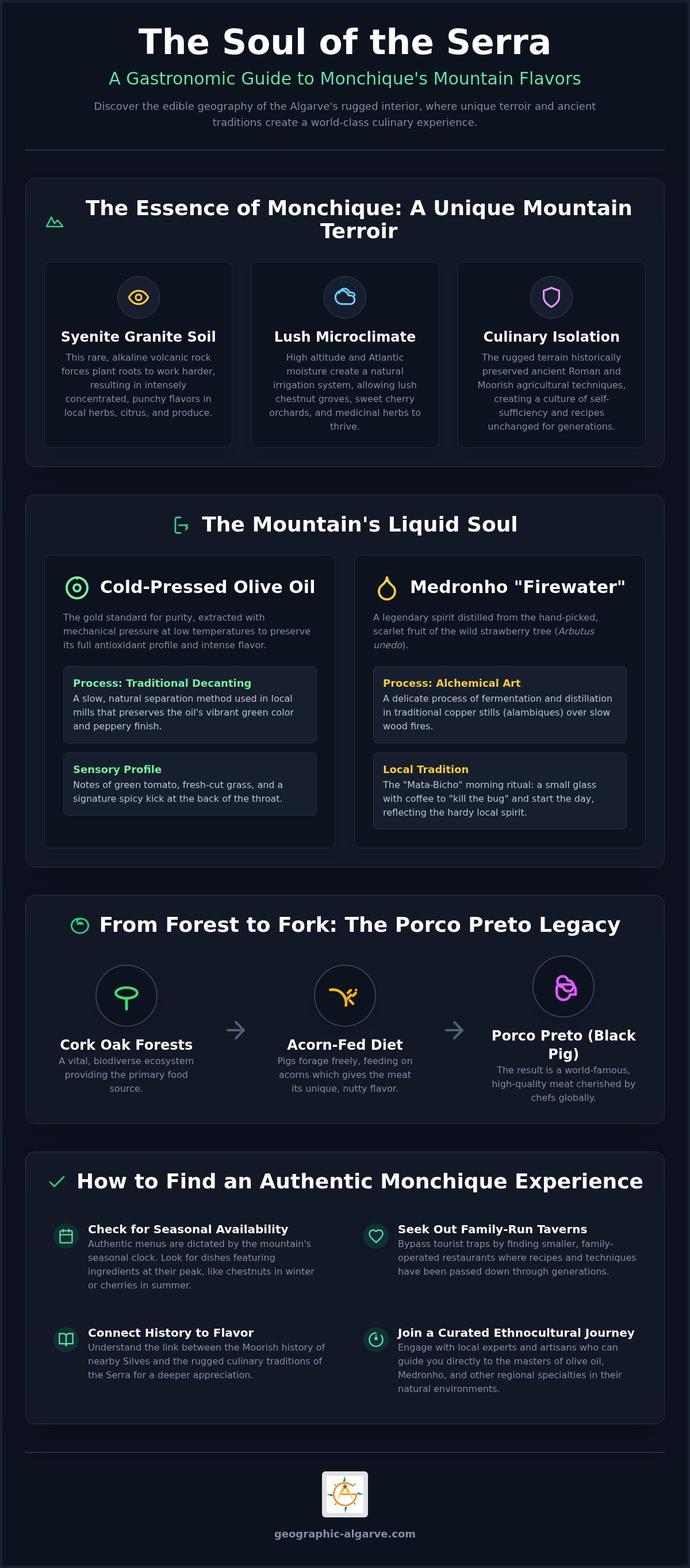
Step away from the sun-drenched beaches and look toward the emerald peaks. Monchique is the Algarve's green lung. A Monchique gastronomy tour isn't just a meal; it's an exploration of a rare mountain terroir. This term describes how the specific environment, from the soil to the wind, dictates the flavor of every ingredient. You're leaving the world of grilled sardines behind for a landscape defined by acorns, honey, and wild game. It's a journey into the Algarve's rugged interior where the air is crisper and the traditions are deeper.
The secret lies beneath your feet. Syenite granite soil provides a unique mineral profile found nowhere else in Portugal. This alkaline volcanic rock forces roots to work harder. The result is concentrated, punchy flavors in everything from citrus to wild herbs. While the shoreline offers salt and sea, the Serra offers earth, wood, and smoke. This is ethnocultural geography at its finest! It's the study of how people and landscape co-evolve to create a unique culinary identity. Let's look closer at why this specific geography matters so much for your plate.
The Microclimate of the Serra
Altitude and Atlantic moisture create a lush environment. Clouds often hug the peaks of Fóia and Picota, providing a natural irrigation system. This microclimate allows for the growth of ingredients that would wither on the sun-baked coast:
- Lush chestnut groves that provide the base for hearty winter stews.
- Sweet cherry orchards thriving in the cooler mountain air.
- Wild medicinal herbs with concentrated oils used in infusions and seasonings.
Heritage food here follows a strict seasonal clock. You eat what the mountain provides at its peak. This is the authentic heart of Monchique's natural products, standing in stark contrast to the mass-produced tourist food found in seaside towns. There's no room for frozen imports here; the mountain dictates the menu!
Centuries of Culinary Isolation
These peaks were once a natural fortress. For hundreds of years, the rugged terrain made travel difficult. This isolation was a blessing for food lovers! It preserved ancient Roman water systems and Moorish agricultural techniques that still function today. Self-sufficiency was a necessity for survival. Families grew their own grains, pressed their own oil, and cured their own meats. You'll still taste recipes that haven't changed in generations. These dishes aren't just food; they're edible history books. Experience the resilience of mountain life through every bite!
The Sacred Duo: Cold-Pressed Olive Oil and Medronho Firewater
Every Monchique gastronomy tour reaches its peak when you taste the mountain's liquid soul. In the Serra, two liquids reign supreme: the golden flow of artisanal olive oil and the fiery kick of Medronho. These aren't just products; they're the results of centuries of labor and deep environmental knowledge. Local families still practice the "Mata-Bicho" ritual, a small morning glass of firewater taken with coffee to "kill the bug" and jumpstart the day. It's a bold tradition that reflects the hardy spirit of the mountain people! You'll find that these flavors are inseparable from the rugged landscape that produces them.
Inside the Traditional Olive Mill
Visit a local mill to see history in motion. Traditional mills use a decanting process, which is a slow, natural separation that preserves the oil's intense, peppery finish and vibrant green color. Cold-press extraction is the gold standard for purity because it relies on mechanical pressure at low temperatures to ensure the oil retains its full antioxidant profile. When you participate in a professional mountain tasting, you'll learn to warm the glass in your hand to release the aromas. Look for distinct notes of green tomato, fresh-cut grass, and a signature spicy kick at the back of the throat. It's a sensory explosion that coastal oils simply can't match!
The Alchemical Art of Medronho
Medronho is the legendary "firewater" of the Algarve. It's distilled from the scarlet fruit of the Arbutus unedo, or strawberry tree. These wild berries are hand-picked across the rocky slopes, often within the same biodiverse landscapes that house Portugal's cork forests. The distillation happens in traditional copper stills, known as alambiques, over slow wood fires. It’s a delicate, alchemical process passed down through generations of Monchiqueiros. The fruit must be perfectly fermented in wooden barrels before it ever touches the copper.
Don't settle for industrial imitations found in souvenir shops! High-quality, artisanal Medronho should be crystal clear and smell like the forest after a summer rain. It should feel smooth on the palate and leave a long, warm glow in your throat without any harsh chemical burn. If you're ready to taste these traditions at their source, consider joining an ethnocultural journey led by those who know the distillers by name. You'll gain exclusive access to private cellars and hidden mills that most travelers never find! It's the ultimate way to experience the authentic spirit of the Serra.
From Forest to Fork: The Role of Cork and Wild Harvest
The cork oak forest is the silent engine behind every Monchique gastronomy tour. It's a living ecosystem where the landscape dictates the menu. Portugal produces approximately 50% of the world's cork, but for a food lover, the real value lies in what grows beneath the canopy. This "Montado" system creates a unique symbiotic relationship. The trees provide shade and food for livestock while preserving the biodiversity needed for wild harvesting. It's a sustainable cycle that has fed the Serra for millennia! Every bite of mountain produce is a direct result of this carefully balanced environment.
The Black Pig: A Mountain Delicacy
The Porco Preto, or Black Pig, is the undisputed star of mountain cuisine. These native animals roam freely through the cork oak meadows, feasting on fallen acorns during the montanheira season. This natural diet is essential because it infuses the meat with healthy oleic acids and a distinct nutty flavor. It's the ultimate mountain delicacy! Local families use traditional curing methods to produce sausages and hams that are aged in the cool, dry mountain air. You haven't truly experienced Monchique until you've tasted presunto that has been cured using only salt, smoke, and patience. These artisanal hams represent the pinnacle of Portuguese charcuterie!
Wild Honey and Medronho Blossom
Look up at the hills to find the source of the Serra's sweetness. Monchique mountain honey is a liquid masterpiece! The bees forage on a diverse range of wild flora, including heather, lavender, and the creamy blossoms of the Medronho tree. This results in a dark, thick honey with a complex, slightly bitter profile that is highly prized by chefs. These bees are vital for the health of the entire ecosystem, ensuring the pollination of the wild herbs that define local stews. Thyme, rosemary, and oregano grow wild across the rocky slopes, adding an incredible aromatic depth to slow-cooked mountain meats. It's nature's own seasoning rack!
By choosing these local products, you're directly supporting the preservation of the landscape. Gastronomic demand keeps the cork forests profitable and protected, preventing the abandonment of these ancient lands. It's a delicious way to ensure that these traditions thrive for another generation. During the 2026 cork harvesting season, which runs from May to August, the connection between the forest and the table is even more visible as the mountains buzz with activity. Experience the raw power of nature on your plate and taste the difference that a healthy forest makes!
How to Identify an Authentic Monchique Culinary Experience
Finding the real soul of the mountain isn't always easy. As you climb the winding paths, you'll see plenty of signs promising "traditional" food. But how do you separate a genuine Monchique gastronomy tour from a shallow imitation? It starts with looking past the surface. You want to hear the clatter of a family kitchen and smell the woodsmoke of an active oven. Authentic experiences are built on deep-rooted relationships, not flashy billboards. We believe that your time is precious, so don't waste it on generic stops!
Red Flags of Tourist Traps
Be wary of multi-language picture boards displayed outside. If a restaurant needs photos of food to sell it, it's likely not catering to locals. Real mountain taverns rely on word-of-mouth and the rhythm of the seasons. If you see strawberries on the menu in mid-winter, keep walking! True mountain cuisine is "zero-kilometer," meaning the ingredients traveled from the backyard to the plate. Cheap prices often signal industrial shortcuts. Artisanal Medronho and hand-cured Porco Preto require immense time and labor. A "budget" menu simply can't support these traditional methods without sacrificing quality. Look for the presence of the owner. In a real tavern, the family is usually in the kitchen or serving the wine.
The Value of Expert Interpretation
A local guide with over 25 years of experience is your greatest asset in the Serra. They know which distillery belongs to which family and who has the best olive oil harvest this season. This level of expertise unlocks closed doors! You'll visit private workshops where artisans still use Roman-era techniques to press oil or distill firewater. This isn't just about eating; it's about understanding the people behind the recipes. It's the perfect way to integrate your meal with broader Algarve cultural tours. You gain a deeper appreciation for the "hidden heritage" that defines this region. A professionally guided Monchique gastronomy tour removes the guesswork, ensuring every stop is a celebration of heritage.
Supporting small-scale artisans directly ensures these traditions don't disappear. When you buy honey from a mountain beekeeper, you're investing in the Serra's future. You get a superior product, and they get a fair price for their craft. It's a win-win for everyone! Don't leave your vacation highlights to chance. If you want a truly curated, high-quality experience, join our Monchique & Silves tour and taste the difference that local expertise makes. We take the stress out of planning so you can focus on the flavors!
Join a Curated Monchique & Silves Ethnocultural Journey
Experience the ultimate mountain adventure with our signature Monchique & Silves Tour! This expedition is designed for those who crave depth, authenticity, and high-value discovery. Led by Vasco Salgueiro, a local expert with over 25 years of experience in ethnocultural geography, this journey transcends the standard sightseeing trip. You'll gain exclusive access to the hidden heritage of the Serra while supporting the very artisans who keep these traditions alive. A Monchique gastronomy tour is more than a meal; it's a commitment to sustainable tourism that protects the local community. Prepare for a day of sensory immersion where every stop reveals a new layer of the Algarve's complex identity!
A Tale of Two Landscapes
Our journey begins in Silves, the former Moorish capital of the Algarve. Here, the red sandstone of the castle walls tells stories of a grand Islamic past. You'll explore the fertile Arade River valley, where orange groves and ancient water systems still define the landscape. This historical foundation is essential for understanding the mountain bounty that follows. As the terrain shifts, the scenery transforms from the terracotta hues of Silves to the lush, volcanic greens of the Serra.
The transition from the river valley to the Fóia summit is breathtaking! You'll witness the changing flora and feel the crispness of the mountain air as we ascend. This vertical journey provides a perfect contrast to our Southwest coast Portugal tour, which focuses on the raw Atlantic power of the cliffs. By connecting these two landscapes, you gain a comprehensive understanding of the Algarve's incredible geographic diversity. It's a masterclass in how environment shapes culture and flavor!
Booking Your 2026 Expedition
Don't leave your vacation highlights to chance. We specialize in small-group intimacy to ensure every guest receives a personalized, high-quality experience. The 2026 season is already seeing a trend toward these immersive, ethnocultural journeys. Booking early ensures your place at the table with local producers who only open their doors to those they trust. This is your invitation to see the "Real Algarve" through expert eyes! You'll leave with more than just photos; you'll carry the knowledge of centuries-old recipes and the warmth of mountain hospitality. Join us for a Monchique gastronomy tour that will undoubtedly be the definitive highlight of your entire trip!
Secure Your Seat at the Mountain’s Table
The Serra de Monchique offers a sensory journey that most travelers never witness. From the mineral-rich syenite soil to the ancient copper stills of local distillers, every flavor tells a story of mountain resilience. You now know how to identify authentic family-run taverns and why the symbiotic cork forest ecosystem is vital for the world-famous Porco Preto. A Monchique gastronomy tour is the ultimate way to experience this hidden heritage before these ancient traditions fade. We believe your time is precious, and we’re here to help you maximize every moment!
Don't leave your discovery to chance. Join a journey led by Vasco Salgueiro, a local expert in ethnocultural geography with over 25 years of heritage preservation. You'll gain exclusive access to family-run mountain producers that remain closed to the general public. This is your chance to taste the real soul of the Algarve! Book your authentic Monchique & Silves cultural tour today and prepare for the definitive highlight of your 2026 vacation. The mountains are calling, and their secrets are ready to be shared!
Frequently Asked Questions
What is the most famous dish to try in Monchique?
Assadura à Monchique is the most iconic dish you must try. It features succulent pieces of pork marinated in garlic, lemon, and local olive oil, then roasted to perfection. Another local favorite is the hearty Monchique-style bean stew. These dishes highlight the region's focus on high-quality meats and simple, mountain-grown ingredients. You'll find these recipes served in family-run taverns that have passed down the secrets for generations!
Is a Monchique gastronomy tour suitable for vegetarians?
Yes, a Monchique gastronomy tour offers plenty of delicious options for vegetarians. While the region is famous for its meats, you'll discover incredible artisanal cheeses, mountain honey, and wild-harvested mushrooms. Many traditional starters include seasoned olives and local bread dipped in premium cold-pressed olive oil. Local chefs are increasingly happy to highlight the seasonal vegetables and wild herbs that thrive in the syenite granite soil. Just let your expert guide know your preferences!
What makes Monchique honey different from regular honey?
Monchique honey is distinguished by its dark color and complex, slightly bitter flavor profile. This unique taste comes from the bees foraging on a diverse range of wild mountain flora, specifically heather and the blossoms of the Medronho tree. Unlike mass-produced versions, this honey is a raw, natural product that reflects the specific microclimate of the Serra. It’s highly prized for its medicinal properties and its ability to add incredible depth to local desserts!
Can I buy Medronho and olive oil directly from the producers?
Absolutely, buying directly from the source is a highlight of any authentic Monchique gastronomy tour. You can visit local distilleries to purchase artisanal Medronho and stop at traditional mills for the freshest cold-pressed olive oil. Supporting these small-scale producers ensures that your money stays within the community and helps preserve ancient agricultural methods. It’s a fantastic way to take a piece of the Serra’s hidden heritage home with you while ensuring the highest quality!
How long does a typical Monchique food excursion last?
A typical high-quality food excursion in this region lasts between 7 and 8 hours. This duration allows for a deep dive into both the historical sights of Silves and the culinary secrets of the Monchique mountains. You'll have ample time for multiple tastings, a traditional lunch, and meeting local artisans without feeling rushed. It’s a full-day immersive experience designed to maximize your vacation time and provide a comprehensive look at the Algarve’s ethnocultural landscape!
Is Monchique food spicy compared to other Portuguese regions?
Monchique food isn't generally spicy, though it is incredibly flavorful and aromatic. Local cooks rely on garlic, sea salt, and wild herbs like thyme and rosemary to season their dishes rather than heavy heat. If you enjoy a kick, most taverns provide a small bottle of homemade piri-piri oil on the side. This allows you to control the spice level yourself while enjoying the natural, earthy notes of the mountain ingredients!
What should I wear for a mountain gastronomy tour?
Wear layers and sturdy, closed-toe walking shoes for your mountain adventure. The temperature in the Serra can be significantly cooler than on the coast, and mist can roll in quickly. Even in the height of summer, a light jacket is a smart addition to your bag. Since you’ll be visiting rustic farms and traditional distilleries, practical clothing is essential for navigating the uneven terrain. Focus on functionality so you can fully enjoy the sensory immersion!
Why is the Black Pig so important to this region?
The Black Pig, or Porco Preto, is essential because it is a cornerstone of the local economy and the Montado ecosystem. These native animals thrive in the cork oak forests, eating acorns that give their meat a unique, nutty flavor. This sustainable grazing keeps the forests healthy and provides the base for Monchique’s legendary cured hams. It’s a perfect example of how the landscape and the local table are inextricably linked in the Serra!
Article by
Kim
To conclude her studies Tourism and Recreation Management, Kim came to Portugal in 2006 for a three month internship and then simply never left! She took a few years exploring the country, living in Porto and the Algarve, while gaining experience working for the main international tour operators. Since 2013 she is a full-time local guide for Geographic Algarve, where she can share her love for and knowledge of Portugal in the best way. Both on tour and here in the blog, she shares crucial tips to get the most out of your stay in the Algarve. Kim creates her articles and photos with the help of AI, so she has more time left to show you around in the wonderful Algarve!
Disclaimer - AI generated content
This article was created by AI (including photos), within guidelines set by Geographic Algarve. Geographic Algarve checks to the best of her abilities all articles for incongruencies, but may not succeed to correct all inaccurate details before publishing. In no way or form, are these articles part of any contract when booking one of our trips. Only the specific tour information as stated on www.geographic-algarve.com is valid. In case of any doubt, please contact us via [email protected].


