
What if the Algarve's most captivating stories aren't found in a guidebook, but are etched into the limestone cliffs and ancient mountain trails? It's easy to get caught in the cycle of generic resorts and crowded tourist hubs. You want to see the "real" Portugal, yet the deeper cultural context often feels out of reach. Our Algarve geography tours bridge this gap, taking you beyond the surface to explore a landscape where geology dictates destiny.
By 2026, the demand for authentic heritage tourism has reached new heights. You'll connect with local experts like Vasco Salgueiro, who brings over 25 years of expertise to every expedition. Discover the "Lost Heritage" of the Southwest Coast or stand at the 902-meter peak of Fóia in the Monchique range. This article explores the three distinct worlds of the region: the dramatic coastline, the fertile Barrocal, and the rugged Serra. Prepare to see hidden landmarks and ancient traditions through a professional, ethnocultural lens. Experience the soul of the south!
Key Takeaways
- Master the "Three Worlds" of the Algarve by understanding the unique geographical shift from the coastal Litoral to the limestone Barrocal and the rugged Serra.
- Discover the biological sanctuary of the Vicentine Coast and the deep maritime history that shaped the legendary cliffs of Sagres.
- Scale the volcanic heights of the Serra de Monchique to reach Fóia, the highest peak in southern Portugal at exactly 902 metres!
- Uncover the "Lost Heritage" of traditional limestone villages and the enduring Moorish influence that still defines the historic geography of Silves.
- See the real Portugal in 2026 by joining expert-led Algarve geography tours that replace generic sightseeing with 25 years of deep ethnocultural expertise!
The Three Worlds of Algarve Geography: A Structural Overview
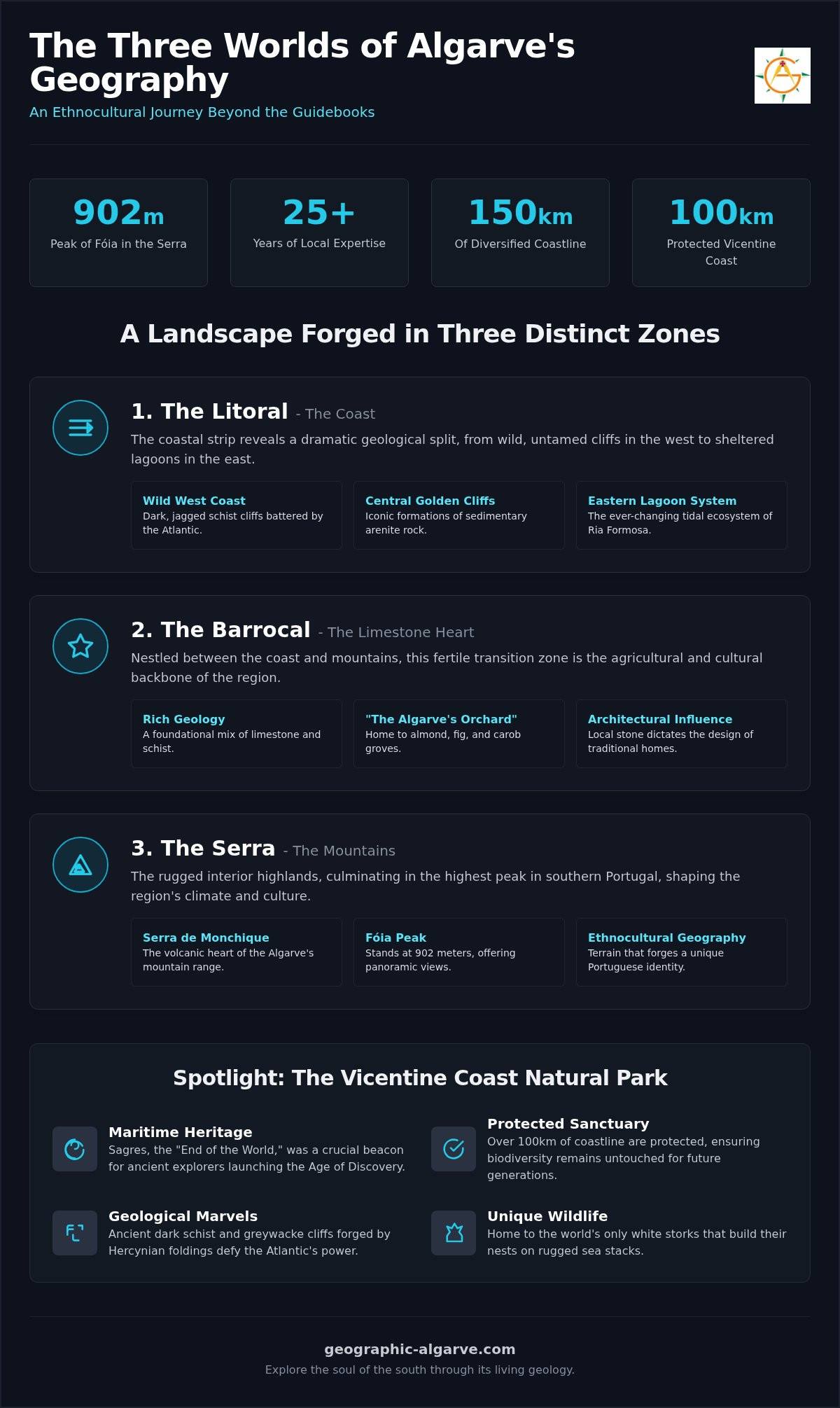
The Algarve isn't just a single coastal strip; it's a complex tapestry of three distinct worlds. To truly understand the Geography of the Algarve, you must look beyond the beach. The region is divided into the Litoral (the coast), the Barrocal (the limestone heart), and the Serra (the mountains). Each zone has shaped the lives, traditions, and diets of the local people for centuries. This is what we call ethnocultural geography. It's the study of how the rugged terrain and the Atlantic's salty breath have forged a unique Portuguese identity. Our Algarve geography tours focus on these deep connections, turning a simple walk into a journey through a living geological museum spanning 150km of diversified coastline.
The Litoral: More Than Just Sandy Beaches
The coastal strip reveals a dramatic split between the wild West and the sheltered Central Algarve. On the western edge, the Atlantic Ocean batters dark, jagged cliffs, creating a raw and untamed energy. As you move east, the landscape shifts into the iconic golden cliffs of the central coast. These are formed from sedimentary rocks called arenites. These rocks glow under the 2026 sun, telling a story of ancient seas and fossilized life. Further east still, the land gives way to the complex lagoon systems of the Ria Formosa. This ever-changing coastal ecosystem relies on the Atlantic's tides to breathe. It's a sanctuary where the sea meets the land in a delicate, shifting dance.
The Barrocal: The Fertile Transition
Nestled between the sea and the mountains lies the Barrocal, often called the "beira-serra." This is the agricultural engine of the region. The ground here is a rich mix of limestone and schist. This specific geology provides the perfect foundation for the "orchard of the Algarve." You'll find sprawling groves of almond, fig, and carob trees that have sustained local families for generations. The influence of this limestone heart extends into the very homes of the people. In cities like Silves and Loulé, the traditional architecture reflects the stone beneath your feet. From the whitewashed walls to the intricate chimney pots, the land dictates the design. Joining Algarve geography tours allows you to see how this fertile transition zone remains the cultural backbone of the south.
The Southwest Coast: Exploring the End of the World
Standing on the edge of the Vicentine Coast feels like witnessing the final frontier. This rugged stretch is more than a scenic backdrop; it's a sanctuary for rare species and ancient ways of life. The Southwest Alentejo and Vicentine Coast Natural Park protects over 100 kilometers of coastline, ensuring the biodiversity remains untouched. Here, the "Wild Coast" isn't just a name. It's a reality where local fishing traditions survive against the backdrop of crashing waves. Fishermen still scale these heights to reach secret spots, proving that the bond between the people and the sea remains unbreakable in 2026. The park is even home to the world's only white storks that nest on sea stacks. Expert-led Algarve geography tours reveal these hidden human stories and natural wonders that generic sightseeing often misses.
Sagres and the Maritime Heritage
Sagres is steeped in myth and salt. Ancient civilizations knew this headland as the "Promontorium Sacrum," a sacred place where the sun hissed as it sank into the ocean. Cape St. Vincent acted as a crucial beacon for early explorers navigating the treacherous Atlantic waters. This maritime history isn't just in books; it's written in the ruins and the very orientation of the land. The sheer height of the cliffs allowed ancient sailors to spot the coast from miles away, making them essential landmarks long before modern technology. You can immerse yourself in this legendary atmosphere through a Southwest coast Portugal tour. It's a chance to see how the geography of the "End of the World" launched the Age of Discovery.
Geological Marvels of the West Coast
The abrupt, jagged coastlines were forged during the ancient Hercynian foldings, creating dark schist and greywacke cliffs that defy the ocean's power. These vertical walls aren't just cold stone. They're home to endemic flora that thrives in the constant, salty Atlantic spray. In 2026, the Natural Park's conservation efforts are focused on protecting these rare botanical treasures from environmental shifts. Every plant and rock formation tells a story of resilience and deep time. If you're ready to see these natural wonders firsthand, consider joining a private tailor-made tour to experience the coast's true soul. Don't just visit the Algarve; understand it!
The Serra de Monchique: The Algarve’s Volcanic Heart
The Algarve's "Three Worlds" culminate in the towering, misty peaks of the north. Unlike the sedimentary layers of the coast, the Serra de Monchique mountains represent a massive outcrop of nepheline syenite. This rare igneous rock gives the range its "volcanic" reputation. It creates a landscape that feels worlds away from the golden sands below. Climbing toward Fóia, the highest peak at exactly 902 metres, you'll witness a dramatic shift in the environment. The air cools and the Atlantic mists cling to the slopes. This creates a unique microclimate that supports lush, green vegetation you won't find anywhere else in southern Portugal. Our Algarve geography tours guide you through these misty forests to discover the secrets of the peaks!
The Syenite Outcrop and Thermal Waters
Monchique's geology is a fascinating anomaly. While much of the region sits on limestone or schist, this syenite heart is rich in minerals. This composition has fueled the famous thermal springs of Caldas de Monchique for millennia. Romans sought these healing waters nearly 2,000 years ago, and the tradition continues in 2026. The mineral-rich soil also dictates the local flavours. From the mountain honey to the earthy vegetables, every bite reflects the volcanic foundation of the land. It's a true taste of the earth! You'll understand why this area was so prized by ancient civilizations as you explore the connection between the rocks and the local diet.
Cork Forests and Mountain Traditions
The mountain geography directly shapes the local economy through the ancient tradition of cork harvesting. The cork oak, or Quercus suber, thrives in this specific humidity and soil. It takes nine years for the bark to regrow after each harvest. This slow, sustainable cycle is a testament to the patience of mountain life. The geography also dictates the production of "medronho," a potent spirit made from the fruit of the strawberry tree. These trees love the rocky, shaded slopes of the Serra. Discover how the land shapes the people on our Algarve geography tours as you explore these inland secrets. You can connect with the "Lost Heritage" of the peaks by joining our Algarve cultural tours. Don't miss the chance to see how the mountains breathe life into the region's traditions. Experience the peak of Portuguese heritage today!
The Lost Heritage of the Barrocal and Silves
Deep in the limestone heart of the region lies a world often overlooked by the casual visitor. This is the Barrocal, a transitional zone where "Lost Heritage" refers to the disappearing customs and centuries-old ways of life. Here, the rural silence of the hills offers a stark contrast to the bustling, sun-drenched coastline found just a few kilometres away. Our Algarve geography tours delve into these quiet limestone villages to uncover a way of life dictated by the stone beneath your feet. You'll see how the terrain has forced a unique adaptation in everything from traditional farming techniques to the way water is harvested from the dry, rocky earth. It's a masterclass in human resilience!
Silves: The Red Sandstone Capital
Silves stands as a monument to the region's Moorish legacy, built upon a unique geological foundation. The city is famous for its "Gres de Silves," a vibrant red sandstone that gives the iconic castle its fiery hue. This stone isn't just a building material; it's a geological signature of the Arade valley that defines the visual identity of the entire sub-region. Historically, the Arade River served as a vital artery for trade and culture, allowing early civilizations to reach the heart of the Algarve with ease. However, the river's eventual siltation led to a shift in regional power over the centuries. As the waterway became too shallow for major trade routes, the strategic importance of Silves waned, eventually moving the administrative focus from this inland capital to the coastal ports.
Preserving Ethnocultural Traditions
The soul of the Barrocal is found in its artisan crafts, which rely heavily on local geological materials. From the red clay used in traditional pottery to the limestone carved into intricate doorframes, the land provides the medium for human expression. In 2026, sustainable tourism plays a critical role in protecting these rural areas from being forgotten. By choosing educational expeditions over generic sightseeing, you help keep these ethnocultural traditions alive for future generations. These villages are the last bastions of a Mediterranean lifestyle that is rapidly changing. An immersive way to visit these tucked-away villages is through a private off-road expedition, which allows you to reach the most remote corners of the limestone heart and meet the locals who still work the land.
Experience the red sandstone of Silves and the hidden treasures of the Barrocal today! Book your Monchique & Silves Tour and connect with the soul of the south.
Planning Your Expedition with Geographic Algarve
Choosing the right partner for your journey through southern Portugal transforms a simple holiday into a profound discovery. At Geographic Algarve, we believe that the land tells a story that only an expert can translate. Vasco Salgueiro founded this company in 1998, bringing over 25 years of local expertise to every expedition. Our Algarve geography tours don't just show you the sights; they immerse you in the ethnocultural fabric of the region. By 2026, the shift toward meaningful, slow travel has never been more important. We invite you to slow down, look closer, and connect with the living heritage of our home!
The Expert Advantage
A standard map shows you where to go, but a local expert shows you why it matters. Our guides are multilingual specialists who interpret the landscape through the lens of history, geology, and culture. They see the subtle shifts in rock formations and the hidden signs of ancient agricultural practices that a casual observer might miss. Storytelling is the heart of our mission. We bridge the gap between scientific geography and human experience. If you're looking for a personalized journey, we offer Private Tailor-made Tours designed for your specific interests. Secure your spot for 2026 today and experience the professional difference of a guide who truly knows every cliff and valley!
A Commitment to Sustainability
We're dedicated to protecting the very landscapes we love. Our focus remains strictly on the Natural Parks of the Algarve, ensuring that our presence supports conservation rather than hindering it. Sustainable tourism isn't just a buzzword for us; it's our core identity. When you join us, your visit directly supports the preservation of local traditions and the "Lost Heritage" of rural villages. We prioritize educational experiences that foster a deep respect for environmental heritage. This approach ensures that the Algarve remains a vibrant, living museum for generations to come. Ready to see the real Portugal? Explore our Southwest Coast, Lagos & Sagres Tour or the Loulé & Ria Formosa Tour to begin your adventure. Let us make your time in the Algarve precious and well-spent!
Start Your Journey Through the Living Heritage of the Algarve!
The Algarve is a land of profound contrasts, waiting for you to look beyond the surface. From the 902-meter volcanic heights of Fóia to the red sandstone ruins of Silves, every rock tells a story of human resilience. You've discovered how the "Three Worlds" of the coast, the fertile Barrocal, and the rugged Serra dictate the region's ancient traditions. This isn't just sightseeing; it's a deep connection with the soul of southern Portugal. By choosing expert-led Algarve geography tours, you ensure that your 2026 vacation is spent uncovering the "real" Portugal behind the resorts.
At Geographic Algarve, we bring over 25 years of local expert guidance to every expedition. We are specialists in Natural Park explorations, offering highly-rated ethnocultural experiences that standard maps simply miss. Your time is precious, so make it count with a journey that respects both nature and history. Book your expert-led Algarve geography expedition today and witness the magic of the Southwest Coast or the hidden secrets of the inland villages. The landscape is calling, and we are ready to lead the way!
Frequently Asked Questions
What are the three main geographical regions of the Algarve?
The Algarve is divided into three distinct longitudinal zones: the Litoral, the Barrocal, and the Serra. The Litoral encompasses the diverse coastline, while the Barrocal acts as a fertile limestone transition area. Finally, the Serra consists of the rugged northern mountain ranges. Understanding these zones is essential for anyone joining our Algarve geography tours, as each region supports unique ecosystems and cultural traditions that have thrived for centuries in southern Portugal!
Is the Algarve mountainous or flat?
It is a land of great geological variety rather than a single flat plain. While the coastal Litoral features sandy beaches and cliffs, the northern border is defined by the Serra de Monchique and Serra do Caldeirão mountains. These ranges provide a dramatic backdrop to the region's landscape. This varied topography creates the unique microclimates that allow lush forests to coexist with arid coastal scrubland, making every expedition a journey through changing elevations.
What is the highest point in the Algarve?
The highest peak in the region is Fóia, standing at exactly 902 metres above sea level. Located in the Serra de Monchique, this summit offers panoramic views that stretch across the entire coastline on clear days. It is a central highlight of our Monchique & Silves Tour. Reaching this altitude allows you to witness the unique nepheline syenite rock formations that characterize this volcanic heart of the Algarve, standing high above the surrounding plains.
What is the "Barrocal" region known for?
The Barrocal is famous as the orchard of the Algarve due to its fertile limestone soil. It is the primary producer of traditional crops like almonds, figs, carobs, and olives. Beyond agriculture, it is known for its Lost Heritage, including ancient limestone architecture and disappearing rural customs. This transitional zone between the sea and the mountains is where you'll find the most authentic glimpses of traditional Portuguese life, far from the typical tourist hubs.
Why is the Southwest coast of Portugal considered a Natural Park?
This area is protected as the Southwest Alentejo and Vicentine Coast Natural Park because it is a vital sanctuary for biodiversity. It serves as a unique habitat for rare species, such as the only white storks in the world that nest on sea stacks. The park's legal status ensures the preservation of its rugged cliffs and endemic flora. In 2026, conservation remains a top priority to protect these wild landscapes from modern development and environmental changes.
What is ethnocultural geography and why does it matter for tours?
Ethnocultural geography is the study of how the physical landscape shapes the traditions, diet, and identity of the people living there. It matters because it provides deep context that standard sightseeing misses. Instead of just looking at a rock, you learn how that stone built the local castle or influenced ancient farming. Our Algarve geography tours use this lens to turn every expedition into a meaningful lesson on the profound connection between nature and heritage.
Can I book a private geography tour in the Algarve for 2026?
Yes! You can secure your Private Tailor-made Tours for the 2026 season right now. These exclusive experiences allow you to customize your itinerary based on your specific interests in geology, history, or local gastronomy. Whether you want to focus on the Moorish legacy of Silves or the volcanic peaks of Monchique, our expert guides provide a personalized experience. Reach out to our team to plan your definitive highlight of the year with Geographic Algarve!
What should I bring on an Algarve geography expedition?
Preparation is key for a successful outing in the wild! We recommend bringing high-protection sunscreen, a reusable water bottle, and a quality camera to capture the stunning natural landmarks. Wear sturdy, closed-toe walking shoes to safely navigate the rocky trails of the Serra or the limestone paths of the Barrocal. Don't forget a light jacket for the higher altitudes of Monchique, where the air can be significantly cooler than the coastal plains, even in summer!
Article by
Kim
To conclude her studies Tourism and Recreation Management, Kim came to Portugal in 2006 for a three month internship and then simply never left! She took a few years exploring the country, living in Porto and the Algarve, while gaining experience working for the main international tour operators. Since 2013 she is a full-time local guide for Geographic Algarve, where she can share her love for and knowledge of Portugal in the best way. Both on tour and here in the blog, she shares crucial tips to get the most out of your stay in the Algarve. Kim creates her articles and photos with the help of AI, so she has more time left to show you around in the wonderful Algarve!
Disclaimer - AI generated content
This article was created by AI (including photos), within guidelines set by Geographic Algarve. Geographic Algarve checks to the best of her abilities all articles for incongruencies, but may not succeed to correct all inaccurate details before publishing. In no way or form, are these articles part of any contract when booking one of our trips. Only the specific tour information as stated on www.geographic-algarve.com is valid. In case of any doubt, please contact us via [email protected].


