

Spring and autumn are good seasons for spotting wildlife in Ria Formosa, with pleasant weather for exploring. In winter, the lagoon becomes a refuge for birds from northern and central Europe. The best way to see Ria Formosa depends on what you hope to discover: seasonal birdlife, island scenery or the lagoon’s varied habitats.
It’s easy to think of this Algarve landscape as simply a stretch of coast, but its marshes, seagrass and changing lagoon habitats are just as compelling. The season can shape what you see, especially if birdwatching is a priority.
Learn what makes Ria Formosa distinctive, when seasonal migration brings birds to the area and how to explore the park independently. Then choose an approach that suits your interests and make the most of your time in this remarkable corner of Portugal.
Key Takeaways
- Get oriented to a protected coastal landscape shaped by barrier islands, a peninsula and rich wildlife.
- Discover how marshes and seagrass make the lagoon’s habitats more than a scenic backdrop.
- Use seasonal bird movements to choose a visit that suits your wildlife-watching interests.
- Compare independent ways to explore, from walking trails to cycling and kayaking.
- Match your route to what you most want to see, whether that’s lagoon scenery, wildlife or nearby coastal landscapes.
1. What is Ria Formosa Natural Park?
Ria Formosa Natural Park stretches close to 60 kilometres along Portugal’s southeastern coast, from Faro towards Tavira. Its coastal landscape brings together lagoon waters, islands and wetlands across the Algarve. For visitors, that variety means the experience can shift between lagoon edges, island shores and bird-rich wetlands within the same protected area.
Portugal protected Ria Formosa as a Natural Park in 1987. It is also recognised as a Ramsar Wetland of International Importance and described as one of the country’s seven natural wonders. The park covers approximately 18,000 hectares and supports more than 1,500 species. Those figures reflect a living landscape, not simply a line of beaches on a map.
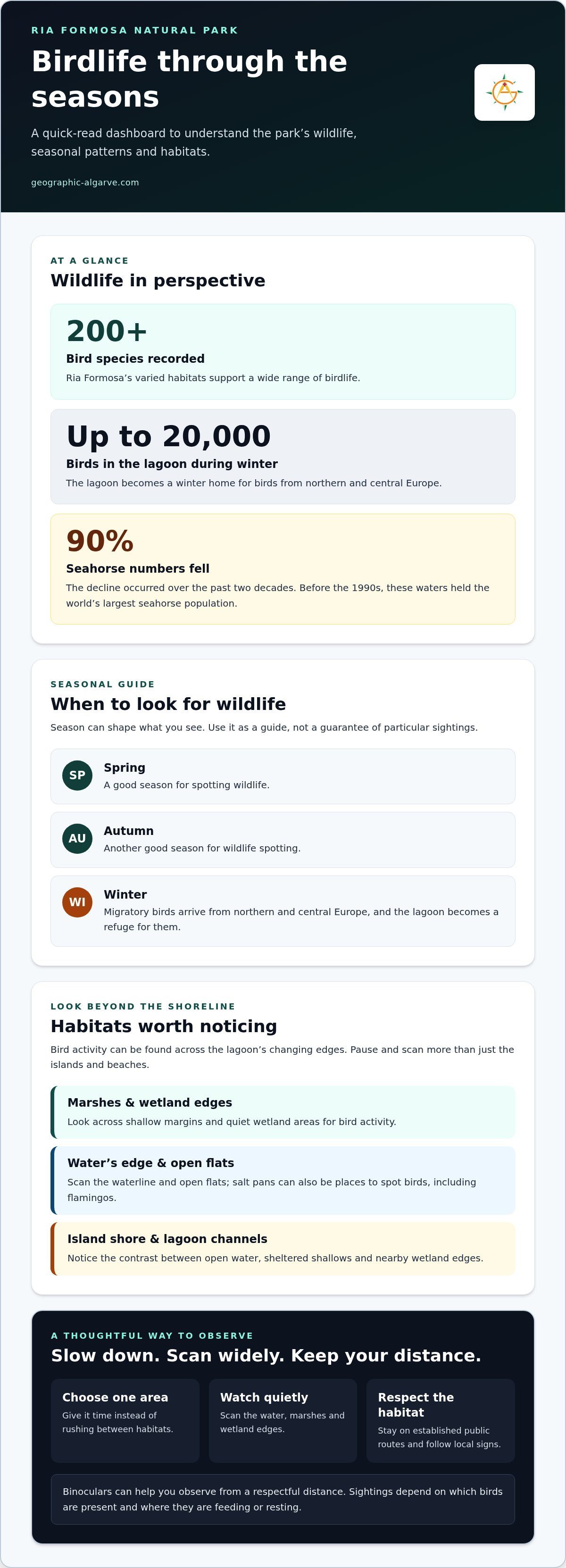
Wildlife watching is one way to understand the park’s changing character. More than 200 bird species have been recorded in Ria Formosa, and the area becomes a winter home for birds from northern and central Europe. During the wintering period, as many as 20,000 birds populate the lagoon. Look across quiet wetland areas for bird activity, and give wildlife room rather than approaching for a closer view.
Season matters for birdwatching. Spring and autumn offer good wildlife-spotting opportunities, while winter brings migratory birds from cooler parts of Europe. Sightings depend on which birds are present and where they are feeding or resting. If migration interests you, consider the season and explore slowly, scanning the water and wetland edges rather than focusing only on the islands.
Ria Formosa’s marine wildlife adds another dimension. Before the 1990s, its waters held the world’s largest seahorse population. Seahorse numbers later fell by 90% over the past two decades, a reminder that this coastal ecosystem is vulnerable as well as rich. Keep observation non-intrusive: watching from a distance helps you appreciate marine life without disturbing its habitat.
For a responsible visit, stay on established public routes, keep your distance from wildlife, and follow local signs and access instructions. Surfaces and conditions vary across paths, islands and wetlands, so if you have accessibility needs, choose routes that suit your mobility and the terrain you can manage.
How long to spend exploring depends on your priorities: visiting one area takes less time than combining birdwatching, island scenery and several stops. Set your pace around the places and wildlife you want to experience instead of trying to cover the entire park in one visit.
2. Ria Formosa's coastal lagoon habitats
The lagoon itself covers around 80 square kilometres, forming a shifting landscape of water, mudflats, marshes and seagrass. Along the Algarve coast, those habitats sit beside barrier islands, where narrow channels connect sheltered waters with the sea. Their changing edges make Ria Formosa more than a chain of beach destinations. Look beyond the open water to see how each habitat adds a different layer to the landscape.
Marshland grows along shallow lagoon margins, where the meeting of land and water creates feeding and shelter areas for wildlife. Seagrass beds add another important underwater habitat. Together, these ecosystems support the park’s natural character and have a role beyond wildlife: marshland and seagrass can sequester up to 40 times more carbon than forests. That figure helps explain why the lagoon’s quieter, less obvious habitats deserve attention.
Salt pans offer a contrasting scene. Shaped by people and water, these shallow basins create clear geometric lines beside the lagoon’s natural channels. They’re also useful places to pause and scan the landscape. Look for birds at the water’s edge, including flamingos, and use binoculars if you have them. A slow, careful look often reveals more than crossing the area without stopping.
Barrier islands shape the lagoon’s sheltered side and its open Atlantic-facing shores. Around Olhão, Fuseta and Tavira, you’ll find different views of this coastal system. Calm waters and tidal channels define the lagoon on one side; beyond the islands, the open sea creates a different scene. Choose a viewpoint that lets you notice both, rather than treating the shoreline as one continuous stretch of sand.
To explore the habitats thoughtfully, first identify whether your stop focuses on marsh, salt pans, seagrass or island shore. Then stay on established paths and observe wildlife from a distance. At low or changing water levels, channels and exposed wetland edges can look different from a map, so follow local signs and avoid walking into sensitive areas. This simple approach protects the very features that make the lagoon distinctive.
For a memorable visit, give the landscape time to reveal its contrasts. At Olhão, notice how salt pans and water channels shape the view; near Tavira, compare the lagoon-facing shore with the open coast. A closer look at Ria Formosa’s landscapes can help you connect these coastal scenes with the wider Algarve.
3. Birdlife and seasonal migration
Season changes the birdwatching experience in Ria Formosa. Spring and autumn offer good wildlife-spotting opportunities, while winter draws migratory birds from northern and central Europe. More than 200 bird species have been recorded across the park, so a visit can reveal different activity in different habitats. Treat the season as a planning guide, not a promise of particular sightings.
For a focused outing, choose one area and give it time. Scan the water’s edge, marshes and open flats rather than watching only the islands or beaches. Pausing, moving quietly and looking across different habitats can help you notice birds. Bring binoculars if you have them and observe from a respectful distance.
Culatra and the surrounding lagoon offer a useful setting for noticing contrasts. Look from the island shore towards the channels, then turn your attention to nearby wetland edges. The shift between open water and sheltered shallows helps explain why Ria Formosa supports varied birdlife. Keep to established public routes, especially where marsh vegetation meets the water.
Spring and autumn are practical choices if you want to combine wildlife viewing with time outdoors. In either season, plan your route around the habitat you hope to observe, then allow time to stop and scan. A beach walk offers a different view from a marsh-side path. Avoid rushing between places; patient observation makes it easier to notice movement without disturbing wildlife.
Winter brings a distinct focus on migration. Birds from northern and central Europe use Ria Formosa as a winter home, making the lagoon a destination for international birdwatchers and local visitors alike. Choose a viewpoint with a broad view over wetlands or water, and watch for activity across the landscape. A quiet approach helps you notice birds while leaving their resting and feeding areas undisturbed.
To make the most of a seasonal visit, match your expectations to the calendar. Choose spring or autumn for good wildlife-spotting conditions, or winter to experience the lagoon as a destination for migratory birds. Then select a route that includes marshes, shoreline or island views. Ria Formosa’s appeal lies in its changing scenes, not in expecting every bird or habitat to appear at once.
4. Independent ways to explore the park
Explore Ria Formosa on foot by choosing one clearly defined area rather than trying to cover the whole natural park. The Interpretation Center at Quinta de Marim in Olhão has 3 kilometres of paths and boardwalks, making it a useful starting point for observing the landscape at walking pace. For a longer outing, the Ludo Trail stretches 7 kilometres. Check the route length against the time and terrain you want to manage.
Which islands and towns are best to visit? Olhão, Tavira and Fuseta each offer a distinct starting point for planning a day, while Culatra and Cabanas are island destinations to consider. Choose based on the experience you want: village character, shoreline views or a quieter walk. For a walk, focus on accessible routes within one area rather than assuming every island and town connects through one continuous path.
For a short coastal stroll, the walk from Praia do Barril to Praia do Homem Nu takes about 15 to 20 minutes. It can suit visitors who want a modest walk alongside a beach visit. Set a clear turnaround point, follow the route on the ground, and leave time to return without rushing. The Ludo Trail offers a longer walking choice for those seeking more distance.
How do you reach Ria Formosa from Faro Airport or central Faro? Faro is a gateway and base for exploring the park. Once in the city, plan your walk around a named trail or specific destination, such as the Ludo Trail or Quinta de Marim. Use the airport and central Faro as orientation points, then choose a walking area that fits your day.
Island visits need a separate plan from mainland walks. Decide which destination interests you, such as Culatra or Ilha de Tavira, and organise your time around it rather than expecting to walk between islands. Access arrangements and departure times depend on the island and starting town, so use current local information when planning this part of your itinerary.
For an independent visit, choose the area first, then set a realistic walking distance and decide what you want to notice. A short Praia do Barril stroll prioritises the shoreline; Quinta de Marim takes you along paths and boardwalks. Keep to established routes and pause to observe the landscape. This simple plan makes each walk purposeful without squeezing too many stops into one day.
5. What is the best way to explore Ria Formosa Natural Park?
The best way to explore independently is to choose a walking area that matches your interests and available time. Faro is a useful base for planning, while the park’s paths and island shorelines offer different experiences. Decide whether you want a boardwalk, an extended beach walk or a trail through varied coastal scenery. A focused outing makes it easier to notice the landscape instead of rushing between distant stops.
For a distinctive walk, Ilha Deserta has a 2-kilometre boardwalk over the dunes. Follow the route to experience the island’s sandy terrain and coastal views without wandering into dune vegetation. Pause along the way to observe how the landscape changes between the boardwalk and the open shoreline. This is a strong choice for visitors seeking a defined path through a quieter island setting.
Ilha da Armona stretches for 9 kilometres, offering a longer coastal landscape to explore on foot. Ilha de Cabanas has a beach 7 kilometres long, while Ilha de Tavira is divided into four beaches. These places suit visitors who want an island walk with time to enjoy the shoreline. Choose one destination rather than trying to cover several in a single outing.
On the mainland side, Praia de Faro offers a shoreline to explore on foot. Its broad stretch gives walkers room to choose a short beach stroll or spend longer exploring the shore. Set a turnaround point before you start, especially if you want to leave time for other plans. Keep your attention on the marked public access areas and avoid disturbing wildlife along the water’s edge.
The Ecovia do Litoral coastal trail is 214 kilometres long, so it offers a wider perspective for visitors planning a longer walking itinerary across the Algarve. For a Ria Formosa visit, select a manageable section based on your starting point and interests. A coastal trail day differs from a focused island walk, so choose one style rather than trying to combine too much.
To decide, match the walk to your priority: choose Ilha Deserta for its dune boardwalk, Cabanas or Tavira for island shoreline, or Praia de Faro for an extended beach landscape. Check your route and walking distance before setting out, then leave time to pause and observe the surroundings. For a wider Algarve itinerary alongside your independent plans, explore guided regional experiences.
Geographic Algarve: Southwest Coast, Lagos & Sagres Tour
Geographic Algarve is a natural next step if you want to connect Ria Formosa with other Algarve landscapes. Choose the Loulé & Ria Formosa Tour for an outing centred on the lagoon and local heritage. If dramatic coastal scenery is your priority, the Southwest Coast, Lagos & Sagres Tour takes you west.
Choose these guided experiences when you’d like a planned regional itinerary instead of exploring independently. The Monchique & Silves Tour offers another direction, combining inland scenery with historic Algarve places. Each option suits different interests, so choose according to whether you want lagoon landscapes, coastal views or cultural discoveries.
To explore a guided Algarve outing, visit geographic-algarve.com.
Make your next Algarve day your own
Geographic Algarve’s Loulé & Ria Formosa Tour connects your visit with the lagoon. To explore other landscapes and heritage, consider the Southwest Coast, Lagos & Sagres Tour or the Monchique & Silves Tour. Each offers a different direction for planning your Algarve experience.
Ready to plan? Contact Geographic Algarve to plan your visit, and start looking forward to the landscapes you’ll discover.
Frequently Asked Questions
What is the Best Time to Visit Ria Formosa?
Choose spring or autumn for wildlife watching alongside outdoor activities, or winter if migratory birds are your priority. Your ideal visit also depends on the day’s focus: an island outing, a quiet walk or time observing wetland habitats. For a quieter visit, avoid the high summer season. Plan around the experience you value most instead of expecting every season to offer the same scenery and wildlife.
What are the Best Tours for Exploring Ria Formosa?
The right tour depends on whether you want to explore the lagoon itself or combine it with other Algarve highlights. Geographic Algarve’s Loulé & Ria Formosa Tour is the most directly relevant guided option for a visit centred on the area. For a broader regional day, compare it with the Southwest Coast, Lagos & Sagres Tour or the Monchique & Silves Tour, and choose according to your interests.
What is Ria Formosa Natural Park?
Ria Formosa Natural Park is a protected coastal landscape in Portugal’s Algarve, bringing lagoon environments, islands and shoreline together in one natural area. The name refers to the protected park, not just its water channels or beaches. For a first visit, decide whether to focus on the lagoon’s natural habitats or use the park as a setting for island and coastal exploration.
Are boat tours, ferries, kayaking, or guided walks best for seeing Ria Formosa?
Choose a boat tour to explore lagoon waterways and island stops, a ferry when your main goal is reaching an island, and kayaking for an active outing close to the water. A guided walk suits visitors who want interpretation along the paths. The best choice depends on whether you value access, activity or context. Match your option to the experience you want, not just its transport method.
What are the best Ria Formosa boat tours from Faro, Olhão, or Tavira?
Choose a tour based on its island stops and time ashore, then select a departure point that fits your itinerary. Boat trips into Ria Formosa depart from Faro and Olhão, with Fuseta as another departure location. Tavira is useful for exploring the eastern part of the area, but the listed boat-trip departure points are Faro, Olhão and Fuseta. Decide which islands or views matter before comparing routes.
How much do Ria Formosa boat tours and island ferries cost?
There isn’t one fixed fare for every route. Costs depend on the departure point, destination, crossing or tour length, island stops and ticket inclusions. A ferry crossing and a guided sightseeing trip are different experiences, so compare like with like when planning your budget. Choose the route first, then account for the relevant fare rather than assuming all island trips cost the same.
When is the best time of year and day to visit Ria Formosa?
Spring and autumn are good choices for wildlife spotting, while winter suits visitors interested in migratory birds. Plan the time of day around your activity: walking, island visits and wildlife observation each need enough time to pause and explore. If peace and quiet are priorities, avoid the high summer season and focus on one area rather than rushing between stops.
What wildlife and birdwatching can visitors see in Ria Formosa?
Visitors may see flamingos around salt pans and wetland edges, as well as varied birdlife across the park. The lagoon also supports marine wildlife, including seahorses. Sightings depend on where animals are feeding or resting, so move quietly, scan the water’s edge and observe from a distance. Bring binoculars if you have them, and stay on established routes while watching wildlife.
Article by
Kim
To conclude her studies Tourism and Recreation Management, Kim came to Portugal in 2006 for a three month internship and then simply never left! She took a few years exploring the country, living in Porto and the Algarve, while gaining experience working for the main international tour operators. Since 2013 she is a full-time local guide for Geographic Algarve, where she can share her love for and knowledge of Portugal in the best way. Both on tour and here in the blog, she shares crucial tips to get the most out of your stay in the Algarve. Kim creates her articles and photos with the help of AI, so she has more time left to show you around in the wonderful Algarve!
Disclaimer - AI generated content
This article was created by AI (including photos), within guidelines set by Geographic Algarve. Geographic Algarve checks to the best of her abilities all articles for incongruencies, but may not succeed to correct all inaccurate details before publishing. In no way or form, are these articles part of any contract when booking one of our trips. Only the specific tour information as stated on www.geographic-algarve.com is valid. In case of any doubt, please contact us via [email protected].


