
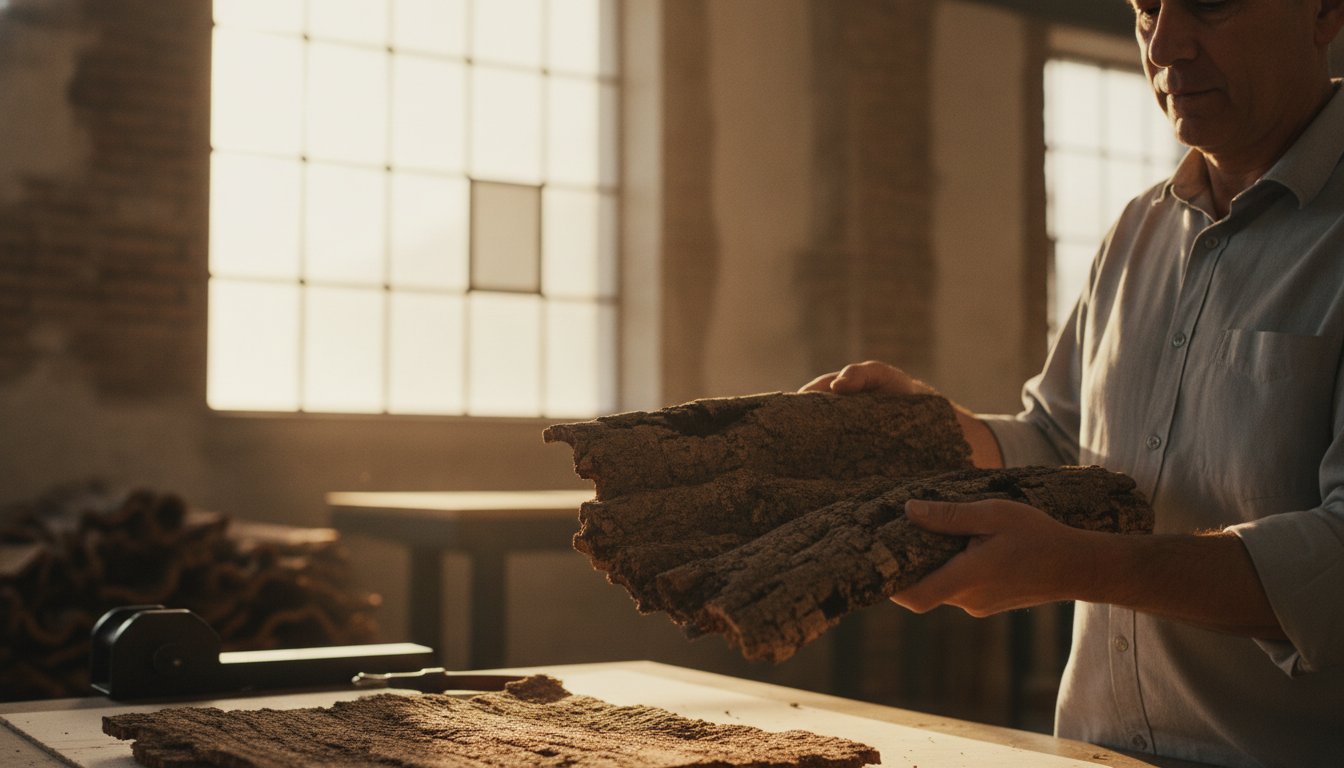
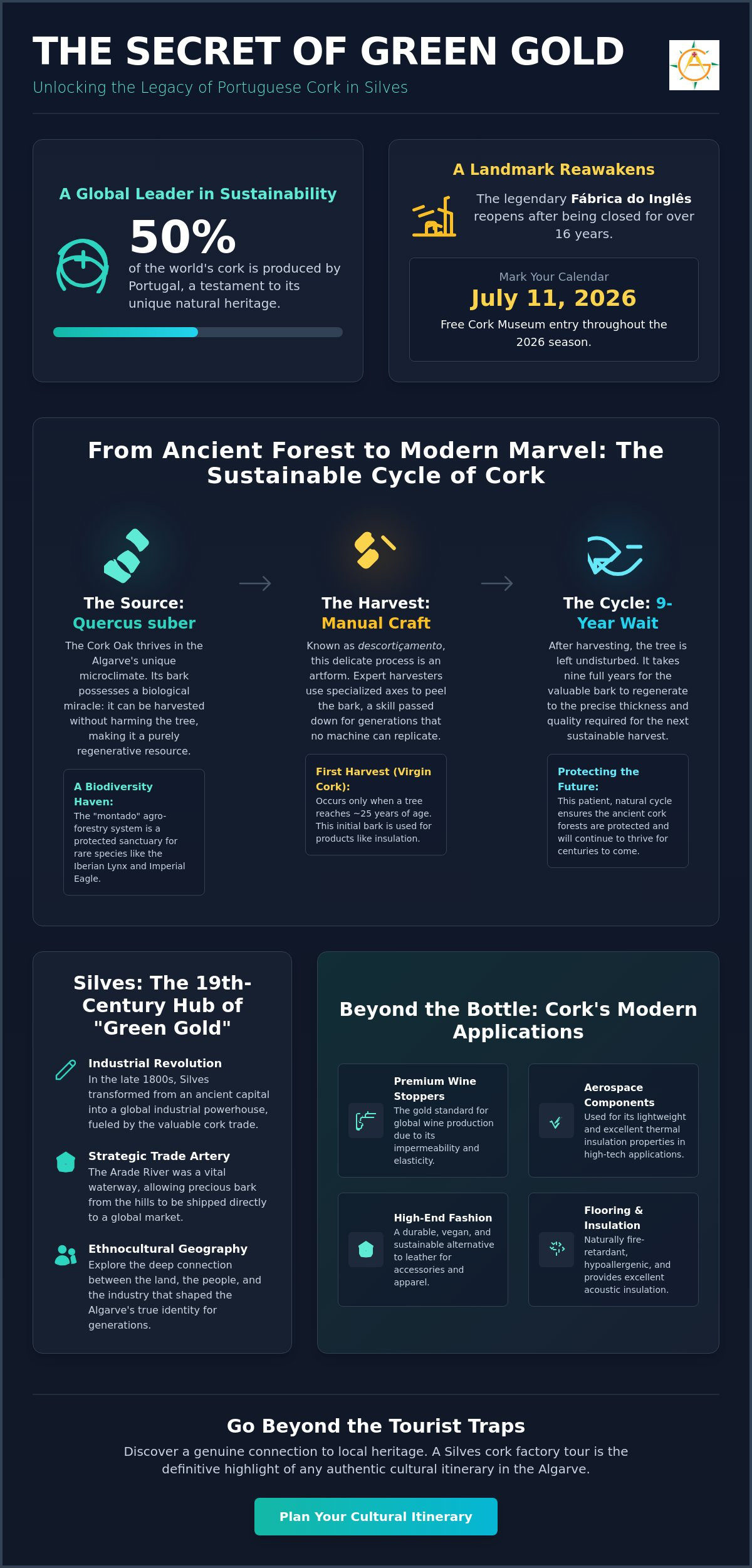
Did you know that Portugal produces 50% of the world's cork, yet the industry's most iconic landmark has been hidden behind closed doors for over 16 years? The wait is finally over. On July 11, 2026, the legendary Fábrica do Inglês complex reopens its doors, offering a rare glimpse into a global industrial triumph that started right here in the Algarve. If you're tired of tourist traps and want a genuine connection to local heritage, a Silves cork factory tour is the definitive highlight of any cultural itinerary.
It's easy to feel overwhelmed by technical jargon when exploring industrial history. You want to understand the heart of the craft without the complexity. We promise to take you deep into this fascinating world, led by local experts who bring the ethnocultural geography of Silves to life. You'll discover how a simple tree bark becomes a high-tech sustainable resource used in everything from premium wine stoppers to aerospace components.
This exploration covers the revitalized Cork Museum and the traditional nine year harvest cycle that protects our ancient forests. You'll learn why this heritage site is a must-visit destination this summer, especially with free entry to the museum throughout the 2026 season. Get ready to see the Algarve through the eyes of those who have shaped its landscape for generations.
Key Takeaways
- Uncover how the 19th-century industrial revolution transformed Silves into a global hub for the valuable "Green Gold" trade.
- Understand the biological miracle of the cork oak tree and the traditional manual craft required for sustainable harvesting.
- Explore the legendary Fábrica do Inglês and see why a Silves cork factory tour is the ultimate way to connect with the region's British industrial influence.
- Discover why cork is the world's most sustainable material with surprising applications in high-end fashion and aerospace technology.
- Learn how to go beyond the Moorish castle to find authentic ethnocultural experiences that define the true spirit of the Algarve.
The Golden Bark: Why Silves is the Historical Heart of Portuguese Cork
Silves is famous for its towering red sandstone castle, but its true economic heartbeat once pulsed through the steam-powered machinery of the cork industry. In the late 1800s, this ancient Moorish capital reinvented itself as an industrial powerhouse. A Silves cork factory tour offers a deep dive into this era of "Green Gold," when the city became the center of a global trade network. The Arade River played a vital role in this success. Before the silting of the riverbed, the waterway served as a strategic trade artery, allowing the direct movement of precious bark harvested from the surrounding hills. This strategic water link transformed Silves from a quiet administrative center into a bustling hub of international commerce.
The impact on the local economy was massive. Thousands of families moved from the rural hillsides into the city to work in the sprawling factory complexes. This wasn't just about survival; it was about progress. The wealth generated by cork exports funded the beautiful architecture and public squares you see today. When you walk through the streets of Silves, you're walking through a city built on the strength of its industrial legacy. It's a story of local resilience and global ambition that continues to define the region's character.
The 19th-Century Industrial Boom
The shift from manual hand-cutting to sophisticated mechanical processing changed everything for the Algarve. Foreign entrepreneurs recognized the immense potential of the local forests. They brought capital and technology that allowed Silves to refine the unique properties of cork on a massive scale. Because the material is naturally impermeable and elastic, it became the undisputed choice for the world's finest vineyards. This period of rapid growth didn't just build factories; it established Portuguese cork as the gold standard for global wine production.
A Cultural Pillar of the Algarve
Cork is woven into the very fabric of local life. The industry created a bridge between the rugged rural interior and the sophisticated coastal ports. It influenced everything from the tools used by craftsmen to the seasonal rhythms of the local workforce. Even the gastronomy of the region reflects the lives of the harvesters who spent months in the forest. Ethnocultural geography is the study of how people and landscape interact. By joining a Silves cork factory tour, you see this interaction firsthand. You'll understand how the land shaped the people, and how the people, in turn, built a global legacy out of simple tree bark.
From Forest to Factory: The Art of Sustainable Cork Harvesting
The journey of cork doesn't begin in the factory. It starts in the rugged, rolling hills of the Monchique and Silves ranges. Here, the Quercus suber, or Cork Oak, performs a biological miracle. Unlike any other tree on Earth, its bark can be removed without causing harm. The unique microclimate of the Algarve, with its salty Atlantic breezes and intense Mediterranean sun, produces a thick, high-quality bark that is prized worldwide. A Silves cork factory tour is the best way to see how this raw material is transformed, but the story truly begins in the forest. Understanding this natural process is a vital part of the experience, as it connects the industrial legacy to the living landscape.
The history of Portugal's cork industry is rooted in the "montado." This is an ancient agro-forestry system that supports incredible biodiversity. Rare species like the Iberian lynx and the Imperial eagle find sanctuary in these forests. The harvest itself, known as descortiçamento, is a masterclass in traditional skill. Expert harvesters use specialized axes to peel away the bark in large planks. It's a delicate dance between man and nature that has remained unchanged for generations. No machine can replace the precision of a skilled hand in these hills.
The 9-Year Cycle of Growth
- Virgin Cork: The first harvest happens when the tree is about 25 years old. This initial bark is rough and irregular, typically used for insulation or flooring.
- Precision Stripping: Local artisans carefully strip the bark during the active growth phase between May and August. They must avoid damaging the delicate inner layer to ensure the tree's health.
- The Rest Period: By law, the tree must rest for exactly nine years. This gives the oak time to regenerate its protective skin and prepare for the next harvest.
- Marking the Cycle: After the harvest, workers paint a white number on the trunk. A "6" signifies the tree was harvested in 2026 and won't be touched again until 2035.
Sustainable Stewardship
These forests are more than just a resource. They are a massive carbon sink. A harvested cork oak absorbs up to five times more CO2 than an unharvested one. This makes every cork product a direct contribution to global environmental health. Supporting this industry helps prevent forest fires, as the well-maintained montados act as natural firebreaks. If you want to see these majestic trees in their natural habitat before heading to the industrial sites, consider booking a Monchique & Silves Tour to witness the full story. Choosing cork is a vote for the planet and the preservation of the Algarve's soul. A Silves cork factory tour completes this narrative by showing you exactly where the forest meets the machine.
The Legacy of Fábrica do Inglês: Silves’ Industrial Revolution
Step into the shadow of the great red-brick chimneys that dominate the Silves skyline. The Fábrica do Inglês, or "The Englishman’s Factory," stands as a powerful monument to the 19th-century industrial revolution. Founded in 1894, this site was the brainchild of Victor Sadler, a British entrepreneur who recognized the immense potential of the Algarve's cork forests. His vision transformed Silves into an international industrial hub, connecting the rural interior with global markets. A Silves cork factory tour here isn't just a walk through old buildings. It's a journey into a time when Silves rivaled major European cities in production and innovation!
The architectural significance of the complex is impossible to ignore. Built with the iconic red sandstone of the region, the factory showcases a blend of functional industrial design and Victorian prestige. This wasn't just a place of labor; it was a symbol of the wealth generated by the cork trade. The 19th-century chalet on the grounds served as a residence for the elite, standing as a testament to the industrial boom. Today, the site remains one of the most important industrial heritage locations in Portugal, offering a stunning backdrop for cultural discovery.
The Cork Museum (Museu da Cortiça)
Inside the award-winning Museu da Cortiça, the story of the workers truly comes to life. In 2001, this space earned the prestigious Luigi Micheletti Award for being the best industrial museum in Europe. You'll see the original machinery that once hummed with activity, processing millions of stoppers for global distribution. It's a raw, authentic look at the social history of Silves. Thousands of local men and women dedicated their lives to this craft, and their legacy is preserved in the very walls of this museum. It's a must-see for anyone wanting to understand the human side of the industry.
Urban Regeneration and Future Vision
The site is currently undergoing an incredible transformation. A €25 million revitalization project is bringing new life to the complex, ensuring its survival for future generations. Mark your calendars for July 11, 2026, when the Fábrica do Inglês officially reopens its doors to the public. This vision perfectly balances heritage preservation with modern cultural uses. To celebrate this reopening, entry to the Cork Museum will be free throughout the summer of 2026! This is the perfect opportunity to book a Silves cork factory tour and witness the rebirth of an Algarve icon. Experience the exciting intersection of history and modern innovation in the heart of the city.
Modern Marvels: Why Cork is the World’s Most Sustainable Material
Cork is often associated with the historical traditions of the Algarve, but its future is written in the stars. While the 19th-century factories of Silves built the foundation of this industry, modern science has revealed that cork is one of the most technically advanced materials on the planet. It is naturally fire retardant, incredibly buoyant, and remarkably elastic. These unique physical properties mean that cork doesn't just seal wine bottles; it protects high-tech equipment in the most extreme environments known to science. A Silves cork factory tour allows you to see how this ancient bark has transitioned from a local craft into a global necessity!
One of the most impressive modern applications of Portuguese cork is in the field of aerospace technology. Because it is a superior thermal insulator, engineers use cork composites in thermal protection systems and atmospheric shielding. It withstands the intense temperatures of high-speed atmospheric friction, proving that nature often provides better solutions than synthetic alternatives. Back on Earth, designers are turning to this "miracle material" for sustainable interior architecture. It provides natural soundproofing and insulation without the need for toxic chemicals. This versatility ensures that the industrial legacy of Silves remains as relevant in 2026 as it was in 1894.
Beyond the Wine Bottle
Walk through the narrow streets of Silves today and you'll find local boutiques showcasing the incredible evolution of cork fabric. This material has become a favorite for high-end fashion designers looking for ethical, vegan leather alternatives. It's durable, waterproof, and has a unique aesthetic that changes with age. Cork is a truly zero-waste material because every single byproduct, from the dust created during sanding to the smallest leftover scraps, is collected and repurposed for energy production or composite materials. This circular economy is a model for global sustainability.
A Global Export Success
Portugal remains the undisputed world leader, producing approximately 50% of the global cork supply. This dominance is maintained through constant innovation and a deep respect for the nine year harvest cycle. Traditional industries stay relevant by embracing these high-tech applications while preserving the manual skills of the harvesters. Our Algarve cultural tours provide the necessary context to understand these global connections. You'll see how a small town in the Algarve became indispensable to the world's most advanced industries. To see this incredible transformation firsthand, book your Silves cork factory tour today and discover the sustainable future of the Algarve!
Beyond the Castle: Immersive Cultural Explorations in Silves
The red sandstone walls of the castle might dominate the skyline, but the true soul of the city lies in the valleys and workshops below. A Silves cork factory tour is the perfect counterbalance to the military history of the fortress. It provides a rare window into the daily lives and industrial triumphs that sustained this region for centuries. By combining these two experiences, you gain a complete picture of the Algarve's rich heritage. It's about connecting the dots between ancient defense and modern innovation. Don't settle for surface-level sightseeing when you can dive into the heart of the local culture!
Planning a high-quality educational day trip from coastal towns like Lagos or Albufeira is simple. The key is to look beyond the typical tourist path. Silves offers a unique atmosphere where history feels alive in every brick and bark plank. By focusing on the industrial legacy of the region, you escape the crowds and find a more authentic connection to the land. This is where the story of the Algarve truly comes together, moving from the rugged mountains to the bustling riverbanks.
Expert Insights with Geographic Algarve
Unlocking the hidden ethnocultural details of the region requires a guide who understands the landscape. At Geographic Algarve, we pride ourselves on being passionate local experts who bring history to life. Our guides specialize in the geography of the area, ensuring you understand how the terrain shaped the industry. Our customized itineraries focus on authentic traditions and local gastronomy, offering a personalized feel that mass-market outings lack. The Monchique & Silves Tour provides a seamless transition between the fresh mountain air of the peaks and the industrial heritage of the valley. It's a journey designed to make your time feel precious and well-spent!
Practical Tips for Your Cultural Visit
Timing is everything for a successful outing. Arrive in Silves during the early morning to catch the optimal lighting against the red sandstone buildings. This cooler part of the day is also the best time to wander through local artisan workshops where craftsmen still work with cork and clay. After your factory exploration, consider taking the next step to see the raw materials in their natural habitat. You can book a private wilderness exploration in the Algarve to see the forests firsthand. Witnessing the majestic oaks in the wild provides the final, essential piece of the puzzle. It's the definitive highlight for any traveler seeking a deep, meaningful connection to the Portuguese landscape.
Start Your Algarve Cultural Adventure Today
The narrative of cork in Silves bridges the gap between ancient forests and the cutting edge of global industry. You've seen how the delicate harvest cycle and the revitalized factory sites create a legacy of sustainability that reaches far beyond the wine bottle. This journey reveals the true character of the region, far beyond the standard tourist path. A Silves cork factory tour is the definitive way to connect with the people and landscapes that make this corner of Portugal so special. It's an experience that stays with you long after you leave.
We invite you to experience this transformation with a guide who truly knows the land. Led by local expert Vasco Salgueiro, our team brings over 25 years of educational travel experience to every itinerary. Our focus on sustainable and ethnocultural tourism ensures your visit supports the preservation of this incredible heritage. Discover the authentic Silves with our expert-led cultural tours and see why your time here is so precious. It's time to create an unforgettable itinerary that celebrates the very heart of the Algarve! Join us and discover a landscape where history and innovation meet.
Frequently Asked Questions
Where is the best place to see a cork factory in the Algarve?
Silves stands as the definitive location for exploring the Algarve's industrial cork heritage. The town's historical connection to the Arade River made it the primary hub for processing and export during the 19th century. You'll find the most significant industrial remains at the Fábrica do Inglês complex. It's the best spot to witness the scale of the "Green Gold" era and see the massive red-brick chimneys that once powered the local economy.
Is the Silves Cork Museum (Fábrica do Inglês) open to the public in 2026?
Yes, the Silves Cork Museum is scheduled for a grand reopening on July 11, 2026, after being closed for over 16 years. This is an incredible opportunity for travelers to step inside a world-class industrial heritage site that was previously inaccessible. To celebrate this milestone, museum entry will be completely free throughout the summer season of 2026! It's the perfect time to witness the results of the €25 million revitalization project.
How long does a typical Silves cork factory tour take?
A comprehensive Silves cork factory tour typically lasts between 60 and 90 minutes. This gives you enough time to examine the vintage machinery and learn about the fascinating social history of the factory workers. If you're joining a broader cultural itinerary, expect a deeper exploration that includes the surrounding medieval streets and the castle. It's a perfectly paced experience that fits easily into a morning or afternoon schedule in the city.
What is the best time of year to see the cork being harvested?
The annual cork harvesting season runs from mid-May to mid-August. This is the only window of time when the bark can be safely removed without damaging the tree's internal structure. If you visit the hillsides around Silves during these months, you'll see the fresh, reddish trunks of the oaks immediately after their stripping. It's a spectacular seasonal event that highlights the living rhythm of the Algarve's rural interior.
Can I buy authentic cork products during the tour in Silves?
You'll find a fantastic selection of authentic cork items in the boutiques scattered throughout the Silves city center and at the museum shop. From high-fashion handbags and vegan leather wallets to unique home decor, the variety is staggering! Many of these local shops source their materials directly from regional producers. It's the perfect way to take a piece of sustainable Portuguese heritage home with you while supporting local artisans and craftsmen.
Why is Portuguese cork considered the best in the world?
Portugal produces approximately 50% of the world's cork because of its unique combination of Mediterranean climate and strict quality regulations. The legal requirement to wait exactly nine years between harvests ensures the bark reaches peak density and elasticity. This patient approach, combined with the manual skill of local harvesters, results in a material that is unmatched for premium wine stoppers and high-tech industrial applications in the aerospace sector.
Is a cork tour suitable for families with children?
Absolutely, a Silves cork factory tour is a brilliant educational experience for families! Children are often fascinated by the tactile nature of the bark and the massive scale of the industrial machines used in the 19th century. It's a great way to teach kids about environmental sustainability and how everyday items are made from natural resources. The museum's layout is engaging and provides a hands-on look at history that beats any classroom lesson!
How does cork harvesting help the environment in the Algarve?
Cork harvesting is a vital tool for environmental preservation. A harvested cork oak tree actually absorbs up to five times more CO2 than an unharvested one as it regenerates its protective bark! These forests also act as natural firebreaks and provide a critical habitat for endangered species like the Iberian lynx. By supporting this industry, you're helping to keep the "montado" ecosystem alive and ensuring the biodiversity of the Algarve remains protected for future generations.

Article by
Kim
To conclude her studies Tourism and Recreation Management, Kim came to Portugal in 2006 for a three month internship and then simply never left! She took a few years exploring the country, living in Porto and the Algarve, while gaining experience working for the main international tour operators. Since 2013 she is a full-time local guide for Geographic Algarve, where she can share her love for and knowledge of Portugal in the best way. Both on tour and here in the blog, she shares crucial tips to get the most out of your stay in the Algarve. Kim creates her articles and photos with the help of AI, so she has more time left to show you around in the wonderful Algarve!
Disclaimer - AI generated content
This article was created by AI (including photos), within guidelines set by Geographic Algarve. Geographic Algarve checks to the best of her abilities all articles for incongruencies, but may not succeed to correct all inaccurate details before publishing. In no way or form, are these articles part of any contract when booking one of our trips. Only the specific tour information as stated on www.geographic-algarve.com is valid. In case of any doubt, please contact us via [email protected].

