
What if the most spectacular part of your Algarve holiday isn't the ocean at all? You probably feel that the crowded coast can sometimes lack true Portuguese soul. It's easy to worry that you're missing the authentic heart of the region while sticking to the well-worn tourist paths. Join a Monchique gastronomy tour and discover the hidden flavors and traditions that define this mountain paradise!
We're here to show you why the Serra de Monchique is the essential cultural and natural center of the Algarve. It offers a perspective of Portugal that most visitors never see. Find yourself surrounded by unique flora, breathtaking panoramic views, and the rich heritage of local artisans. This article previews five powerful reasons to head inland in 2026. Taste traditional mountain delicacies and explore the lush green peaks that make this area so special!
Key Takeaways
- Discover why swapping the golden coast for the lush Serra de Monchique reveals the most authentic, traditional heart of the "Real Portugal."
- Uncover ancient heritage through artisan workshops where Roman-style "Scissor Chairs" are still hand-crafted using local mountain materials.
- Experience the ultimate sensory journey on a Monchique gastronomy tour featuring legendary black pig delicacies and traditional medronho firewater.
- Witness the Algarve's most spectacular views from the 902-metre summit of Fóia, home to rare botanical species found nowhere else.
- Learn how to maximize your time by combining mountain exploration with the rich Moorish history of nearby Silves for a definitive cultural highlight.
Beyond the Coastline: Why Monchique is Essential for Your Algarve Itinerary
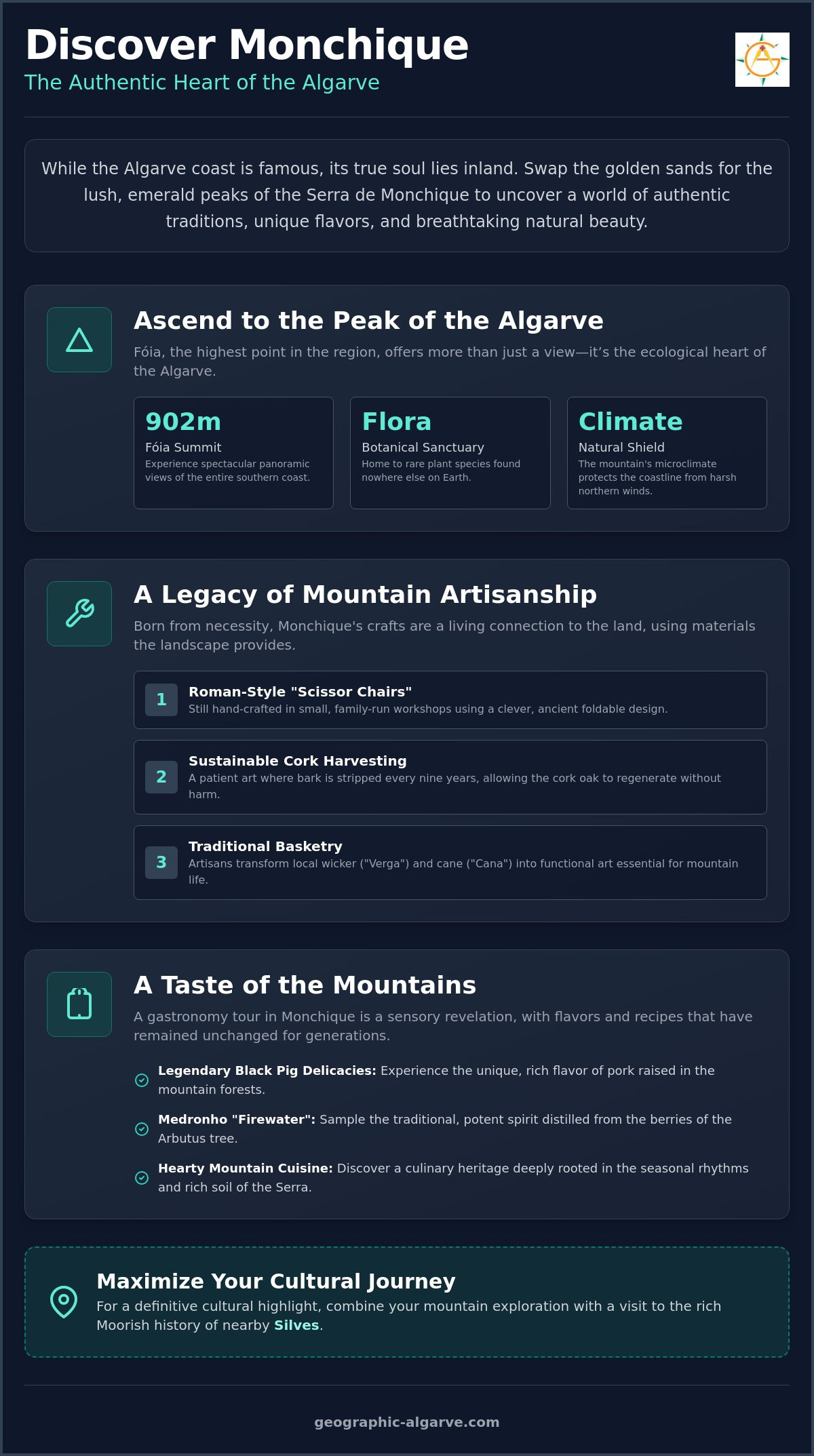
The Algarve's golden beaches are famous for a reason, but the lush, emerald peaks of the Serra de Monchique offer a completely different world. As the highest point in the region, this mountain range provides a striking green contrast to the sun-soaked coastline. It's a place where the air feels different and the pace of life slows down significantly. Monchique serves as the gateway to the "Real Portugal." Here, time-honoured traditions aren't just historical footnotes; they remain the primary way of life for the local community. This area acts as the region's spiritual and botanical lungs. Understanding its unique landscape is essential for anyone who wants to grasp the full geography of the southern coast. Monchique stands as the definitive ethnocultural heart of the Algarve, a status established over centuries of mountain isolation that preserved its unique identity.
Embarking on a Monchique gastronomy tour is the best way to see how this isolation created a world-class culinary heritage. You'll discover flavors that have remained unchanged for generations, rooted deeply in the mountain soil.
A Microclimate of Discovery
The "Serra" is more than just a collection of hills; it creates its own unique weather system. This microclimate ensures the landscape stays vibrant and green year-round, even during the peak of the dry Mediterranean summer. You'll notice the change the moment you begin to climb. The crisp mountain air offers a refreshing escape from the intense coastal heat found just a few kilometers away. Beyond being a botanical sanctuary, the mountain range plays a vital role in the region's ecology. It acts as a massive natural shield, protecting the entire southern coast from harsh northern winds. This protection is what allows the Algarve to maintain the temperate climate that draws millions of visitors every year.
The Town of Water and Wood
Natural resources have always defined the municipality of Monchique. Water is perhaps its most famous gift. Caldas de Monchique has served as a thermal healing centre since Roman times, prized for its mineral-rich springs. These local springs are not just historical curiosities; they are essential pillars for modern Algarve cultural tours that seek to uncover the region's deep-rooted health traditions. Alongside water, the abundance of wood from local forests has shaped the town's identity. From building sturdy homes to crafting intricate tools, the availability of timber fueled the local artisan industries that still thrive today. This combination of forest and spring makes every Monchique gastronomy tour an exploration of how the land provides for its people through traditional crafts and hearty, mountain-grown ingredients.
A Deep Dive into Serra de Monchique’s Ethnocultural Heritage
Artisanship in the Serra de Monchique wasn't born for the tourist market. It was born from necessity. For centuries, the mountain's relative isolation forced residents to become masters of their environment. They used every material the landscape provided. This deep connection between the land and the hand is what makes the local culture so vibrant today. A Monchique gastronomy tour reveals that the local diet and the local crafts share the same DNA. They both rely on the seasonal rhythms of the mountain. You'll see this in the famous "Scissor Chair" or Cadeira de Tesoura. This Roman-origin design is still hand-crafted in small, family-run workshops. Its clever, foldable structure was perfect for mountain life, where space and portability were always at a premium.
The slopes are blanketed in cork oak forests, which support one of the most sustainable industries on the planet. Cork harvesting is a patient art. Workers strip the bark every nine years, allowing the tree to regenerate without harm. This sustainable cycle defines the local economy and preserves the forest's biodiversity. Alongside cork, you'll find ancient traditions of basketry and weaving. Artisans transform "Verga" (wicker) and "Cana" (cane) into functional art. These baskets weren't made for decoration; they were essential tools for gathering chestnuts and olives. Today, they stand as symbols of a resilient heritage that refuses to fade.
The Living Traditions of the Artisans
Visiting a local workshop offers a connection that no souvenir shop can match. You get to meet the "Mestre" or Master. These experts have spent decades perfecting their skills, often learning from their fathers and grandfathers. Seeing these traditions in person helps you understand why certain items, like the Bolo de Tacho, have earned intangible cultural heritage status. It's about preserving a way of life that values quality over speed. If you want to witness these masters at work, our Monchique and Silves tour provides exclusive access to these hidden artisan spaces.
Architecture and the "Saia" Chimneys
The town's architecture tells its own story of mountain survival. The most distinctive features are the "Saia" or skirt chimneys. These wide, flared structures were designed to handle the large hearths needed for mountain winters. They are iconic symbols of the region's domestic history. As you walk the narrow, cobbled streets, you'll notice the town layout is built for a slower, pedestrian pace. This design reflects Monchique's history as a place of refuge and a vital trade hub between the coast and the Alentejo plains. Every corner reveals a piece of the past, from ancient stone walls to hidden plazas where neighbors still gather to share the latest news. For those interested in how urban planning and amenities shape the character of a community in other regions, you can learn more about Lopes Next and their insights on neighborhood infrastructure.
Exploring the Peak of the Algarve: Fóia and the Serra’s Unique Flora
Fóia stands tall at 902 metres. It is the highest peak in the Algarve. On a clear day, your eyes can wander from the rugged Cape St. Vincent in the west all the way to the Spanish border in the east. This isn't just a viewpoint; it's a botanical treasure chest. The mountain range is a recognized hotspot for rare plant life. You'll find species here that exist nowhere else in the world, such as the Rhododendron ponticum ssp. baeticum. As you ascend, the landscape shifts dramatically. You move through dense eucalyptus and pine forests before reaching ancient groves of cork and oak. This diverse environment is the perfect preamble to a Monchique gastronomy tour, as the mountain's bounty directly influences the local plate.
The hiking trails here cater to every level of ambition. You can choose a gentle forest stroll under the canopy or commit to a demanding peak-to-peak expedition. Each path offers a fresh perspective on this wild terrain. The transition from the commercial coastline to these ancient groves is immediate. It reminds every visitor that the Algarve is far more than just sand and surf. It's a living, breathing ecosystem with deep roots.
Panoramic Views from the Summit
Standing at the summit of Southern Portugal is an emotional experience. The sheer scale of the landscape below is humbling. Look toward the coast to spot the Sagres peninsula jutting into the Atlantic. Follow the silver thread of the Arade river as it winds toward the sea at Portimão. Nature enthusiasts and birdwatchers flock here to catch glimpses of soaring birds of prey. The silence at this altitude is profound. It provides a rare moment of stillness that you won't find in the busy beach towns below. It's a must-visit destination for anyone who values natural beauty and wide-open spaces.
The Flora of the Monchique Nature Park
The park is a sanctuary for the "Monchique Oak." This tree is a vital part of the ecosystem and currently holds a protected conservation status. The mountain changes its clothes with the seasons. Spring brings a riot of wildflowers and vibrant greens. Autumn replaces them with deep, earthy tones and the scent of damp earth. This botanical diversity does more than just look beautiful. It supports a thriving population of bees. These bees produce the famous Monchique honey, a staple ingredient you'll encounter on any Monchique gastronomy tour. The connection between the wild flora and the local kitchen is absolute. Every jar of honey and every traditional dish tells a story of the mountain's unique soil and climate.
Tasting the Mountains: Why a Monchique Gastronomy Tour is a Sensory Revelation
The flavors of Monchique are as robust as the granite peaks that surround the town. Unlike the seafood-heavy diet of the coast, mountain cuisine relies on the forest and the field. A Monchique gastronomy tour is a deep dive into a world of "porco preto" (black pig) and local game like wild boar. These animals roam freely, feeding on acorns and herbs, which gives the meat a distinct, nutty depth. Everything here centers on what the land provides. For example, Monchique Honey is a certified treasure. It's famous for its dark, mahogany color and medicinal properties. It carries the scent of the local wildflowers you'll find on the trails. You should also try "Bolo de Tacho." This spicy mountain cake is unique to the region, combining cocoa, cinnamon, and honey into a dense treat that has sustained families for centuries.
You'll find that mountain dining is an authentic experience. At local favorites like Luar da Foia, you can start with homemade bread for just €2.75 or indulge in black pork smoked ham for €13.50. These prices reflect the honest, direct relationship between the producer and the plate. Main courses like wild boar with prunes or chestnuts typically cost around €19.90, offering incredible value for such high-quality, seasonal ingredients.
The Art of the Distiller
You can't explore Monchique without discovering Medronho. This legendary "firewater" is distilled from the red berries of the Arbutus tree, which grows wild across the slopes. The process is a labor of love. Local families still use traditional copper stills, known as alambiques, to produce small batches of this potent spirit. It's a vital social ritual. You might be offered a glass of "Melosa," which is Medronho blended with local honey and lemon. It's the perfect way to toast to your mountain adventure. Identifying authentic spirits is easy once you know the local producers. Look for the small, family-run labels that represent the true taste of the mountain rather than mass-produced versions.
Mountain Flavours on the Plate
When you sit down for a mountain lunch, prepare for a feast of the senses. Signature dishes like Assadura (roast pork) are seasoned simply with garlic and lemon to let the quality of the meat shine. You'll also find traditional mountain sausages, such as chouriço and farinheira, often smoked over local wood fires. These flavors are inseparable from the "hortas" or mountain gardens. These small, terraced plots provide the seasonal vegetables and sweet potatoes that accompany every meal. Eating here is an act of connection to the soil. It's why a traditional meal is the soul of any Monchique gastronomy tour. Ready to taste these traditions for yourself? Book our Monchique & Silves Tour to experience the most authentic flavors of the Serra.
How to Experience Monchique Beyond the Tourist Surface
Scratching the surface of the Serra requires more than just a map. Most visitors miss the true essence of the mountain because they stay on the main roads. A guided excursion offers exclusive access to private artisan workshops and hidden viewpoints that remain invisible to the average traveler. These are the places where the "Mestre" still carves wood by hand and the scent of woodsmoke fills the air. Our multilingual local experts don't just show you the sights; they translate the living stories of the mountain. They bridge the gap between you and the local community. This approach ensures your visit supports the local economy and helps preserve ancient traditions for future generations. It's about sustainable travel that respects the heritage of the land.
Combining a visit to Monchique with the Moorish history of nearby Silves creates a complete historical narrative. You'll see how the mountain provided the timber and water that sustained the great Islamic capital of the Algarve. This connection is vital for understanding the region's complex identity. Every Monchique gastronomy tour we lead is designed to be an educational journey. We want you to leave with a deep appreciation for the ethnocultural geography that makes this area unique.
Curated Heritage Journeys
A structured itinerary provides a perfect balance of nature, history, and food. It allows you to see the Algarve as a whole, linking the green peaks to the blue sea. To truly understand the region's diversity, compare the rugged mountain peaks with the wild beauty of the Southwest coast Portugal tour. Seeing both sides of the landscape is the only way to experience the definitive highlight of your trip. While the coast offers dramatic cliffs, the mountains provide a deep, cultural soul that rounds out your Portuguese adventure. It's a sensory revelation that connects the flavors of the forest to the traditions of the coast.
Planning Your 2026 Expedition
Timing is everything for a successful mountain outing. The shoulder seasons of spring and autumn offer the freshest air and the most vibrant colors. Spring brings a burst of rare wildflowers, while autumn is perfect for tasting the new harvest of chestnuts and honey. Prepare for the mountain climate by bringing sturdy footwear and several layers. The weather at 902 metres can change quickly, even when the coast is warm. You can book a private or group experience to ensure a personalized touch. Whether you choose a Monchique gastronomy tour or a broader cultural exploration, our team is ready to share the regional highlights with you. Make your 2026 vacation count by choosing an experience that values quality and authentic discovery!
Unlock the Hidden Heart of the Algarve in 2026
Monchique is more than just a scenic detour; it's a living archive of Portuguese tradition. You've seen how the ancient artisan workshops and the rare botanical wonders of Fóia offer a completely different world from the coastal bustle. By choosing a Monchique gastronomy tour, you aren't just tasting food. You're participating in a heritage that has defined these mountains for centuries. From the spicy mountain cakes to the legendary medronho, every flavor tells a story of resilience and pride.
Our team brings over 25 years of local expertise to every journey. We focus on an ethnocultural approach that reveals the true soul of the region. Let our multilingual guides lead you through the hidden plazas and secret springs that most tourists overlook. Your time is precious, so make sure it's spent discovering the authentic Algarve. Discover the soul of the Algarve on our Monchique & Silves Tour and experience the definitive highlight of your next vacation!
Frequently Asked Questions
Is Monchique worth a day trip from the coastal Algarve?
Monchique is absolutely worth a day trip because it provides a lush, green contrast to the golden coastline. It's the highest point in the region and serves as the cultural heart of the Algarve. You'll find ancient traditions and a slower pace of life that feels worlds away from the busy beach towns. It's the perfect escape for those seeking authenticity.
What is the best time of year to visit Monchique?
The shoulder seasons of spring and autumn are the best times to visit for the freshest climate and most vibrant colors. Spring brings rare wildflowers like the Rhododendron ponticum, while autumn is perfect for the chestnut harvest. These seasons offer the best conditions for a Monchique gastronomy tour when local ingredients like wild boar and honey are at their peak.
Can you see the ocean from the top of Monchique?
You can see the entire southern coastline and the Atlantic Ocean from the summit of Fóia. On clear days, the panoramic views stretch from Cape St. Vincent in the west all the way to the Spanish border. Standing at 902 metres, it's the most spectacular vantage point in Southern Portugal for nature lovers and photographers who want to see the region's full scale.
What should I buy as a souvenir in Monchique?
Look for authentic "Scissor Chairs" (Cadeira de Tesoura) or locally produced honey and medronho spirits to take home. These items are deeply rooted in mountain necessity and long-standing tradition. Buying directly from artisan workshops ensures you're supporting the local economy while taking home a piece of the Serra's ethnocultural heritage. The quality of these handcrafted goods is exceptional.
Is Monchique suitable for hiking beginners?
Monchique is perfect for beginners because many trails offer gentle forest walks under the shade of cork and oak trees. While some routes to the peak are more demanding, several shorter paths provide beautiful views without requiring extreme physical effort. Always wear sturdy footwear to navigate the cobbled paths and uneven mountain terrain safely. The fresh air makes every step rewarding.
What is the difference between Monchique and Silves?
Monchique is a high-altitude mountain town focused on nature and crafts, while Silves is a historic riverfront city famous for its red sandstone Moorish castle. Both are culturally significant, but Monchique offers a cooler microclimate and lush forests. Silves provides a deep dive into the medieval history of the Algarve’s former capital. They complement each other perfectly on a day trip.
How long does it take to explore Monchique town?
You can explore the main town center in about two to three hours. However, a full day is recommended if you plan to visit the summit of Fóia, browse artisan workshops, and enjoy a traditional mountain lunch. A structured Monchique gastronomy tour usually spans a full day to capture the true essence of the mountain’s culinary and cultural highlights without feeling rushed.
What is Medronho and where can I try it?
Medronho is a traditional fruit brandy distilled from the berries of the Arbutus tree, often called "firewater." You can try it at local distilleries, traditional restaurants, or specialized shops in Monchique town. Many families still use copper stills to produce this potent spirit. It is frequently served as "Melosa" when mixed with local honey, which creates a smoother and sweeter flavor profile.
Article by
Kim
To conclude her studies Tourism and Recreation Management, Kim came to Portugal in 2006 for a three month internship and then simply never left! She took a few years exploring the country, living in Porto and the Algarve, while gaining experience working for the main international tour operators. Since 2013 she is a full-time local guide for Geographic Algarve, where she can share her love for and knowledge of Portugal in the best way. Both on tour and here in the blog, she shares crucial tips to get the most out of your stay in the Algarve. Kim creates her articles and photos with the help of AI, so she has more time left to show you around in the wonderful Algarve!
Disclaimer - AI generated content
This article was created by AI (including photos), within guidelines set by Geographic Algarve. Geographic Algarve checks to the best of her abilities all articles for incongruencies, but may not succeed to correct all inaccurate details before publishing. In no way or form, are these articles part of any contract when booking one of our trips. Only the specific tour information as stated on www.geographic-algarve.com is valid. In case of any doubt, please contact us via [email protected].


